AA
Share

 Las noticias del día en tu correo
Recibe lo más destacado de la cobertura de CONFIDENCIAL todos los días.
Más boletines
The best of our coverage, in English
Sign up for our weekly newsletter. We will send it to you every Friday at 10:00 am (Nicaragua time)
More Newsletters
PUBLICIDAD 4D
PUBLICIDAD 5D
25 senior officials run the machinery of the dictatorship, transmitting orders. They intervene and supervise, but they do not deliberate; no one is guaranteed immunity

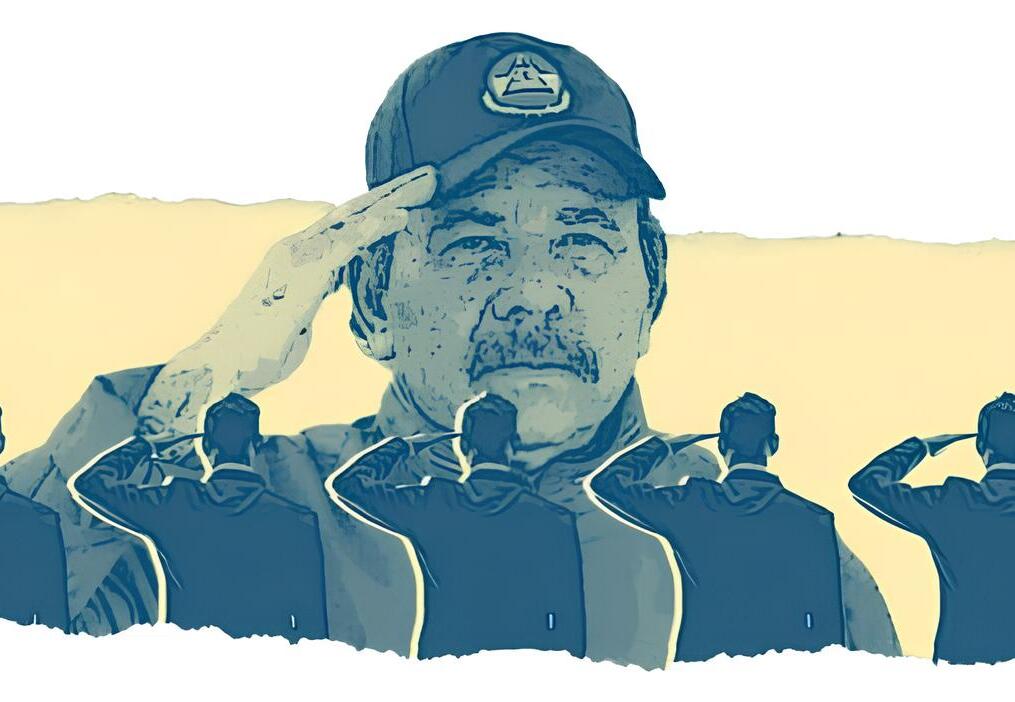
Rosario Murillo controla a los operadores del poder de la dictadura en Nicaragua. // Fotoarte: CONFIDENCIAL
The dictatorship’s state apparatus in Nicaragua includes, by law, at least eighteen ministers and more than twenty-five directors of autonomous government agencies, as well as an even larger number of vice ministers and co-directors. In a calculated way, they help dilute executive authority within public institutions through a system of political checks and counterweights.
The full universe of key government officials expands to more than two hundred when mayors of the country’s main municipalities are included—municipalities that, since 2022, the FSLN has claimed entirely for itself. Added to this are the senior leadership of the Nicaraguan Army and National Police, as well as magistrates from the branches of government, now reduced to mere “organs” that function as extensions of the Executive.
No Posts Found
However, only around twenty-five senior officials—among them at least five children of the presidential couple, Laureano, Rafael, Daniel Edmundo, Camila, and Maurice—are the ones who keep the machinery well-oiled, transmitting orders and enforcing the regime’s lines of authority.
These are the operators who manage the four pillars of power: political repression; control of the party-state; management of the economy and corruption; and censorship and official propaganda.
The presidency—now a “co-presidency”—also has around twenty advisers on the state payroll, listed through decrees published in La Gaceta. A few have specific responsibilities. Most are former ministers who once played a relevant role, or dismissed officials who have been given a fictitious consolation post—such as Army Major General Óscar Balladares, the former institution’s “number two,” appointed an “adviser on infrastructure” after his promotion to the top command was blocked in 2013.
A CONFIDENCIAL investigation published in September 2024 detailed that since 2007 Ortega has appointed 47 presidential advisers to reward, punish, or sideline officials, granting them high salaries and no concrete duties, as a kind of “wild-card” post within the dictatorship. Of these, fewer than 11 remain “active”; two of them (Bayardo Arce and Steadman Fagot) are imprisoned under conditions of enforced disappearance, and two others (Iván Acosta and Horacio Rocha) have fallen from grace and hold no position.
These political operators move in and out of the presidential couple’s inner circle depending on their specific sphere of influence. They intervene and supervise—and some may voice opinions—but they do not deliberate. They only execute orders.
Loyalty is the essential requirement to serve in this role—and above all, the trust of Rosario Murillo. Yet nothing guarantees permanence within a political order defined by rigid vertical control.
After approval of the so-called “Chamuca Constitution” and Murillo’s ongoing purge, these are—for now—the regime’s rings of power and the most influential operators who manage its main pillars.
The day-to-day management of the government, the Sandinista National Liberation Front (FSLN) party, and the regime’s repressive paramilitary forces is directly overseen by Rosario Murillo, through her two main political operators: Fidel Moreno and Gustavo Porras.
Porras and Moreno have also overseen politically strategic social programs—such as Bono Productivo, Usura Cero, Plan Techo, and Calles para el Pueblo—in coordination with the FSLN’s territorial party structures.
Although Moreno and Porras coordinate with one another to carry out the tasks assigned by Murillo, each controls his own power base. They compete to expand their respective spheres of influence by recruiting loyalty from lower-ranking officials and party cadres.

The secretary general of the Managua Mayor’s Office, Fidel Moreno, wields the municipality’s real power and serves as the link to the business sector responsible for executing large-scale infrastructure projects.
Moreno is also the FSLN’s secretary of organization, effectively acting as the regime’s chief human-resources manager. He drafts proposals for placing loyalists in key positions across government institutions, within an administration marked by a high turnover of personnel.
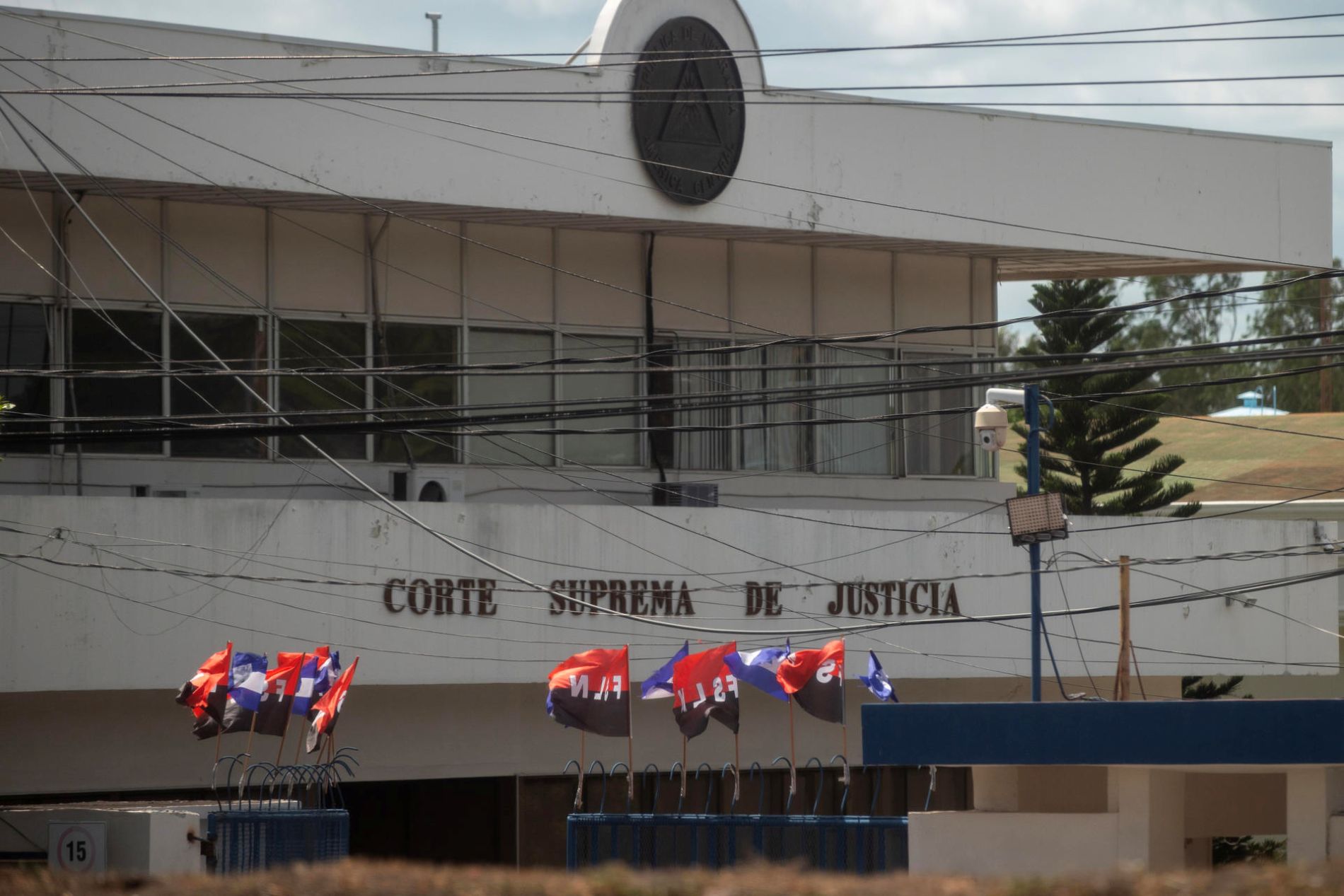
Fidel Moreno coordinates paramilitary operations with the National Police and Army intelligence and is the principal liaison with municipal governments and the FSLN’s party structures. He also serves as Murillo’s political overseer within the Supreme Court of Justice and other institutions, including the Nicaraguan Institute of Territorial Studies (INETER) and the National System for Disaster Prevention and Response (SINAPRED).

The lawmaker and president of the National Assembly, Gustavo Porras, controls the Legislative Branch, the FSLN parliamentary bloc, alliances with the “satellite” parties, and the unions through the National Workers’ Front (FNT).
He also acts as the operator-intervenor of a vast sector of the government’s social area, which includes the Ministries of Health and Education, the Tourism Institute, and the Ministry of Agriculture. Porras suffered a significant loss with the political takeover and closure of the now-defunct Ministry of Family, Community, Cooperative and Associative Economy (MEFCCA).
In coordination with Porras, Roberto López runs the Nicaraguan Social Security Institute (INSS) and is described as one of the officials “closest” to Murillo, ordering the confiscation of pensions from citizens, dissidents, former public employees, and opposition figures in exile.

In the background, Lumberto Campbell is the only one of the traditional political operators who has survived under Murillo’s command, handling matters related to the Sandinista Front, the Caribbean Coast, and the Supreme Electoral Council, where he remains after resigning the presidency, citing health problems.
FSLN political secretaries also have a presence in all public institutions and perform key functions in the “surveillance and intelligence network of the state apparatus.”
Among the political secretaries most prominent in repression are mayors Sadrach Zeledón Rocha, in Matagalpa, and Leónidas Centeno Rivero, in Jinotega, who “led the repression in their respective departments.”
Since 2007, police affairs have been under the political intervention of the FSLN secretariat and, since 2018, under the direct supervision of Rosario Murillo.
At first this occurred through the mediation of the presidential adviser on national security, Néstor Moncada Lau; later through retired commissioner general Horacio Rocha; and now under Murillo’s intervention through the triad of police chiefs: First Commissioner Francisco Díaz, head of the National Police and related by marriage to the presidential couple; Police co-director Victoriano Ruiz, appointed in 2025; and alongside them the deputy director general and head of Police Investigation and Intelligence since 2022, Zhukov Serrano Pérez.

“In the Police, Rosario Murillo rules through the three police chiefs,” said a former police officer with firsthand knowledge of Murillo’s mechanisms of political intervention.
The loyalty of the Police was sealed with blood in 2018, when shoulder to shoulder with paramilitary groups they carried out repression and massacres against the citizen protests of the April Rebellion, leaving more than 350 people killed and thousands wounded.
The Police also run the de facto police state imposed since September 2018, banning any kind of demonstration against the dictatorship, within an apparatus of surveillance, espionage, and harassment that has forced hundreds of thousands of Nicaraguans into exile.
In February 2025, Francisco Díaz swore “loyalty and obedience” to the dictators during his inauguration as police chief for a second consecutive term. During the ceremony, Murillo took the opportunity to administer the oath to a “selection” of 30,000 hooded individuals designated as volunteer police officers.
At the beginning of 2025, over a six-week period, the dictatorship quintupled the size of its main repressive arm in Nicaragua by integrating more than 76,800 “volunteer police” into the Police force — a term the regime has used since 2018 to justify the actions of paramilitary groups. With them, the number of police officers rose from 20,474 in 2024 to 105,285 in February 2025. This “army” of Murillo is the largest police force in the country’s history, even though the dictatorship claims the country is living in times of peace.
Under Ortega’s presidency, relations between the Executive Branch and the military institution have never been channeled through the Ministry of Defense or any other intermediary: instead, there is a delegated administration in the hands of the Army chief, General Julio César Avilés.
Daniel Ortega himself used to deal directly with Army General Julio César Avilés, at the express request of the military high command, until this delegation passed into Rosario Murillo’s hands in mid-2025.
In February 2025, Avilés swore loyalty to Ortega, Murillo, and the new Constitution, which grants absolute power to the dictatorial couple. The Army general assumed a fourth consecutive term as head of the Army at an official ceremony in which the roughly twenty generals who make up the military high command were also enthroned, forming the “bottleneck” that blocks promotions within the military career. Three months later, in May, Avilés reiterated to the troops that the Army will respect the constitutional reform that included the figure of “co-presidents” and designated Murillo, alongside Ortega, as supreme commanders of the Armed Forces.

At the head of the “bottleneck,” alongside Avilés in the General Command, are Chief of Staff Bayardo Rodríguez and Inspector General Marvin Corrales, both promoted to the newly created rank of “colonel general” in May 2025. “Co-president” Rosario Murillo deals directly with General Avilés and the General Command, without the participation of Daniel Ortega, who presides only at ceremonial events.
A report by the Group of Experts on Human Rights in Nicaragua
A February 2025 report by the United Nations Group of Experts on Human Rights on Nicaragua (GHREN) stated that, during the 2018 demonstrations, the Army chief “ordered the participation of military personnel in the repression,” which resulted in the loss of Nicaraguan lives and is considered extrajudicial executions. “This occurred on several occasions, and also involved their participation as armed groups in a disguised manner in the executions,” said German jurist Jan-Michael Simon, president of the GHREN.
As head of the Army, General Avilés is the operator who, with autonomy, concentrates the greatest political, military, and economic power after Rosario Murillo and Daniel Ortega.
Through the Military Social Security Institute, Avilés controls the Army’s business and investment arm in construction, commerce, agriculture, real estate development, and health services. At the same time, he acts as protector of the private business network of former military officers and promotes the placement of former Army officers as regime officials.
During its second and third terms, the regime earned national and international recognition for facilitating responsible macroeconomic management. That credit was attributed to former Central Bank president Antenor Rosales and to economist and Nicaragua’s representative to the CABEI, Silvio Conrado, one of Ortega’s most influential economic advisers, who died in 2018.

But under Rosario Murillo’s command, the main economic operator is Ovidio Reyes, appointed president of the Central Bank in 2014 as successor to Alberto Guevara. Reyes is a highly qualified technocrat who acts as a “super-minister” of the economy after taking control of the Ministry of Finance and Public Credit following Iván Acosta’s downfall in late 2023, and who functions as the regime’s “fixer” on economic matters.
As president of the Central Bank’s Board of Directors, he is responsible for designing monetary and exchange-rate policy and is in charge of fiscal policy. After Acosta’s departure, Reyes presented the draft National Budget, confirming his role as the regime’s “czar of public finances” and its main interlocutor with international organizations.
In December 2024, the dictatorship ordered a reform of the operations of the Central Bank and the Superintendency of Banks and Other Financial Institutions (Siboif), and in January 2025 expanded Reyes’s powers so that he would preside over the Financial Stability Committee (CEF), giving him influence over additional state entities.
In practice, Reyes controls the Ministry of Finance, Siboif, the Financial Analysis Unit (UAF), and the Deposit Guarantee Fund (Fogade). The UAF has been identified as part of the surveillance network used to identify opponents, monitor their activities, and locate the bank accounts of opposition figures to be seized.
Under Reyes’s supervision, the regime carries out policies of state capture, the “laundering” of confiscations, and the management of “official corruption.”

At the end of December 2023, the presidency ordered the National Assembly to eliminate the name Ministry of Governance (Migob) and rename it the “Ministry of the Interior (MINT),” as it was called in the 1980s, when it was responsible for spying on, persecuting, imprisoning, and repressing those considered “enemies of the revolution.”
The resurrection of the MINT was the final stage of a “mutation” process carried out by the dictatorship. By mid-2022, it had already been granted powers to persecute, confiscate, expel, and banish opponents and independent organizations.
This resurrection also confirmed another objective of the regime: to “intimidate” the population by reviving the specter of the 1980s and to carry out transnational repression.
After Ortega’s return to power, the former Ministry of Governance was initially headed by Ana Isabel Morales, who in 2017 was replaced by María Amelia Coronel Kinloch, previously a minister counselor with consular functions at Nicaragua’s Embassy in Panama.
However, real power in the Ministry of the Interior is exercised by Vice Minister Luis Cañas, a former police officer who was part of specialized anti-drug units in the 1990s. Cañas is Rosario Murillo’s main operator for managing the Ministry of the Interior, while Minister Amelia Coronel plays a largely decorative role.
The UN Group of Experts on Nicaragua (GHREN) states that the Ministry played an important role in the government’s repressive infrastructure through three subordinate units: the National Penitentiary System (SPN), the Directorate General of Migration and Aliens (DGME), and the Directorate General of Control and Registration.
The SPN is accused of physical torture and other cruel, inhuman, or degrading treatment or punishment against political prisoners during exhaustive interrogations to obtain information or punish them for their participation in protests. These acts include beatings, sexual violence, threats, insults, bans on communicating with other detainees, isolation in punishment cells, inadequate food — sometimes in smaller portions than those given to common prisoners — and water and electricity cutoffs in cells, as well as limited access to medical care.
No Posts Found
The DGME is responsible for confiscating passports at border crossings, refusing to renew expired travel documents, and carrying out expulsions from the country or de facto banishments, following direct orders from the Vice Minister of the Interior, Luis Cañas, who heads a team that decides whether a person is allowed to enter Nicaragua, under Murillo’s command.
Also within the Ministry of the Interior, the Directorate General of Registration and Control, headed by Franya Urey Blandón, is tasked with canceling the legal status of non-profit organizations and providing lists of assets to be confiscated, dismantling civic space through the annulment of approximately 5,500 national and foreign NGOs.
Under Ortega’s fourth consecutive term and his second alongside Murillo, Nicaragua’s Attorney General’s Office has undergone a drastic transformation, becoming an instrument of repression, accumulating unprecedented powers and absorbing functions that historically belonged to other institutions.
Its rise is evident in its role as executor of mass firings of public employees at all levels, including mayors and university presidents. It has also assumed auditing functions in municipalities, work that was previously carried out by the Office of the Comptroller General and the now-defunct Nicaraguan Institute of Municipal Development (Inifom).
In addition, it has positioned itself as the regime’s legal arm to justify and carry out property confiscations, whether from denationalized citizens, NGOs, opponents, or dissidents. It has even taken over public registries, the issuance of environmental permits, and the resolution of disputes, centralizing functions from multiple state agencies.
A constitutional reform formalized its vast authority, renaming it the “Attorney General of Justice’s Office” and assigning it the prosecutorial functions of the Public Prosecutor’s Office. This change, together with a significant increase in its budget, consolidates its role as an entity of control and surveillance over the rest of the State and as a direct enforcer of the dictatorship’s repressive policies, accountable only to the co-presidents.
At the head of this “super Attorney General’s Office” is Wendy Morales Urbina, who has risen to become a central figure in the regime and is identified as one of Murillo’s most trusted officials. Morales is the public face of confiscations and the transfer of private property to the State and, internationally, has represented the dictatorship in forums where she has denied repression and human rights violations in Nicaragua.

Contrasting with the institutional strength of the Ministry of Foreign Affairs in the 1980s, when it was led by Father Miguel D’Escoto, under the current regime the Foreign Ministry is projected as one of the weakest institutions in government, under the intervention of Rosario Murillo and Laureano Ortega Murillo.
At the beginning of 2017, the then ambassador to the Organization of American States and “presidential adviser on Policies and International Affairs,” Denis Moncada Colindres, assumed the functions—and later the post—of foreign minister.
During all those years, Valdrack Jaentschke served as vice minister of foreign affairs, at one point holding up to 15 simultaneous positions within the diplomatic hierarchy until his departure, by an “unappealable decision” of Murillo, in February 2021. But six months later, when some of his adversaries within the government believed he had fallen from grace, Jaentschke reappeared as a political operator for the regime in Central America, occupying posts in several embassies.
In the 1980s, he worked in the General Directorate of State Security (DGSE), where he carried out intelligence and espionage activities and, from Honduras, gathered information on the Contras and Somoza loyalists. In the 1990s, he worked as a civil society consultant and interlocutor to manage project financing with U.S. funds, although after Ortega’s return he became one of those responsible for attacking international cooperation and civil society organizations, labeling them “interventionist” and “foreign agents.”
In August 2024, the dictatorship failed for the second time in its attempt to impose him as secretary general of the Central American Integration System (SICA), but nine days later appointed him foreign minister as a consolation prize.
In September 2025, Murillo appointed Denis Moncada as “co–foreign minister.” Moncada had also been rejected as a candidate for secretary general of SICA. Above both “co–foreign ministers,” Murillo kept her son, Laureano Ortega Murillo, who oversees diplomatic relations with China, Russia, and the regime’s main allies. At the end of 2025, Moncada was appointed chargé d’affaires at Nicaragua’s embassy in the United States, with the mission of opening channels of communication with the Donald Trump administration.
Meanwhile, Nicaragua’s diplomatic representation abroad rests on two types of officials. On the one hand, four diplomats who divide up roughly thirty embassies among themselves as “super-ambassadors,” despite the questioned backgrounds of some of them, such as Libyan-Nicaraguan Mohamed Farrara Lashtar and Italian-Nicaraguan Maurizio Gelli. On the other hand, about a dozen new ambassadors with no diplomatic experience, “rewarded” with postings in African countries for their “merits” in the National Union of University Students (UNEN) and the Sandinista Youth.

In an opaque cabinet, where the norm is that ministers not only have no vote but not even a voice, the exception is the head of the Ministry of Transport and Infrastructure (MTI), Óscar Mojica Obregón, a retired major general of the Nicaraguan Army, who previously also served as president of the Nicaraguan Energy Institute (INE).
Since his appointment in August 2017, Mojica has remained at the helm of the MTI despite U.S. Treasury Department sanctions, although administrative authority was transferred to a ministry secretariat.
Mojica lost administrative and financial power within the MTI and is unable to sign any legal documents. However, he remains the most influential operator for infrastructure development, first with funds from CABEI and, since 2025, with costly loans from Chinese companies. In addition, Mojica manages a private business network run by former military officers.
His son, Óscar Mojica Aguirre, former credit manager at Bancorp, was the presidential couple’s main operator at Credicoop, the dictatorship’s new “slush fund,” and later held the post of Minister of Finance and Public Credit for four months. Another important operator in this area has been the minister of Energy and Mines, and also head of the National Electric Transmission Company (Enatrel), Salvador Mansell, who came into these posts as Murillo’s operator, displacing veteran minister Emilio Rappaccioli. And close to him is the representative of the Nicaraguan Electricity Company (ENEL), Ernesto Martínez-Tiffer, who in August 2025 was tasked with consummating the takeover of the facilities of the Momotombo Geothermal Plant, confiscated from the former regime investment commissioner Álvaro Baltodano, his son Álvaro Baltodano Monroy, and three foreign investors.

Engineer Francisco “Chico” López, treasurer of the FSLN and vice president of Albanisa, was the main operator for managing the multimillion-dollar Venezuelan cooperation through the private channels of Caruna and Albanisa, under the close supervision of Rosario Murillo and her son Rafael Ortega Murillo.
In July 2018, López “resigned” from his posts as president of the board of the Nicaraguan Petroleum Company (Petronic) and as president of the Nicaraguan Mining Company (Eniminas), after the U.S. government included him—and two other regime-aligned officials—on the Magnitsky Act sanctions list.
Two days later, López was removed as representative “of the State’s equity shares” in the Northern Electricity Distribution Company (Disnorte) and the Southern Electricity Distribution Company (Dissur).
With reduced relevance and influence, López continues as FSLN treasurer and retains his post as vice president of the sanctioned Albanisa. He also operates through proxies—and together with other operators—within Credicoop, the regime’s new “slush fund” to evade international sanctions and “launder” funds from Bancorp and Caruna. According to a CONFIDENCIAL investigation published in December 2024, this fund totals more than $500 million to finance agricultural, commercial, and real estate businesses linked to Ortega, Murillo, and their inner circle.
After the detention of the son of Bismarck López — himself a son of “Chico” López — some media outlets circulated reports about the alleged arrest of “Chico” López. However, sources linked to the FSLN secretariat maintain that, although with diminished power, “Chico” López remains a “useful” operator for Rosario Murillo and that, “although he has been under surveillance, he has too much information about the businesses and management of the Ortega-Murillo family’s assets and about the regime’s dealings in the energy sector.”
Since the outbreak of protests in April 2018, the Nicaraguan Institute of Telecommunications and Postal Services (Telcor) has played an instrumental role in the systematic censorship of journalists, the monitoring and criminalization of citizens’ social media activity, and the shutdown of independent media outlets, as part of the government’s strategy to silence all critical voices.
From Telcor’s leadership, intimidating messages were sent to executives of at least two television channels, threatening them to “face the consequences” if they provided coverage of public demonstrations against the government and suggesting they focus on other topics.
Telcor also hosts “troll farms” controlled by the Network of Young Communicators to harass, threaten, and discredit opponents and to spread disinformation, under Murillo’s orders.
Nahima Janett Díaz Flores, director general of Telcor, is also among the operators who identify “persons subject to expulsion” in coordination with the Army, the National Police, the FSLN, and the Ministry of the Interior. She is the one who “provides all information on phone calls, mobile messages, and internet communications,” according to the GHREN. She is the daughter of Police Director Francisco Díaz.
With the entry into force of Telcor’s new gag law in November 2025, Nahima Díaz emerges — alongside Wendy Morales — as one of the two most important political operators loyal to Rosario Murillo, pushing into the background the old guard of judges and prosecutors loyal to Ortega, such as Alba Luz Ramos, Juana Méndez, and Ana Julia Guido.
In April 2025, the UN Group of Experts on Human Rights on Nicaragua (GHREN) identified a total of 54 senior Nicaraguan officials as responsible for serious human rights violations and crimes against humanity. This is the first list to publicly name individuals and their positions as operators of repression. Several have already been sanctioned by the international community.
The list includes six generals and five colonels from the Nicaraguan Army high command, as well as the first commissioner, eight commissioners general, and one senior commissioner of the National Police, all part of the repressive apparatus directly controlled by Ortega and Murillo.
The 234-page report also exhaustively details the institutional structures, chains of command, and the “state and individual” responsibilities of each of those implicated in the state-directed repression following the outbreak of the April 2018 uprising.
“For the first time, we reveal how dozens of people are linked to the human rights violations and crimes documented in our previous reports,” said Jan-Michael Simon, president of the GHREN, who added that they will continue investigating responsibilities in order to expand the list of operators and their roles within the machinery of repression.

This report is part of CONFIDENCIAL’s special series The Rings of Power of Rosario Murillo, which describes the new map of the chain of command that manages the four pillars of power: political repression; control of the party-state; management of the economy and corruption; and censorship and official propaganda.
Read here: The new rings of power: Rosario Murillo in command of everything
PUBLICIDAD 3M
PUBLICIDAD 3D

Alertas en tu celular
Suscribite a las alertas informativas de Confidencial en Telegram.

Boletines
Lo mejor de nuestra cobertura noticiosa en tu correo electrónico.

Anuncios
Obtené una propuesta comercial de acuerdo a tus objetivos y presupuesto.

Test Político
Explorá tus ideas sobre nuestra política, economía y sociedad con nuestro Test Político.