AA
Share

 Las noticias del día en tu correo
Recibe lo más destacado de la cobertura de CONFIDENCIAL todos los días.
Más boletines
The best of our coverage, in English
Sign up for our weekly newsletter. We will send it to you every Friday at 10:00 am (Nicaragua time)
More Newsletters
PUBLICIDAD 4D
PUBLICIDAD 5D
Two Mexicans and one Guatemalan had been part of the investment for more than a decade. The business climate could not be worse, warns economist.

Vista de la Planta Geotérmica Momotombo, en Nicaragua. // Foto: ENEL
The “definitive” cancellation of the concession contract for the Momotombo Geothermal Plant in Nicaragua strips three foreign investors who had conducted business in the country for more than a decade. They are Mexican partners Arturo Gamboa Rullán and Pablo Monroy, and Guatemalan businessman Fernando Paiz, a member of one of the most powerful business groups in Central America.
Shortly before acquiring the geothermal company, in partnership with Álvaro Baltodano Monroy through Momotombo Power, the Mexicans Monroy and Gamboa had increased their fortune by selling 33% of the shares of the company Genomma Lab, in which both were shareholders. A transaction estimated at 300 million dollars. In 2005, Paiz sold his operations of Supertiendas Paiz and Despensa Familiar in Guatemala and El Salvador to Walmart Stores, and is the investor of Mangosa in Nicaragua, among other companies.
The Attorney General’s Office —serving Daniel Ortega and Rosario Murillo— justified the cancellation of Momotombo Power’s concession by alleging that Álvaro Baltodano Cantarero, former president of the National Free Trade Zone Commission, and his son, Nicaraguan-Mexican businessman Álvaro Baltodano Monroy, were colluding in a “money laundering” scheme with “other people,” who were not identified. Yet none of Baltodano Monroy’s business partners —who invested in the company for 12 years— fits the profile of a money launderer.
In 2013, Momotombo Power Company —led by businessman Álvaro Baltodano Monroy along with Guatemalan and Mexican investors— acquired for 7.5 million dollars the concession previously held by Ormat Momotombo Power Company.
Twelve years later, the regime decided to cancel it, after imprisoning Baltodano Monroy, son of Álvaro Baltodano Cantarero and nephew of Mexican investor Pablo Monroy.
Baltodano Monroy’s arrest occurred two months after the arrest of his father, now sentenced to 20 years for alleged treason.
Days later, in early August 2025, the dictatorship sent Ernesto Martínez-Tíffer —executive president of the Nicaraguan Electricity Company (ENEL) since 2007— to take control of the Momotombo Geothermal Plant.
It wasn’t until almost a week later, on August 15, that the Attorney General’s Office issued a statement claiming that the two Baltodanos “and others” had devised an illegal corporate scheme to “launder money from tax evasion crimes against the Public Treasury.”
On July 14, 2023, then Vice President Rosario Murillo celebrated the 40th anniversary of the commissioning of the geothermal plant, recognizing its contribution to the generation of energy with renewable sources.“Many congratulations to all the compañeros who have worked and continue working so hard to keep the energy flowing… and many congratulations to Ernesto, with all the affection, respect, and recognition from all of us,” Murillo said.
Another argument raised by the Attorney General’s Office was that “Momotombo Power Company failed to meet its obligation to make investments that would maximize the operation of the geothermal resource.” The stated goal was to reach an energy output of 37 to 40 megawatts. “It was also confirmed that the company failed to carry out the works agreed upon in the contract for that purpose,” the statement added.
The latest available data (undated) on the website of the National Load Dispatch Center shows that Momotombo Power Company had an installed capacity of 77.5 MW, but an effective capacity of only 28 MW.
An energy sector executive explained to CONFIDENCIAL, on condition of anonymity, how this lack of investment kept the plant operating below the reservoir’s potential. Geothermal energy requires significant investment. The Momotombo Geothermal Plant needed funding to reinject water into the system in order to boost generation capacity. At the beginning, the investors could have financed operations with their own resources. However, they opted to seek loans to drill new wells —loans they never obtained.
The result was that generation remained largely stagnant: no new wells were drilled, and no reinjection system was developed. This failure to expand electricity production is now being used by the Attorney General’s Office as justification, leaving both Baltodanos in prison and the foreign investors stripped of their assets, wondering what they can do to recover their investment.
The decision to strip three foreign investors of their assets further worsens Nicaragua’s business climate and deepens the country’s reputation as an unviable destination for investment, according to six experts consulted by CONFIDENCIAL.
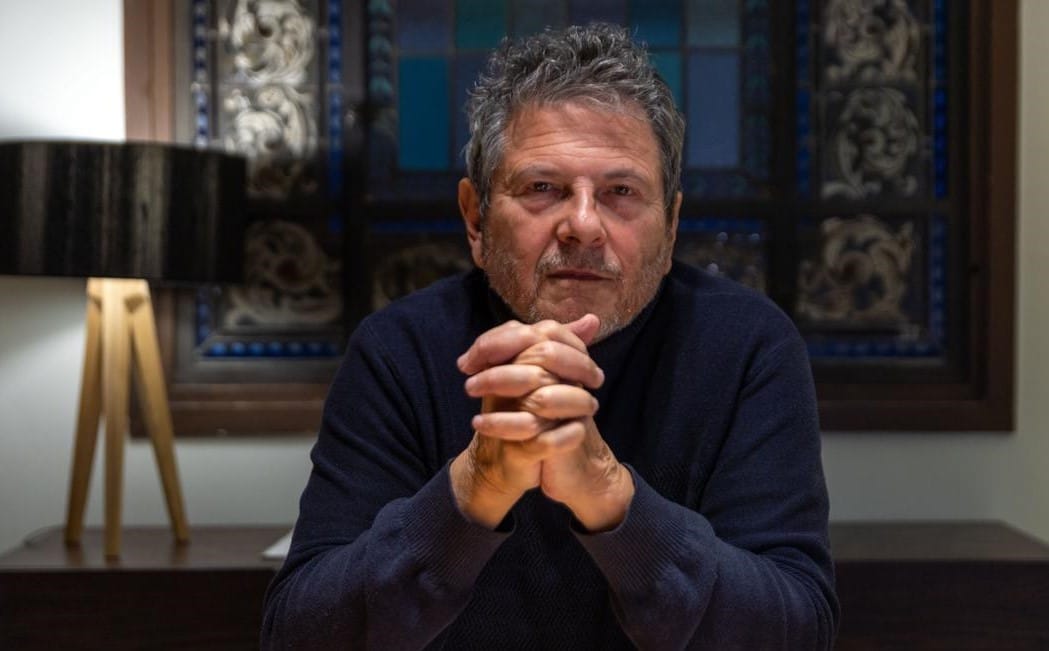
“There’s nothing left that can make Nicaragua’s business climate worse —this is just more of the same, in the sense that there’s no real business climate to speak of,” said economist and former deputy finance minister Juan Sebastián Chamorro, a former political prisoner exiled in February 2023.
The former official described the situation in Nicaragua as one of “total aggression against investors, harassment, fiscal terrorism, and blackmail. This pattern has been in place for years, so it’s not that this will make the business climate deteriorate —it simply can’t get any worse,” he stressed.
“A concession is a contract between the State and private actors, who can be either foreign or national investors,” explained a lawyer in exile who requested anonymity. He added that, whether granting a concession or signing a contract, the State and its counterpart must always establish mechanisms to resolve any conflicts that may arise.
“There should be a clause that specifies how disputes between the parties are to be resolved,” the lawyer emphasized. Options range from the International Centre for Settlement of Investment Disputes (ICSID), part of the World Bank Group, to a court in New York. Another route could be CAFTA, recalled Chamorro, referring to the free trade agreement signed between Central America, the Dominican Republic, and the United States.
The energy sector executive added that beyond the “CAFTA option,” the case could be taken to the World Trade Organization, if the plaintiffs can frame it as a commercial dispute.
Another possibility —given the nationality of two of those affected— is to turn to the dispute settlement mechanisms in the free trade agreement with Mexico. “These mechanisms typically start with the parties attempting to reach an agreement, but if not, they can resort to arbitration, where each side appoints one arbitrator and a third, independent arbitrator joins them,” he explained.
Although it is clear that legal options exist, it is equally clear, sources said, that there is no will on the part of the Nicaraguan State —captured by Ortega and Murillo— to comply with any ruling against them.
“Since Nicaragua has withdrawn from several international forums and rejects any that contradict the sovereignist policies of the dictators, they will most likely disregard any arbitration ruling. They will not honor the [concession contract’s] dispute resolution clauses either,” the lawyer added.
Chamorro recalled that Nicaragua has already seen cases where investors were targeted by the regime, but “in this case, since it involves a natural resource under a very special regime and already declared of public interest, there is nothing to be done. These investors have lost, and even if they seek justice elsewhere, the State will not accept any ruling as binding. We are talking about a rogue state that ignores both international and domestic law. There’s simply nothing to be done,” he insisted.
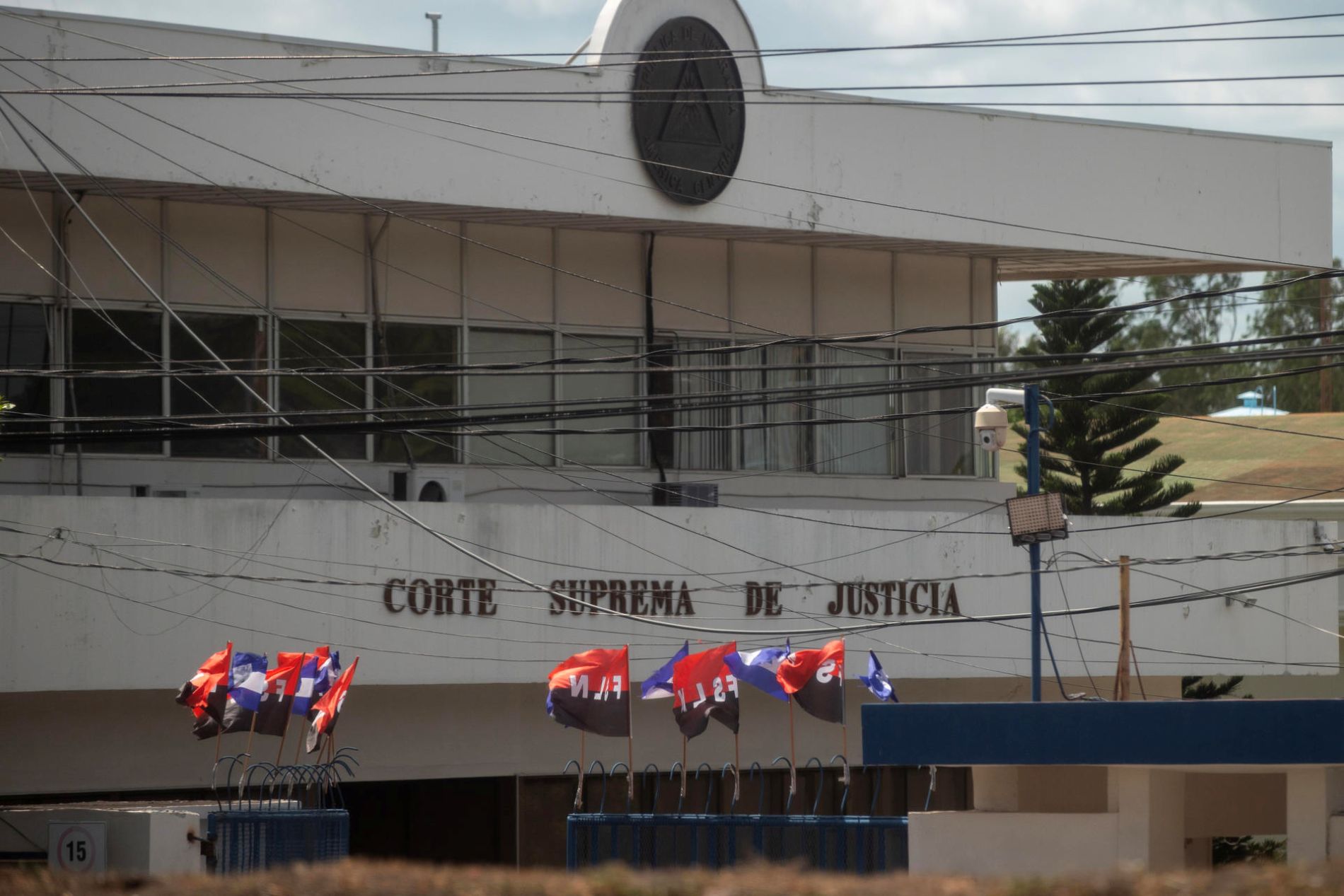
There is also no possibility of filing an appeal in the country. “Who protects the citizens and the companies, if the institutions are collapsed and subdued? In the country there is no longer an independent Judicial Power: what we have is a judicial body subordinated to the co-presidency“, the lawyer pointed out.
While Nicaragua maintained the “agreements and consensus” scheme that gave the organized private sector a privileged position, companies and businesspeople had a safety cushion that allowed them some room to maneuver with the State. Having someone on the board who was close to those in power offered an added layer of security.
Until now.
The confiscation of the Momotombo Geothermal Plant “fits into a broader context of progressive, lethal, toxic contamination of Nicaragua’s investment climate —a succession of events that has poisoned that environment,” noted economist Enrique Sáenz.
“What happened with Momotombo,” explained an international finance and trade expert who also requested anonymity, “is that the concession was granted to foreign citizens, and they were told they needed to find Nicaraguan partners. Any investor would have thought the same as they did: find people with influence in the government, political clout to avoid confiscations,” he said, referring to Baltodano.
The reason that guarantee failed, the expert stressed, is because “things changed, and they changed because the government changed. This is the next stage in the dictators’ script: sowing terror because seduction no longer works”.
Although short-term results may suggest that the ruling co-presidential couple can continue acting this way without consequence, both Chamorro and economist Marco Aurelio Peña warned against such triumphalist euphoria.
The decision to cancel the geothermal concession “shows a clear intent to violate all kinds of rights, and this undermines the State’s own ability to grant concessions,” Chamorro explained. “When the time comes to find an investor interested in a state concession in any sector —not just energy— they will think twice. Ultimately, that destroys investment,” he warned.
Peña argued that the regime is taking “an enormous risk” by relying on force. “There is an opportunity cost here —the resources the country fails to obtain because it is not a democracy. How much investment goes to Panama, Costa Rica, or Guatemala, which do not face the political situation Nicaragua does? That’s the question we should be asking,” he said.
“Living under a dictatorship, an autocracy, carries an economic cost. It carries a very high opportunity cost in terms of attracting foreign direct investment, because the country’s brand is severely damaged,” the economist illustrated. That cost, he added, is further aggravated by the decisions of some governments to recommend that their citizens avoid traveling to Nicaragua.
PUBLICIDAD 3M
PUBLICIDAD 3D

Alertas en tu celular
Suscribite a las alertas informativas de Confidencial en Telegram.

Boletines
Lo mejor de nuestra cobertura noticiosa en tu correo electrónico.

Anuncios
Obtené una propuesta comercial de acuerdo a tus objetivos y presupuesto.

Test Político
Explorá tus ideas sobre nuestra política, economía y sociedad con nuestro Test Político.