AA
Share

 Las noticias del día en tu correo
Recibe lo más destacado de la cobertura de CONFIDENCIAL todos los días.
Más boletines
The best of our coverage, in English
Sign up for our weekly newsletter. We will send it to you every Friday at 10:00 am (Nicaragua time)
More Newsletters
PUBLICIDAD 4D
PUBLICIDAD 5D
A police memorandum tried to silence the 2018 protests. Seven years later, the police state monitors and persecutes under the guise of normality.

Fotoarte: CONFIDENCIAL
Behind the apparent calm on the streets of Nicaragua lies a hidden repressive apparatus of control and fear. Seven years after a police memorandum attempted to silence the April protests, the dictatorship of Daniel Ortega and Rosario Murillo maintains a de facto police state, disguised as peace, well-being, and normality. Their apparatus for surveillance and persecution has forced the population to refrain from discussing topics the government disapproves of, even among relatives and friends. The repression has also systematically extended into legal, social, and even transnational arenas.
In this special report, CONFIDENCIAL documents the chronology of how the de facto police state was built and how it’s maintained in Nicaragua.
The official narrative, as promoted in the pro-government media and in “made-to-order” surveys, portrays a supposed approval rate of 86% for Ortega and Murillo. Meanwhile, any dissent is smeared as “Coup-promotion.” In her daily monologue, Murillo constantly evokes the image of a “blessed” Nicaragua, while sponsoring thousands of cultural and recreational activities every weekend to keep the population distracted within a false calm.
The repression has achieved its main objective: to create a climate of fear and self-censorship. The threat of losing freedom, nationality, or personal property has silenced the vast majority of the population. The dictatorship also manipulates the situation to its advantage, claiming that actions such as banning religious processions are public safety decisions to avoid confrontation, when in fact they are just another act of censorship and control.
After issuing a police order banning protests on September 28, 2018, the regime focused on eliminating any form of collective organization and dissent. Initially, repression took the form of physical violence. The first protest march, two days after the ban, was violently suppressed.
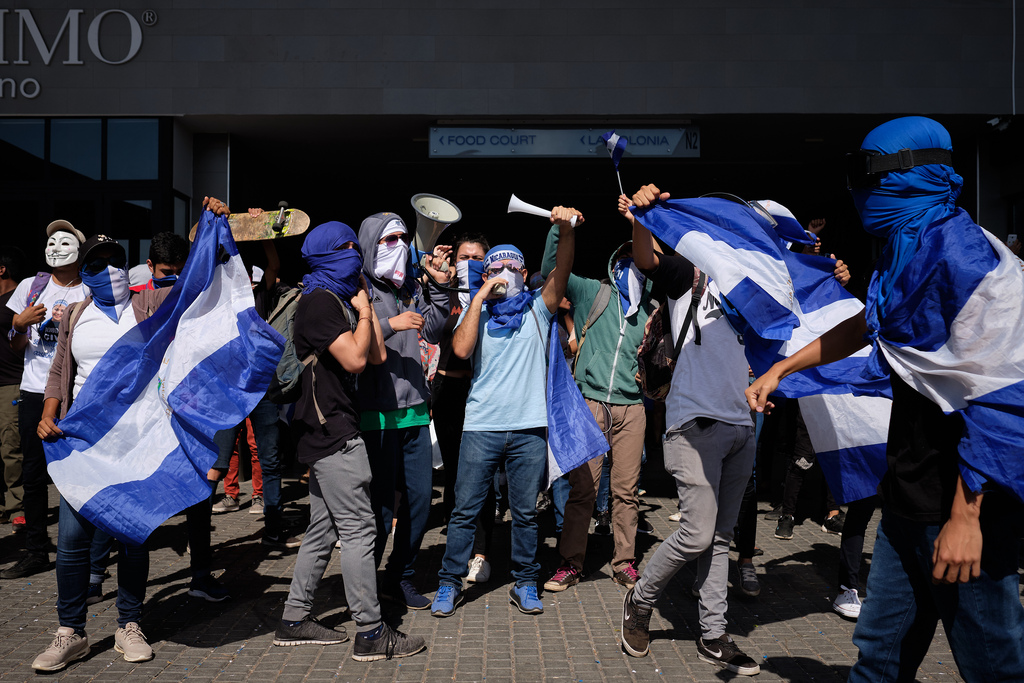
In response, the population organized “flash demonstrations,” “express sit-ins,” and small acts of citizen resistance, such as releasing blue and white balloons or confetti into the streets, putting up stickers, hanging banners, or bringing water to the mothers of political prisoners who staged a hunger strike in a church surrounded by police. But the strategy of repression evolved further, to deter any citizen action.
The regime has not only resorted to violence, but has also systematically dismantled any counterweight to their authority – closing, attacking, confiscating, and censoring non-profit organizations, universities, and independent media outlets.
That onslaught began in November 2018, when the Nicaraguan National Assembly canceled the legal status of the first eleven NGOs. As of today, over 5,600 NGOs have been cancelled, at least 1,300 of them church-affiliated.
The attack was extended to the independent press with the assault and confiscation of CONFIDENCIAL and 100% Noticias in December 2018. The criminalization of journalism continued with over 60 citations and interrogations of journalists and media directors in the Attorney General’s office, which led hundreds to flee the country. Nicaragua’s oldest newspaper, La Prensa, with nearly a century of history behind it, was also assaulted and confiscated in August 2021. Today more than 50 media outlets have been shuttered. Some of them have succeeded in maintaining their work from exile, despite further attempts at censorship, such as cancelling the access of independent media websites to the “.ni’ web domain in March 2025.
The goal of silencing all dissent has also extended to the universities and religious institutions. More than thirty private universities—including the Jesuit-run Central American University (UCA)—have been closed and confiscated. Using them as a springboard, the dictatorship has built a lucrative [higher education] business, while promoting partisan indoctrination. Similarly, the Catholic and Evangelical churches have been attacked, persecuted, and confiscated, and their bishops, priests, and pastors have been imprisoned and exiled.
More about this subject:
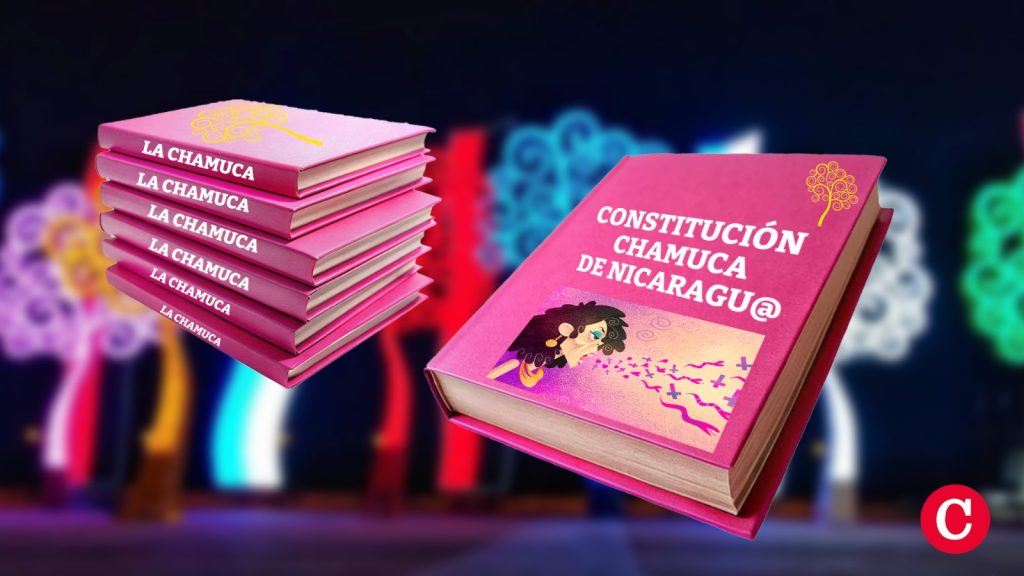
The regime has not only used violence, but also instrumentalized the law to build a state of terror, fabricating a legal framework designed to justify repression and persecution against those it labels “traitors to the homeland.” Its true objective is to nullify all checks and balances, in order to exercise absolute power with complete impunity.
In less than six months, between September 2020 and February 2021, the Sandinista controlled legislature passed a dozen repressive laws that suspended the constitutional freedoms and rights of citizens:
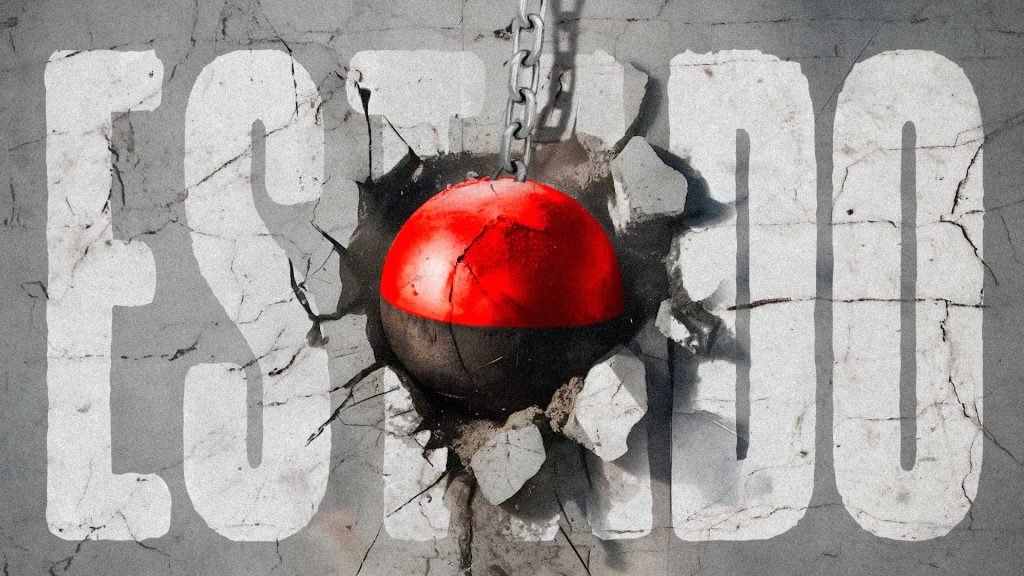
The above laws marked the prelude to Ortega and Murillo’s final assault on the State. The regime has enacted legal reforms to completely reconfigure the justice system and concentrate power in a totalitarian manner.
More about this subject:
The regime’s control is not limited to major laws or institutions; it seeps into the daily lives of citizens, creating a climate of self-censorship and fear. While the majority continue living their normal lives—in silence—for many others, repression is their everyday reality, with constant harassment and surveillance.
Since the ban on marches in September 2018, the police have persecuted citizens for carrying the national flag, raided shopping malls to arrest protesters, harassed mothers for bringing flowers to the graves of their murdered children, and prevented opponents from leaving their homes. Even certain religious processions have been banned since September 2022, eliminating another form of social gathering.
The repression is also often localized, with the aim of silencing any critical voices, whether public figures or ordinary citizens. Among the targets being journalists, doctors, academics, human rights defenders, businesspeople, activists, peasants, bishops and priests, and opposition politicians. The repression has also reached Sandinista militants and past officials of the governing party, and veterans of the anti-Somoza struggle, sending a clear message: criticism will not be tolerated, no matter where it comes from.
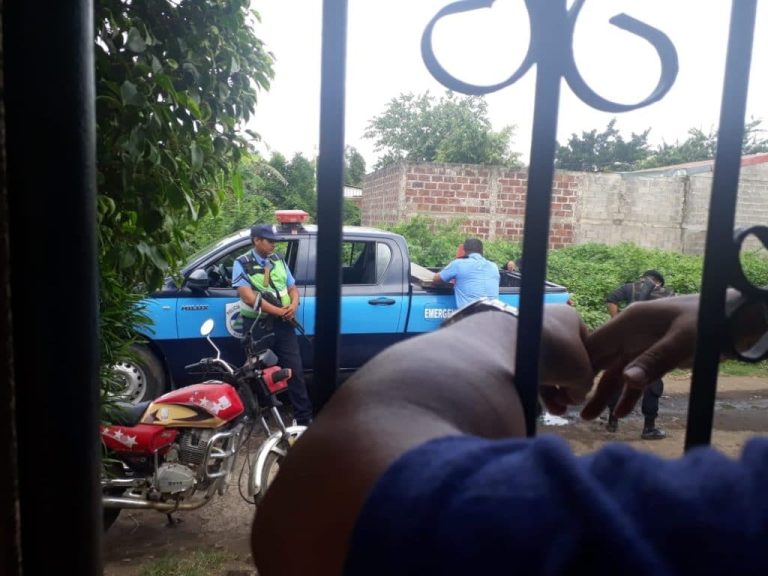
Arbitrary arrests and forced disappearances continue to occur in Nicaragua. Hundreds of families suffer the anguish of not knowing anything about a relative who was taken from their home or workplace one day. They are not even told which prison they are being held in. De facto “house arrest” has also been imposed, without judicial process, on dozens of opposition figures and citizens. Others are obligated to appear for daily check-ins at police stations as a condition for remaining in Nicaragua.
More about this subject:
The Ortega-Murillo regime has extended its repression beyond the borders of Nicaragua, deploying a strategy aimed at harassing, silencing, and punishing dissidence in exile.
A September 2025 report from the Group of Human Rights Experts on Nicaragua (GHREN) identified eight transnational human rights violations committed by the Nicaraguan regime in its attempt to eliminate all forms of opposition.
Control of Nicaragua’s de facto police state rests with the National Police, which has ceased to be a security force and become the regime’s principal repressive armed wing. The institution has concentrated unprecedented power, ensuring total loyalty to the presidential couple.
The growth of the police force has been exponential. Between 2019 and 2021, as the de facto police state consolidated its power, it grew by more than 27% (with 4,000 new officers) and continued to grow.
In just six weeks of early 2025, the dictatorship quintupled the size of its police force, swearing in more than 76,800 hooded men into the “army of Rosario Murillo.” These are not regular members of the police but are dubbed “volunteer police,” bringing to mind the paramilitary groups that suppressed the 2018 protests. This brought the number of police effectives from 20,474 in 2024 to 105,285 in 2025, the highest number in the country’s history.
In February 2025, upon being ratified for a new term as police chief, First Commissioner Francisco Díaz, a relative by marriage of Ortega and Murillo, swore “loyalty and obedience” to the presidential couple, in a clear message that the institution is completely subordinate to political power.
The dictatorship has conferred powers on the police that go beyond public security, turning it into a judicial and economic arm.
In August 2025, the dictatorship expanded to a dual police command, appointing police commissioner Juan Victoriano Ruiz Urvina as “co-chief” of police. Ruiz was previously in charge of the feared Managua main jail, known as El Chipote.
On the streets, the Police are the ones responsible for carrying out the repressive actions that disrupt Nicaraguans’ daily life. It’s the agent of arbitrary arrests and forced disappearances, playing a key role in the persecution of the Church, by harassing priests, bishops and the faithful. The agency has been accused both nationally and internationally as being the chief arm of the repression, assuming a role as central pillar of the regime’s totalitarian control and de facto Police State.
PUBLICIDAD 3M
PUBLICIDAD 3D

Alertas en tu celular
Suscribite a las alertas informativas de Confidencial en Telegram.

Boletines
Lo mejor de nuestra cobertura noticiosa en tu correo electrónico.

Anuncios
Obtené una propuesta comercial de acuerdo a tus objetivos y presupuesto.

Test Político
Explorá tus ideas sobre nuestra política, economía y sociedad con nuestro Test Político.