AA
Share

 Las noticias del día en tu correo
Recibe lo más destacado de la cobertura de CONFIDENCIAL todos los días.
Más boletines
The best of our coverage, in English
Sign up for our weekly newsletter. We will send it to you every Friday at 10:00 am (Nicaragua time)
More Newsletters
PUBLICIDAD 4D
PUBLICIDAD 5D
Nicaragua’s total exports grew 15.4% compared to 2024, with the United States as the primary destination.

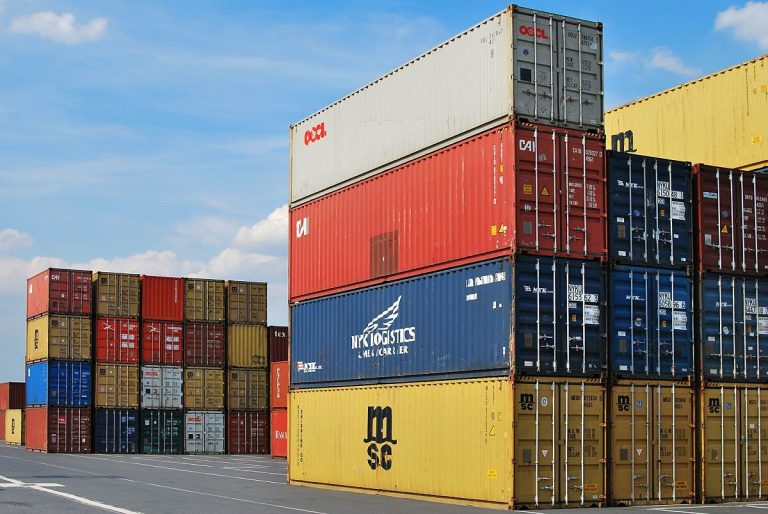
Movimiento de cargamentos en el Puerto de Corinto, principal salida de las exportaciones de Nicaragua. // Foto: Tomada de la EPN
Compared to 2024, total exports grew by USD 1.1917 billion (15.4%), according to the Central Bank of Nicaragua’s Fourth Quarter 2025 Foreign Trade Report. This performance was driven by the relentless rise in the average price of gold — up 41.8% over the year — as well as higher prices for coffee, cattle, and bananas. In terms of volume, the standout products were also coffee and cattle, along with lobster and beef.
Exports brought exactly USD 8.9089 billion into the country, making them Nicaragua’s main source of foreign currency. Remittances, foreign direct investment, international cooperation, and tourism completed the group of external activities supplying foreign exchange to the national economy.
Central Bank data show that most of the growth observed in 2025 came from a 27.1% increase in merchandise exports, equivalent to USD 1.1349 billion, and a 1.6% rise in free-zone exports, totaling USD 56.8 million. The strongest momentum was concentrated in the agricultural sector, which grew 46.1% (an additional USD 406.7 million); followed by the mining sector, up 44.4% (USD 617.6 million); and fishing and aquaculture, which rose 6.7% (USD 11.8 million).
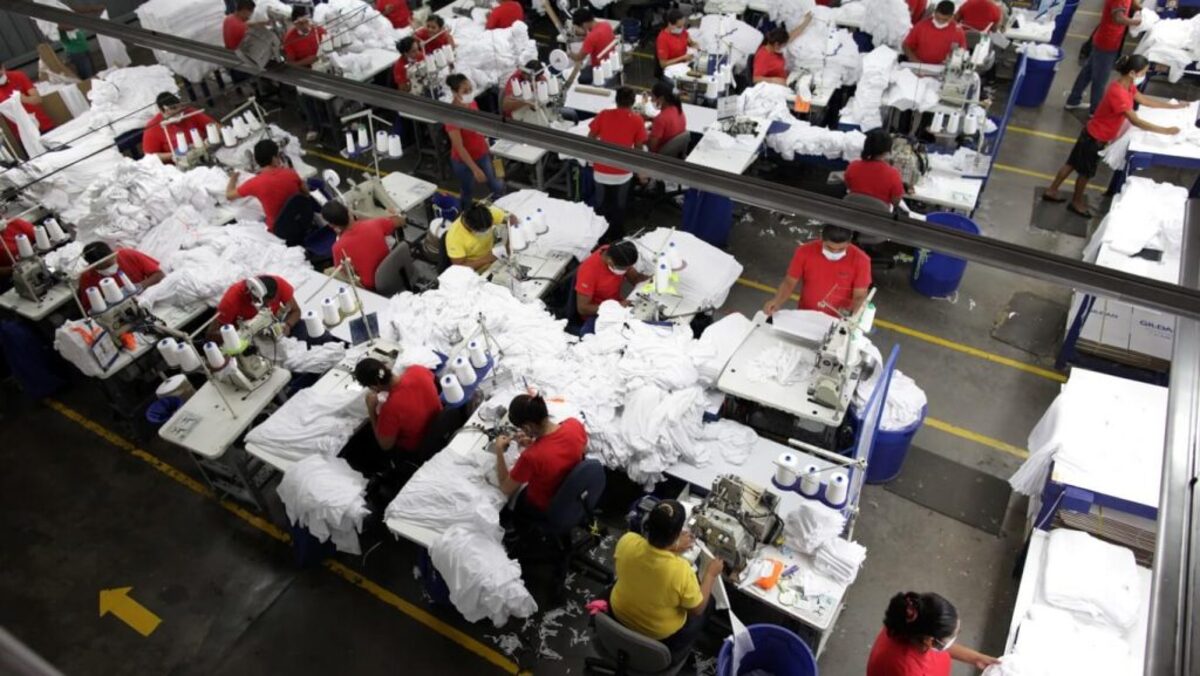
The increase in free-zone exports was driven mainly by higher sales of wire harnesses (USD 115.4 million; 14.4%), tobacco products (USD 9.9 million; 2.3%), and fruits and vegetables (USD 8.4 million; 16.9%), among others. On the other side of the ledger, declines were recorded of USD 24.5 million (−34.4%) in maquila-processed fish products; USD 22.4 million (−31.3%) in palm oil; and USD 21.0 million (−24.1%) in textile products.
In 2020, gold became Nicaragua’s top export, pushing beef sales into second place. Since then, the precious metal has remained firmly in the lead, significantly widening its advantage: the USD 124 million gap recorded in 2020 grew to more than USD 1 billion over both the second-ranked product (beef) and the third (coffee) by 2025.
In any case, this explosive performance is explained more by prices than by volumes. The troy ounce, which averaged USD 1,754.9 in 2020, rose 89.2% to reach USD 3,319.7 in 2025. Over the same period — which includes three years of U.S. sanctions against the sector — the country increased its exports from 379,000 ounces to 593,700, a growth of 56.6%.
Another way to understand gold’s importance is that the additional USD 617 million the country earned in 2025 accounts for 54.36% of the USD 1.1349 billion increase in merchandise exports.
The USD 1.971 billion generated by gold sales exceeded the USD 1.842 billion from the manufacturing sector and the USD 1.2899 billion contributed by the entire agricultural sector.
By definition, and historically, Nicaragua is considered a country with a strong agricultural vocation. And while it is true that the country is largely self-sufficient in producing most of the food it consumes, statistics show that manufactured exports generate more revenue: USD 1.8424 billion versus USD 1.2899 billion.
Beef is the standout product in this group, generating USD 960.8 million in revenue (up 27.1%), with dairy products in second place (USD 236.9 million, essentially unchanged from 2024).
The third product is sugar, which generated USD 165.9 million on the international market — 30.4% less than the previous year. Beverages and rum (USD 65.3 million), tobacco products (USD 47.7 million), and chemical products (USD 30.7 million) round out the group of the most important exports.
Agricultural exports grew 46.1% between 2024 and 2025. Most of that growth was driven by the country’s booming coffee exports, which — despite all the difficulties faced by local producers — recorded a 24.4% increase in volume and a 75.1% rise in sales value.
The other category that showed growth was live cattle (an additional USD 11.2 million), thanks to a combination of much higher export volumes (+230.3%) and a substantial price increase (333.3%). Despite these dramatic gains, the product did not generate large revenues in 2025 because it started from a very small base in 2024.
A similar explanation applies to bananas, whose export value grew nearly 60% in 2025 — from USD 3.1 million in 2024 to USD 4.9 million in 2025.
Foreign-exchange earnings from the rest of the products in this segment were all negative: sesame −28%; peanuts −10.9%; beans −3.1%; and raw tobacco −2.4%.
The fishing sector generated an additional 6.7% in revenue, with increases in lobster and tuna exports and declines in shrimp, fresh fish, and sea cucumber exports.
By destination, the United States remains the main buyer of Nicaraguan exports: USD 2.0257 billion, representing 38% of the country’s total merchandise exports. Canada ranks second with USD 924.4 million, largely due to mining companies shipping more gold there and less to the United States.
Central America as a whole fell to third place with USD 899.4 million, with El Salvador standing out as the main regional destination, purchasing USD 503.3 million worth of goods. European countries — both within and outside the European Union — bought USD 657.7 million in Nicaraguan products. Latin America and the Caribbean (USD 272.9 million) and Asia (USD 249.1 million) are the country’s other major trading partners.
The combined purchases of the regime’s two ideological allies do not even reach USD 87 million. With roughly 1.4 billion potential consumers, China bought just USD 81.1 million worth of products — far less than any of Nicaragua’s Central American neighbors, including Panama (USD 87.8 million). Russia’s purchases totaled only USD 5.7 million, even less than the USD 9.9 million sold to Colombia and the USD 7.2 million exported to Peru.
PUBLICIDAD 3M
PUBLICIDAD 3D