AA
Share

 Las noticias del día en tu correo
Recibe lo más destacado de la cobertura de CONFIDENCIAL todos los días.
Más boletines
The best of our coverage, in English
Sign up for our weekly newsletter. We will send it to you every Friday at 10:00 am (Nicaragua time)
More Newsletters
PUBLICIDAD 4D
PUBLICIDAD 5D
Juan Sebastián Chamorro: “Just when CAFTA has been most beneficial for Nicaragua, it could be abruptly shut down”

Imagen de referencia de exportaciones. Archivo | Confidencial
A week after the U.S. Trade Representative recommended that President Donald Trump suspend Nicaragua’s trade benefits under CAFTA and impose tariffs of up to 100 percent on Nicaraguan exports, following an eleven-month investigation into the Ortega-Murillo dictatorship’s violations of the agreement, the “co-dictators” Daniel Ortega and Rosario Murillo remain silent. Not a single government official, FSLN party member, or regime propagandist has said a word.
Economist Juan Sebastián Chamorro, a leader of the Democratic Coordination of Nicaragua (Monteverde), believes the silence shows that “they are extremely worried and running the numbers, because the United States is Nicaragua’s main trading partner,” and that the possible suspension of CAFTA in practice represents a turning point, a before and after, in Nicaragua’s economic growth.
In an interview on the program Esta Semana, broadcast on CONFIDENCIAL’s YouTube channel due to television censorship in Nicaragua, Chamorro called for an end to the police state to mitigate the impact of U.S. economic sanctions and analyzed the scenarios the country faces in light of a potential suspension of CAFTA or a more radical authoritarian shift with greater alignment toward China and Russia.
The U.S. Trade Representative’s report recommending the suspension of Nicaragua’s CAFTA benefits and the imposition of tariffs of up to 100 percent has caused deep concern in Nicaragua among business leaders, workers, and producers. Yet the government has not acknowledged the issue or offered any reaction. What do you make of this silence? Does the government simply not care if Nicaragua loses these trade advantages?
There are plenty of reasons to be very worried, and unlike the dictatorship’s usual pattern of reacting almost in real time, this deafening silence, which has now lasted several days, shows just how concerned they are. They see that the possibility of Nicaragua being excluded from CAFTA, whether through initial measures or the imposition of 100 percent tariffs, which would amount to the same thing, has them extremely alarmed. They are running the numbers, as everyone else is, and are deeply concerned because the United States is Nicaragua’s main trading partner, which should also worry the regime. They may be comfortable doing business with the Chinese and the Russians, but if this materializes, it will have very serious consequences for the national economy.
In the past, when faced with comparable situations, the regime’s reaction has been to take a leap forward, seeking to strengthen its alliances with China and Russia. Can these allies of the dictatorship offer a real alternative for Nicaraguan exporters?
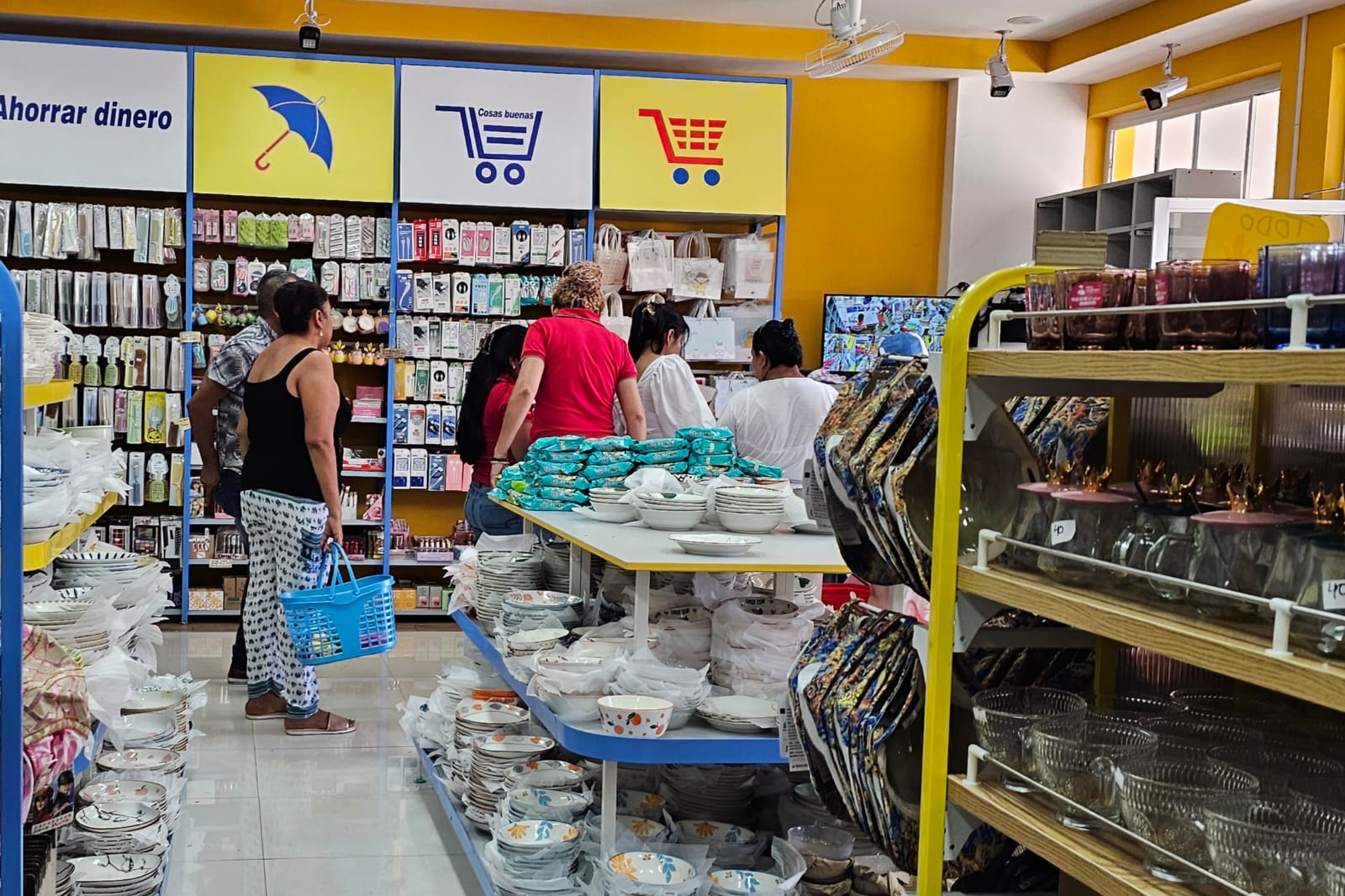
Not at all. Several Ortega officials have been saying for years that China could replace the potential loss of the U.S. market, but the data they themselves present show that this is nowhere near happening. If anything has increased, it’s imports of Chinese goods, which have driven many local businesses into bankruptcy. But exports will not be replaced by China, much less by Iran or Russia, whose economy is even smaller. Nicaragua’s trade ties with the United States go back to the 19th century, and there are deep commercial links between the two economies and with the rest of Central America. The success CAFTA has had since it took effect in 2006 is now precisely the source of Nicaragua’s greatest vulnerability. If a 100 percent tariff had been imposed before CAFTA, Nicaragua was not as exposed to international trade as it is today. The share of exports and imports as part of GDP is extremely high. At the very moment when the treaty has been most successful, it could be abruptly shut down. That is why we are all concerned about the irresponsibility Ortega and Murillo have shown for decades as the main enemies of CAFTA, and the record of their opposition is there in your own media outlet.
Daniel Ortega has consistently described Nicaragua’s main trading partner as the enemy of humanity. This political rhetoric cannot go unnoticed by U.S. authorities, especially now that the Office of the Trade Representative is, by law, required to place its report on the president’s desk. The United States runs a trade deficit with Nicaragua, and even if the deficit is small, that negative number, that red figure, is perceived by this administration as a reason to apply differentiated tariffs, such as the 18 percent already imposed.
What would be the impact of an effective suspension of CAFTA, for example, on job creation and the export sector?
Some estimates point to losses of between 1.2 and 1.5 billion dollars per year. We are working to obtain a more accurate estimate, because the impact should not be seen as automatic. Rather, the economy’s growth trajectory would drop sharply in the first years after the measure takes effect. The magnitude will depend on which of the four possible measures is adopted. If the mildest option is chosen, applying a 100 percent tariff to a single product, that is very different from applying it to 100 percent of Nicaragua’s exports.
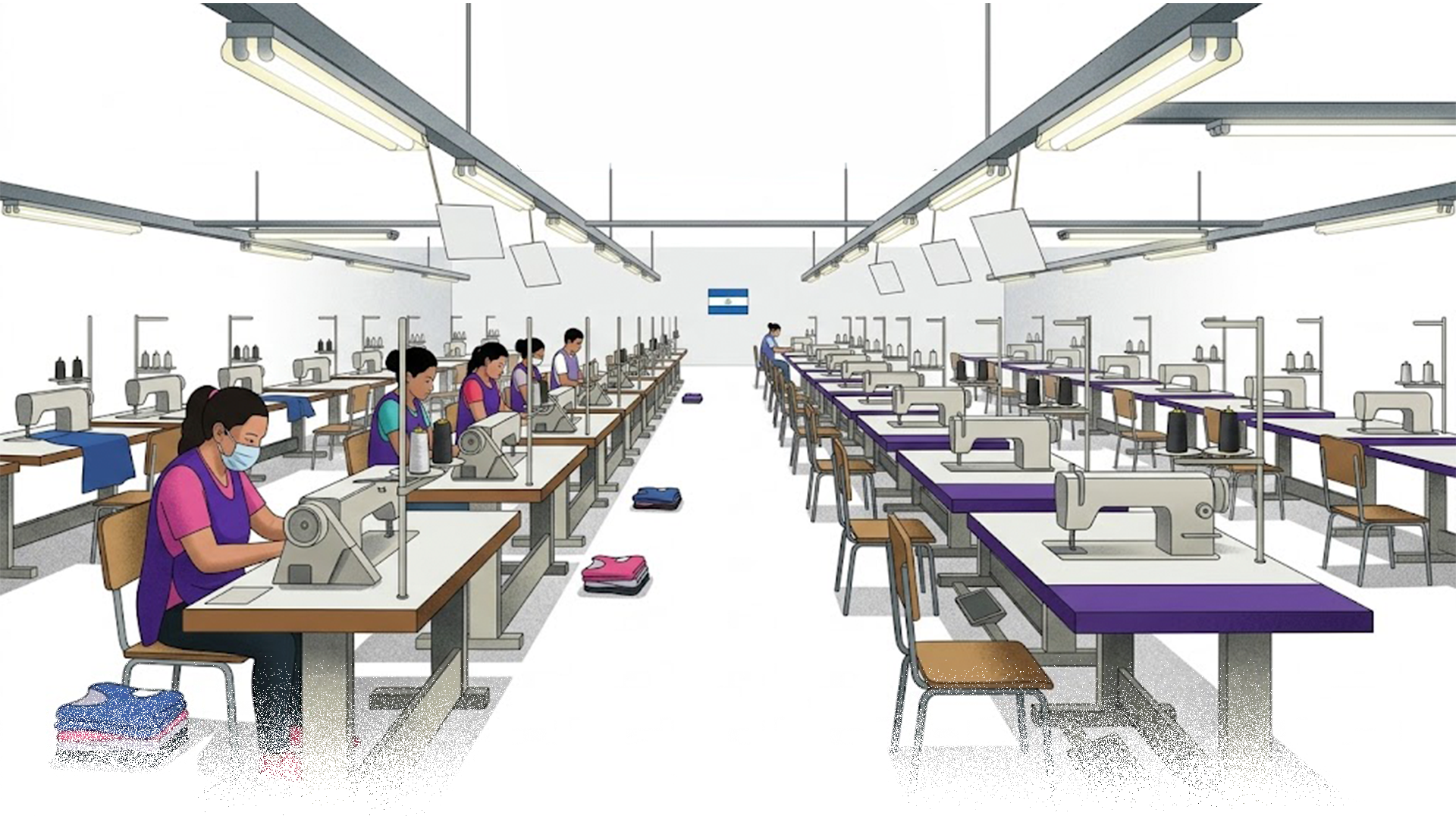
We have four options, and several scenarios could unfold, which is what many economists are analyzing. We cannot specify it yet because the measure has not been signed. The outcome will clearly be negative, as leaving a trade agreement that transformed Nicaragua’s export structure is no small matter. It would be a significant setback that cannot be offset by a distant market. You are not going to send exports from the free trade zones to China, because China is the one producing the T-shirts.

What is the scope of this consultation, in which the opinions of business owners from the tobacco and textile sectors are already being heard, as they advocate for the trade benefits not to be suspended? Could this have any impact on the view of the U.S. Trade Representative’s office, whose considerations on suspending CAFTA are based on Nicaragua’s violations of labor, political, business, and environmental rights?
The tobacco sector, particularly cigar production, which employs a large number of people in Estelí and northern Nicaragua, has been one of the most benefited industries under CAFTA after the free trade zone sector. Currently, cigar exports account for 9% of Nicaragua’s total exports to the United States, representing billions of dollars in sales. Naturally, it is to be expected that these business owners are quite alarmed, because while Nicaragua does produce quality products, it competes with Honduras and the Dominican Republic, and a 100 percent tariff would almost certainly push it out of the market. U.S. law establishes that before executing a measure of this nature, there must be a public consultation process. Naturally, those with economic interests at stake will step forward to defend them. The documentary evidence proving these abuses is indisputable; what the report presents are findings gathered from victims, legal sources, the media, and human rights commissions. I don’t believe this consultation will change the nature of the action to be taken. In the end, the president (Trump) will be presented with very similar options, and I believe he will likely choose the second set of measures, which would mean a 100 percent tariff.
What priority does this policy toward Nicaragua have in the context of Trump’s relations with Latin America, which so far have focused on deportations, trade with Mexico and Canada, and the escalating conflict with Venezuela? Where does Nicaragua fit into that picture?
Ortega has done something quite remarkable, in a negative sense: he has put Nicaragua on the U.S. agenda, when it previously ranked far below other priorities such as Venezuela, Haiti, Cuba, Colombia, and Mexico. Nicaragua is now at that level because, by design, the U.S. Trade Representative must place an executive action proposal on the president’s desk.
Ortega has managed to push this sanction to the highest possible level in a relatively short and unique timeframe. Much of the discussion highlights labor and union issues and investor interests, which will certainly carry significant weight, but human rights and civil liberties are also part of the conversation. This creates an opportunity for the administration to demonstrate that when violations affect trade, the United States will also take action.
The Nicaraguan opposition, organized under the Democratic Coordination Monteverde, has called on the regime to change course. It says the police state must be dismantled and all political guarantees and human rights in Nicaragua must be restored to mitigate the impact of these measures. But the government already rejected such a change of course during the National Dialogue, and even when it had the opportunity in the 2021 elections, which it effectively nullified. Can we expect the government to dismantle its own dictatorship?
I highly doubt it, based on the actions you just mentioned. But as members of the opposition, it is our duty to lament what is happening, which will carry a significant cost for the Nicaraguan people, while also emphasizing that Ortega has the ball in his court. Whether he decides to act or not is up to him, but we already know what the consequences will be. Our position is to ask what can be done in this scenario, and the Trade Representative’s report itself suggests the answer: if freedoms are restored, if exiles are allowed to return safely, and if all these repressive mechanisms are lifted—though I personally don’t believe he will do it—this process will only highlight Ortega’s responsibility in the matter. I also believe it will cause internal divisions within the regime, because there are many people benefiting from the treaty, doing business through it, and who are close to Ortega. Many of these businesspeople, both corrupt and not just those closest to the dictator, will start saying, “This ship is heading off a cliff.” Within the ranks of the Sandinista business elite, which has consolidated itself through this corrupt system, that will generate division—something to keep an eye on, because it could also lead to political consequences when the time for a political transition comes.
What would be the consequences of further radicalization by the regime or an attempt to strengthen its alliances with China and Russia even more?
The dictatorship is already murdering opponents in Costa Rica, such as in the case of Roberto (Samcam), and engaging in transnational persecution. It has aligned itself with the worst actors in the international order. It can always become more radical, but that is precisely the point: this radicalization explains the severe and drastic response of suspending Nicaragua from the trade agreement. This trade treaty is a privileged condition that no other country enjoys, and within CAFTA, Nicaragua was given special terms compared to the rest of Central America. So it’s inconsistent. From a U.S. perspective, the question becomes: why should I grant such special treatment to someone who calls me “the enemy of humanity,” who hosts Russian intelligence bases two hours from Miami, who cultivates Chinese interests, who visited the Iranian president a few years ago, whose Revolutionary Guard apparently has a presence in Nicaragua, and who declares itself part of a “brotherhood of revolutions”? How can you justify such a close trade policy with someone so politically distant?
Will the opposition as a movement make a statement in this consultation? Will they submit a proposal?
Yes, this is a public process that any Nicaraguan—or any person who feels affected as a victim—can participate in through this portal. Certainly, the argument we as opposition members will present is that this situation has reached this point because of what Ortega has done, due to abuses of all kinds and violations of all rights, and to explore how to resolve the situation. We will say: perhaps this severe shock will make the dictatorship reconsider and remove some of the repressive elements it has in place. Personally, I don’t believe they will do it, but as opposition members, it is our responsibility to link this to pressure for reform, including the elimination of that constitution, which is widely referenced in the report.
PUBLICIDAD 3M
PUBLICIDAD 3D

Alertas en tu celular
Suscribite a las alertas informativas de Confidencial en Telegram.

Boletines
Lo mejor de nuestra cobertura noticiosa en tu correo electrónico.

Anuncios
Obtené una propuesta comercial de acuerdo a tus objetivos y presupuesto.

Test Político
Explorá tus ideas sobre nuestra política, economía y sociedad con nuestro Test Político.