AA
Share

 Las noticias del día en tu correo
Recibe lo más destacado de la cobertura de CONFIDENCIAL todos los días.
Más boletines
The best of our coverage, in English
Sign up for our weekly newsletter. We will send it to you every Friday at 10:00 am (Nicaragua time)
More Newsletters
PUBLICIDAD 4D
PUBLICIDAD 5D
The Indigenous leader served as a political adversary, negotiator, ally, and intermediary between Indigenous peoples and the Sandinista Front

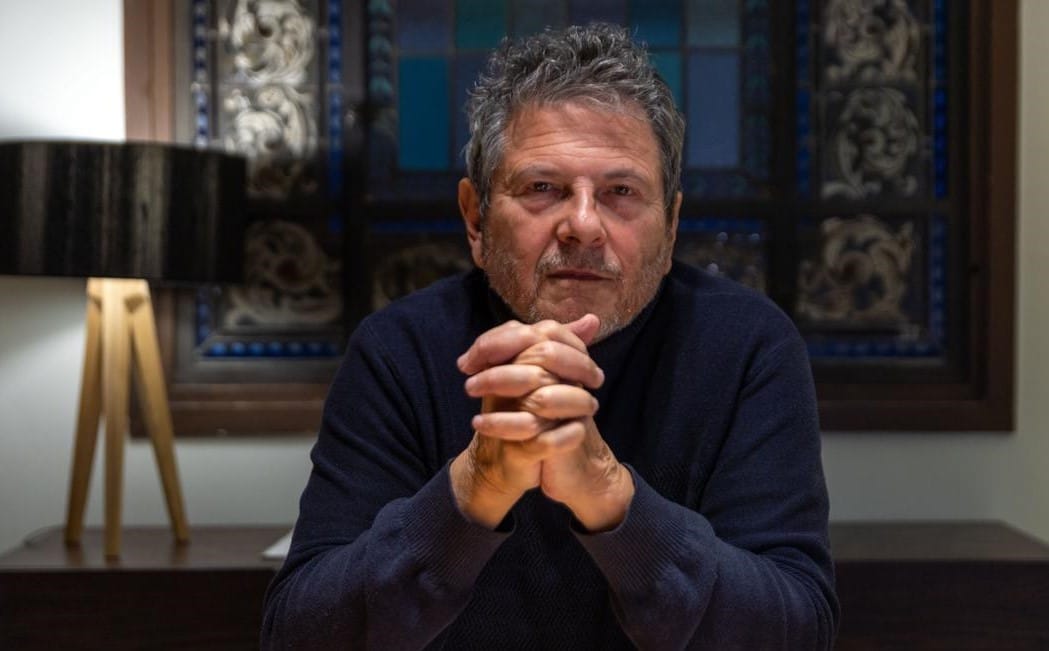
Brooklyn Rivera, líder indígena miskito fundador de Yatama. //Fotoarte: Confidencial.
Brooklyn Rivera Bryan was one of the most significant Indigenous leaders in Nicaragua’s contemporary history. He was a political adversary, negotiator, ally, and interlocutor for Indigenous peoples with the regime of Daniel Ortega. The same regime stripped him of his seat in the National Assembly on two occasions, effectively banished him from his homeland, and imprisoned him until his final days.
Taupla Brooklyn, as he was known in Miskitu Indigenous communities, died on May 30, 2026, at the age of 73, while in the custody of the Ortega-Murillo regime, which illegally detained him through deception on September 29, 2023. Rivera was one of the founders of Yapti Tasba Masraka Nanih Aslatakanka (Yatama, meaning “Children of Mother Earth” in the Miskitu language), an Indigenous movement that later became a political party.
A native of the Miskitu community of Lidaukra on Nicaragua’s North Caribbean Coast, Rivera emerged as a social leader in the 1980s. He served as Minister for the Development of the Autonomous Regions in the 1990s, was a prominent social leader in the 2000s, and represented the North Caribbean Coast in the National Assembly beginning in 2007. Above all, he was a leader who devoted more than five decades of his life to defending the rights of Indigenous and Afro-descendant peoples.
This is an account of the times Brooklyn Rivera allied with—and confronted—the Sandinista Front.
During Daniel Ortega’s first government in the 1980s, Miskitu leaders were persecuted and branded as “counterrevolutionaries.” Rivera was one of them. He was arrested in 1981 and released a year later for leading Misurasata (Miskito Sumo Rama Sandinista Asla Takanka).
Under Rivera’s leadership, Misurasata clashed with the revolutionary government and filed the first formal complaint documenting human rights violations committed against the Miskitu Indigenous peoples by the Nicaraguan government between December 1981 and January 1982. The events—which included the massacre and forced displacement of thousands of Indigenous people, including women and children—became known in Nicaragua as Red Christmas.
In 1985, Rivera signed a peace agreement with the Sandinistas in exchange for the autonomy of the Caribbean Coast being incorporated into Nicaragua’s Constitution. Regional autonomy was formally included in the Constitution in 1987.
Years later, he participated in the Sapoá peace negotiations and in the disarmament process of the Contra forces during the 1990s.
During the 2006 election campaign, Yatama, under Rivera’s leadership, joined the United Nicaragua Triumphs alliance, which the FSLN organized as part of its effort to return to power in the following year’s elections.
As part of that alliance, the FSLN committed to advancing the process of granting legal title to Indigenous and Afro-descendant territories and resolving land disputes within them, a longstanding demand of the movement led by Rivera.
Backed by that alliance and supported by the Indigenous peoples of Nicaragua’s Caribbean Coast, Rivera won a seat in the National Assembly in 2007, where he served as a negotiator, ally, and intermediary between Indigenous peoples and the FSLN.
Following the 2014 regional elections, Rivera distanced himself from the FSLN and denounced what he described as “blatant fraud” committed by the ruling party. He presented evidence and filed appeals that were ignored by Roberto Rivas, then president of the Supreme Electoral Council (CSE).
In a 2014 interview with the television program Esta Semana, Rivera alleged that the Sandinista Front distributed voter ID cards and paid cash to teenagers in order to inflate the vote count. He also said that Yatama supporters were subjected to the tactic known as el ratón loco (“the crazy mouse”), in which voters were deliberately directed to the wrong polling stations.
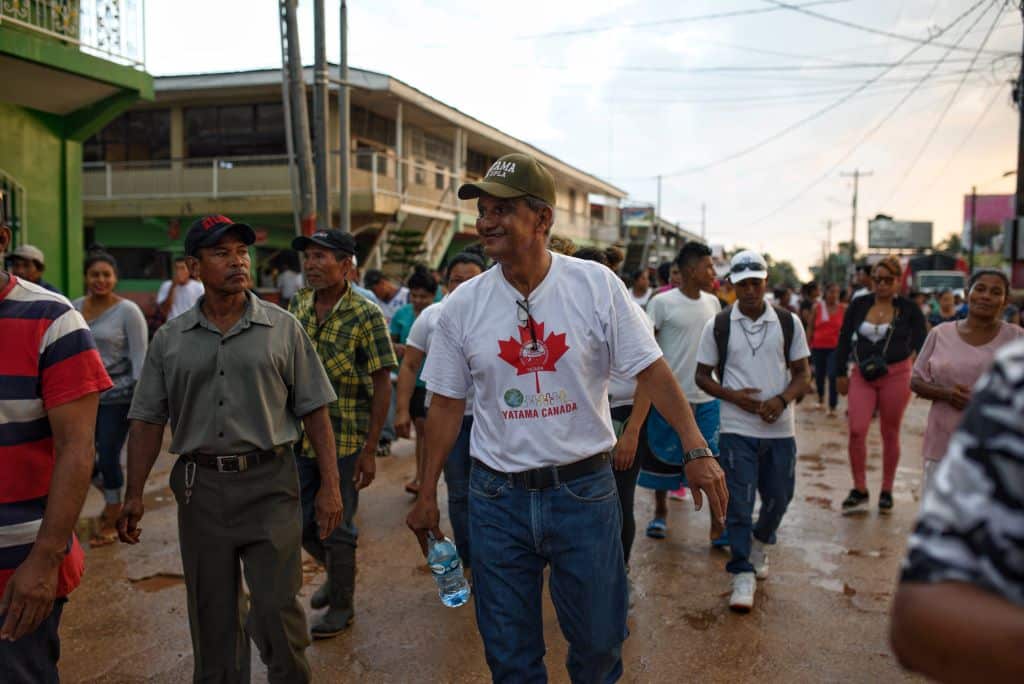
In that same interview, Rivera explained that the Yatama-FSLN alliance began to unravel in 2012, when the Sandinista Front started acting “unilaterally.” He attributed the split to Yatama’s demands that the government fulfill its commitments to demarcate, title, and secure Indigenous lands.
The issue had become “very uncomfortable for government authorities,” he said.
The government’s failure to fulfill its promise to secure Indigenous territories was compounded in 2013 by the passage of the law creating the proposed interoceanic canal. The megaproject was approved without consultation with Indigenous peoples, despite the fact that it would pass through their ancestral lands. The move further deepened the rupture between Rivera and the FSLN.
“When we insisted that Indigenous territories not be expropriated under that legal framework, we also insisted that the population be consulted, and they refused,” Rivera said.
One year after Rivera formally broke with the FSLN, Sandinista caucus leader Edwin Castro promoted proceedings to strip him of his parliamentary immunity and accused him of using his influence to facilitate the illegal sale of land on Nicaragua’s Caribbean Coast. Rivera lost his seat through a vote by the ruling party bloc on September 22, 2015, but it would not be the last time.
The Indigenous leader dismissed Castro’s allegations as a “political setup” designed to remove him from his seat in the National Assembly. “I was never given copies of the report or the evidence,” said the leader of the Indigenous party Yatama. The accusations also sought to undermine his standing within his community and weaken his longstanding struggle for Indigenous land rights.
Rivera argued that the FSLN was making a mistake by removing him from office. “They are mistaken,” he said. “They think that by taking away my seat in the National Assembly they can clip my wings. But before I was a legislator, I was a leader, and we will continue fighting for our lands.”
After being stripped of his seat in the National Assembly in 2015 and accused by lawmaker Edwin Castro of using his influence to facilitate the illegal sale of Indigenous lands, Rivera fired back by accusing several Sandinista leaders of being responsible for trafficking Indigenous territories, which under Nicaraguan law cannot be transferred to third parties.
“The regional and national authorities, the Police, the Army, and the regional councils in the Mining Triangle are involved in the sale of Indigenous lands,” Rivera said on the television program Esta Semana. He identified Waldo Müller, a Sandinista council member, as the largest trafficker of Indigenous territories, alleging that he operated under the protection of Carlos Alemán Cunningham, secretary of the Regional Council of the North Caribbean Coast Autonomous Region (RACCN).
In that same interview, Rivera said that “the Sandinista Front knows about it, and so does everyone involved.” He stressed that the illegal sale of Indigenous territories on Nicaragua’s Caribbean Coast was nothing new and argued that Castro was targeting him because they were “looking for scapegoats.” He challenged his accusers, saying: “Let them prove a single case against me.”
“I’ve spent 35 years fighting for Indigenous lands, and I don’t even own a plot of land for my own burial,” Rivera added. “The problem is that the government acts however it pleases in an authoritarian manner.”
Rivera fulfilled his promise to “continue the struggle” in 2016, when he was once again elected to the National Assembly as Yatama’s representative. Running without an alliance with any political party and facing the same party that had removed him from office, Rivera returned to the Assembly through the front door. His election under the Yatama banner demonstrated the strength of his leadership in the Caribbean Coast communities.
In 2018, during the social uprising known as the April Rebellion, he joined the mass protests against the Ortega-Murillo regime. Two years later, he became part of the National Coalition, an effort to unite Nicaragua’s opposition forces.
Rivera’s time in the National Coalition was brief. Five months after announcing his participation, he was expelled for voting alongside the Sandinista Front in favor of the reelection of Lumberto Campbell as a magistrate of the Supreme Electoral Council. Rivera cited longstanding personal and political ties to justify his vote, although he maintained that Yatama had proposed human rights advocate Anexa Alfred for the position.
Following the expulsion of its leader, the Indigenous party withdrew from the opposition bloc and accused it of “intolerance, discrimination, and contempt” toward the Indigenous peoples of Nicaragua’s Caribbean Coast.
Speaking to Voice of America, Rivera acknowledged that he had voted for Campbell—who also served as the FSLN’s political secretary on the Caribbean Coast—because “we are friends.” He downplayed the fact that his vote broke with the opposition alliance of which he was a member. “I did it because he had already been elected with Sandinista votes; my vote was simply one more,” he argued.
No Posts Found
In March 2023, Rivera was effectively exiled after participating in the United Nations Permanent Forum on Indigenous Issues. The regime prevented him from returning to the country, but he re-entered Nicaragua in April 2023 through unofficial crossing points in the Moskitia region and moved between safe houses.
In a video released months later, the Indigenous leader explained that his departure from Nicaragua had been authorized by the regime and that he had even formally designated his alternate in the National Assembly, lawmaker Nancy Elizabeth Henríquez, to serve in his place. But when he attempted to board a flight back to Nicaragua, he learned that “there was an order barring my entry into the country.”
Rivera refused to remain in exile. He traveled to Honduras and re-entered Nicaragua through unofficial routes. “I am here, accepting a certain level of risk out of love for my land, my communities, my people, and my countrymen,” the Indigenous leader said in what would become his final public video.
Brooklyn Rivera was arrested on September 29, 2023, at approximately 8:30 a.m. at his home in Bilwi, the capital of Nicaragua’s North Caribbean Coast region. From that day forward, no member of his family saw him again.
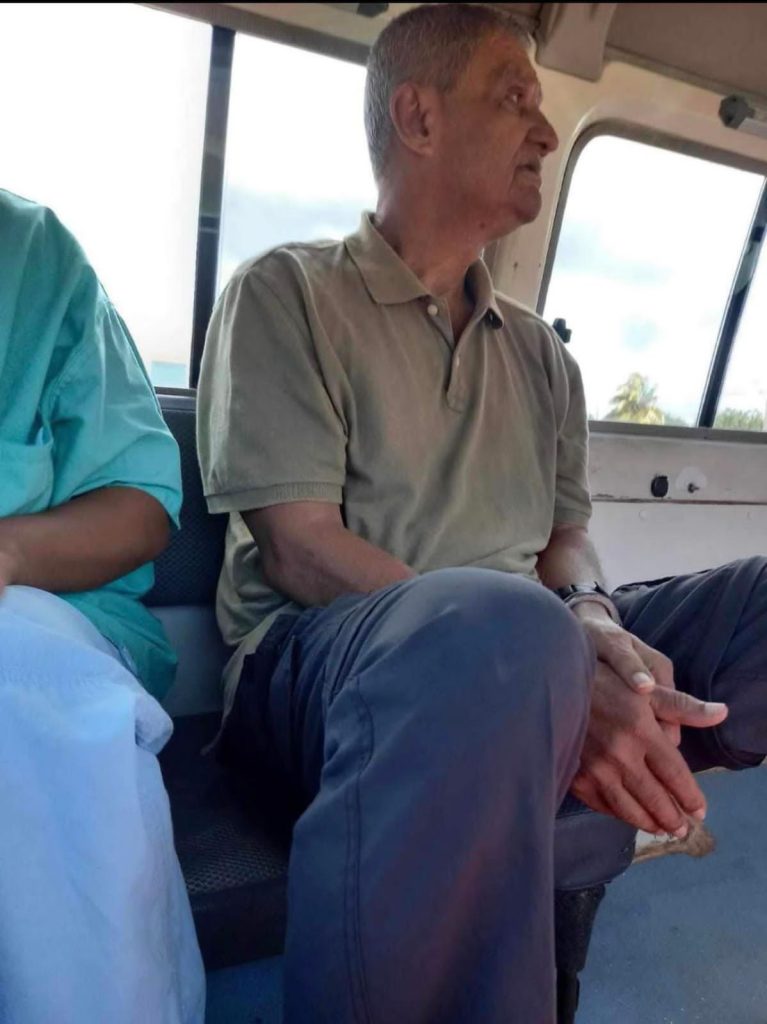
For more than a year, the regime denied that the Indigenous leader had been arrested. It was not until November 2024, during Nicaragua’s Universal Periodic Review before the United Nations and amid pressure from the delegations of Brazil, Norway, Canada, and other states, that the Ortega-Murillo regime acknowledged his detention.
The regime accused Rivera of treason, conspiracy, and undermining national integrity. However, it never filed formal charges, no public trial was held, and he was never allowed visits from family members. As a result, human rights organizations consider that he was subjected to enforced disappearance.
While Brooklyn Rivera remained forcibly disappeared, the Sandinista Front took control of his seat in the National Assembly. On October 13, 2023, the seat was assigned to Sandinista alternate lawmaker Ana Valeria Rafael Alfred.
The takeover of Rivera’s seat occurred even though no criminal proceedings had been initiated against the Yatama legislator and without following the parliamentary process required to remove him from office. Moreover, Rafael Alfred had originally served as the alternate for South Caribbean Coast lawmaker Antenor Urbina of the FSLN.
Rivera’s alternate, Nancy Elizabeth Henríquez, was also detained by the regime days after his arrest for demanding his release. Yatama’s legal status as a political party was later revoked as well.
Despite repeated requests for proof that Rivera was alive from his family and the international community, the Ortega-Murillo regime concealed the severity of his condition.
The regime broke its silence about the condition of the Indigenous leader and political prisoner on May 27, 2026, through an alarming statement revealing the irreversible deterioration of his health after nearly three years of enforced disappearance.
It also released photographs showing the Indigenous leader in agony in a hospital bed, connected to mechanical ventilation through a tracheostomy and receiving intravenous nutrition.
Taupla Brooklyn, a leading figure in the struggle of Nicaragua’s Indigenous peoples, died virtually alone, without the presence of his family, after more than 970 days of illegal detention. The regime concealed the Indigenous leader’s death for more than fifteen hours and kept his body under police custody. Even in death, Brooklyn Rivera remained a prisoner.
The same regime that stripped him of his seat, effectively exiled him, imprisoned him, and ultimately caused his death also denied him his final wish: to be buried beside his mother, Pulcida, in Lidaukra, a Miskitu Indigenous community in Sandy Bay, within the municipality of Bilwi on Nicaragua’s North Caribbean Coast.
PUBLICIDAD 3M
PUBLICIDAD 3D

Alertas en tu celular
Suscribite a las alertas informativas de Confidencial en Telegram.

Boletines
Lo mejor de nuestra cobertura noticiosa en tu correo electrónico.

Anuncios
Obtené una propuesta comercial de acuerdo a tus objetivos y presupuesto.

Test Político
Explorá tus ideas sobre nuestra política, economía y sociedad con nuestro Test Político.