AA
Share

 Las noticias del día en tu correo
Recibe lo más destacado de la cobertura de CONFIDENCIAL todos los días.
Más boletines
The best of our coverage, in English
Sign up for our weekly newsletter. We will send it to you every Friday at 10:00 am (Nicaragua time)
More Newsletters
PUBLICIDAD 4D
PUBLICIDAD 5D
New constitutional reform adds to others that eliminated the requirements to obtain Nicaraguan nationality by birth.

Los dictadores Daniel Ortega y Rosario Murillo asisten a un acto oficial en la Plaza de la Fe en Managua, el 30 de abril de 2025. // Foto: CCC
In less than six months, the regime of Daniel Ortega and Rosario Murillo has reformed Nicaragua’s Constitution to strip more people of their Nicaraguan nationality and block mechanisms for claiming it, affecting even newborns.
On Friday, May 16, 2025, the National Assembly, under Ortega and Murillo’s orders, approved a partial constitutional reform establishing that Nicaraguans by birth “will lose their nationality upon acquiring another nationality.”
Lawmakers amended Articles 23 and 25 of the Constitution, which had been the only ones left untouched during a recent sweeping constitutional overhaul that the regime misleadingly presented as “partial.”
The new version of Article 25 now states that “Nicaraguan nationality shall be lost at the moment of acquiring another nationality”.
The revised Article 23 adds that “foreigners may become naturalized citizens after renouncing their original nationality,” while “Central Americans by origin who reside in Nicaragua have the right to Nicaraguan nationality without renouncing their own.”
The reform eliminates the clause that previously read: “In cases of dual nationality, matters shall proceed in accordance with treaties and the principle of reciprocity.”
In what’s now being called the “Chamuca Constitution”—approved in its second legislative session in February 2025—the regime cut the number of articles in Title III, Chapter One (on “Nicaraguan nationality”), from eight to four. The reform drastically simplified and condensed the rules surrounding nationality, removing important provisions.
One change that even affects the children of Nicaraguans is the complete overhaul of Article 16, which eliminated the detailed list of who is considered Nicaraguan by birth. Now, that definition is left up to a future law that has not yet been passed.
The original Article 16 stated that the following are considered Nicaraguan nationals:
Meanwhile, Article 22 of the reformed Constitution states: “Nicaraguans are either nationals or naturalized citizens. The conditions and requirements will be established by relevant law.” But as of May 2025, no such law has been enacted.
The new Constitution also eliminated the following articles of the previous Constitution:
Since February 2023, the Ortega-Murillo regime has stripped more than 450 citizens—mostly government critics—of their Nicaraguan nationality, accusing them of being “traitors to the homeland.”
This figure includes the 222 political prisoners exiled in February 2023, around 94 citizens who were denationalized later that year, and 135 prisoners of conscience released and expelled to Guatemala on September 5, 2024.
In the reformed Constitution, the regime added Article 24, which states: “Traitors to the homeland lose Nicaraguan nationality.”
The acting deputy director of the Americas division of Human Rights Watch (HRW), Juan Pappier, said in an interview with CONFIDENCIAL and Esta Semana in February 2024: “We can’t normalize” Ortega and Murillo expelling people “as if Nicaragua were their private estate,” referring to the regime’s “blatant and obvious” violation of Nicaragua’s international obligations regarding statelessness.
He added: “We must take steps to prevent the Ortega-Murillo regime from continuing these actions against other critics and opponents.”
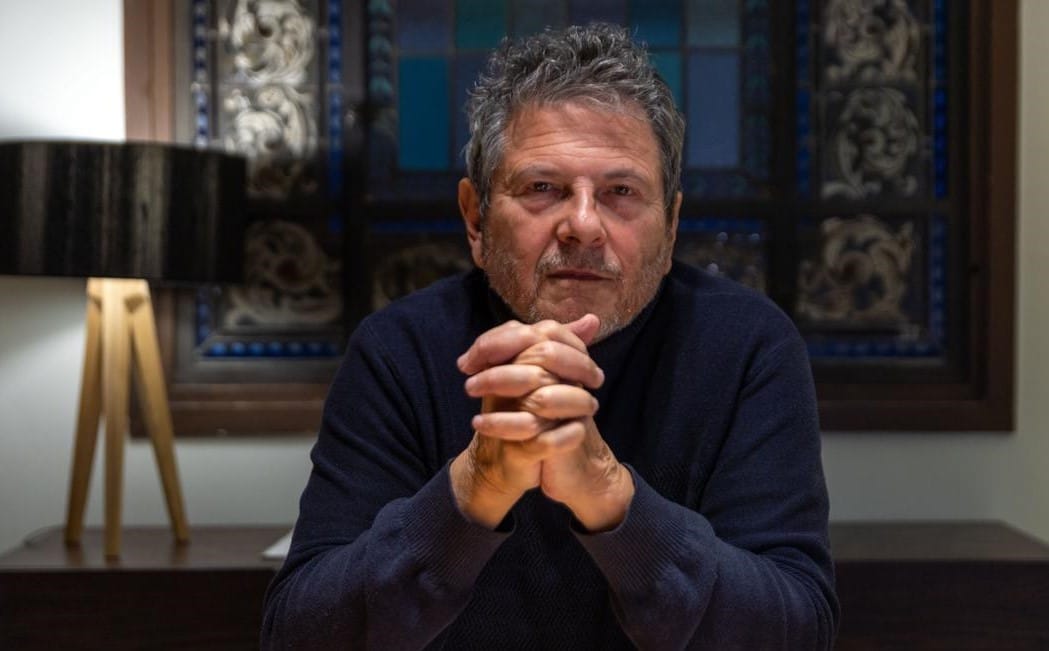
In March 2025, in another interview, jurist Reed Brody, a member of the UN Group of Experts on Human Rights in Nicaragua (GHREN), nicknamed the “dictator hunter”, also criticized the regime, stating: “Nowhere else in the world is nationality arbitrarily stripped away for political reasons like in Nicaragua.”
“There are countries where more people have been killed. There are countries where torture is more common. But sadly, Nicaragua is becoming a full-blown dictatorship—no dissenting voices, no NGOs, no independent press. The outlook is very bleak,” Brody lamented.
PUBLICIDAD 3M
PUBLICIDAD 3D

Alertas en tu celular
Suscribite a las alertas informativas de Confidencial en Telegram.

Boletines
Lo mejor de nuestra cobertura noticiosa en tu correo electrónico.

Anuncios
Obtené una propuesta comercial de acuerdo a tus objetivos y presupuesto.

Test Político
Explorá tus ideas sobre nuestra política, economía y sociedad con nuestro Test Político.