AA
Share

 Las noticias del día en tu correo
Recibe lo más destacado de la cobertura de CONFIDENCIAL todos los días.
Más boletines
The best of our coverage, in English
Sign up for our weekly newsletter. We will send it to you every Friday at 10:00 am (Nicaragua time)
More Newsletters
PUBLICIDAD 4D
PUBLICIDAD 5D
The regime did not return the Indigenous leader’s body to his family for burial in Sandy Bay, in accordance with his wishes and his people’s traditions
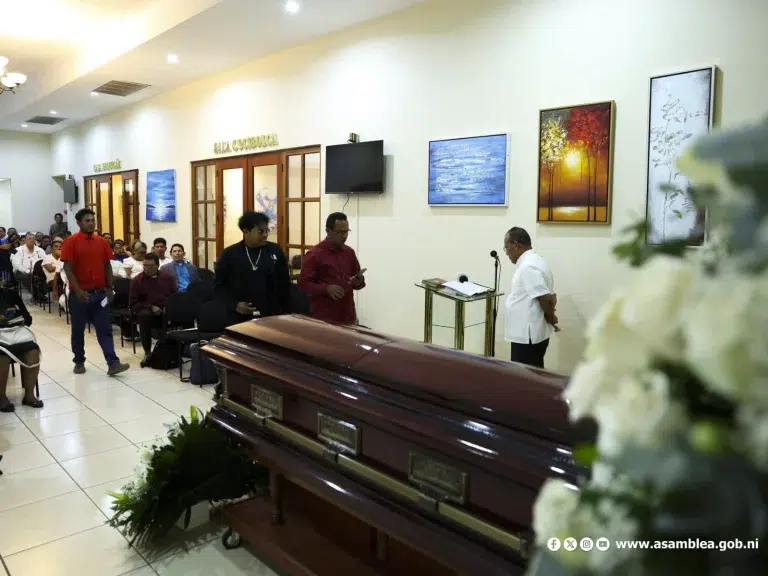
Honras fúnebres del líder indígena Brooklyn Rivera, el 31 de mayo de 2026, en Managua. //Foto: Asamblea Nacional
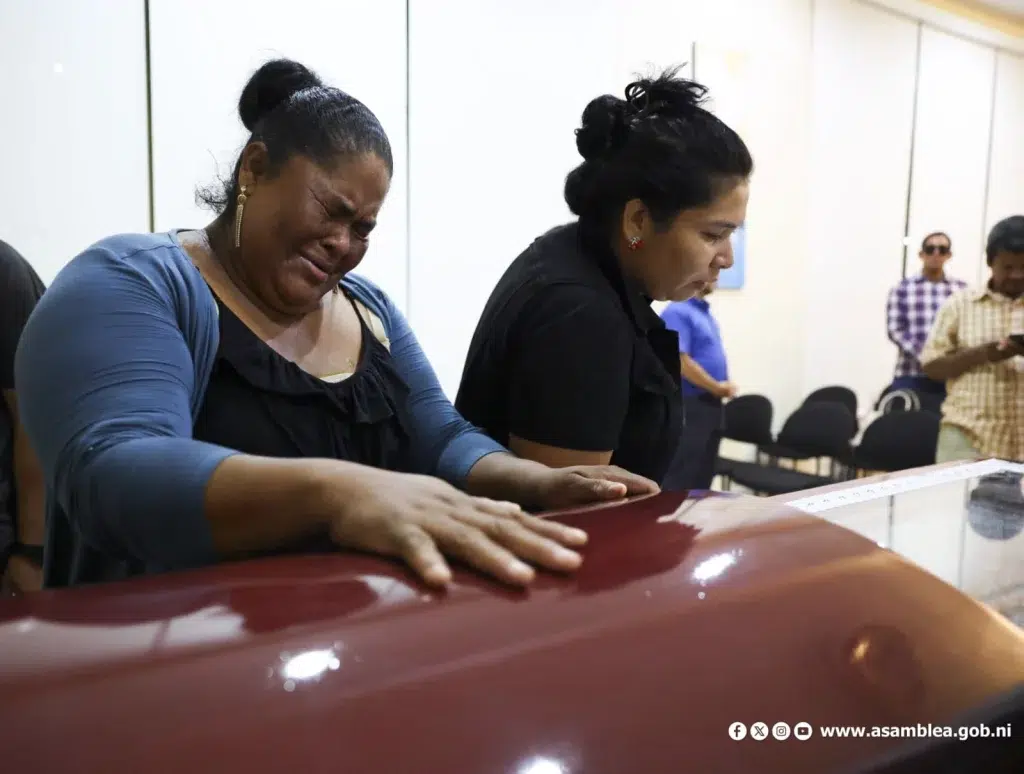
The Ortega-Murillo regime orchestrated funeral services for Miskitu leader Brooklyn Rivera at the Sierras de Paz funeral home in Managua, disregarding his daughter Tininiska Rivera’s request that his body be returned to the family so he could be buried in Sandy Bay, in accordance with the Indigenous leader’s wishes.
Among those attending Rivera’s funeral were several members of the National Assembly, representatives of the Sandinista National Liberation Front, and members of the Moravian Church in Managua.
Sources linked to the Ministry of Health (Minsa) told CONFIDENCIAL that the Indigenous leader was buried in Managua on orders from co-president Rosario Murillo.
Rivera, 73, died on May 30, 2026, at 8:30 p.m., after more than 970 days of illegal detention. The regime confirmed his death a day later and kept his body under police custody.
Tininiska Rivera, daughter of the late Indigenous leader, asked regime authorities to allow the family to receive her father’s body and bid him farewell in accordance with the traditions of their people. She received no response.
“My father was stripped of his freedom; let us not allow them to also deprive his family of the right to say goodbye in accordance with his wishes, his beliefs, and his legacy,” the daughter of the Miskitu leader wrote from exile in a public letter.
In her statement, Tininiska Rivera expressed her “deep sorrow and concern” over the circumstances surrounding the Indigenous leader’s death. She denounced the fact that for months her family had been denied direct information about his condition and was unable to see him, speak with him, or be by his side.
The Indigenous leader’s daughter also called on the international community, human rights organizations, churches, Indigenous peoples, and the diplomatic corps to help guarantee her safe entry into Nicaragua and her full participation in the funeral proceedings.
“As his daughter, I wish to fulfill the promise I made to him during his lifetime: to give him the farewell he deserves and allow him to rest alongside his people,” she said.
Rivera recalled that her father dedicated his life to defending the collective rights of Nicaragua’s Indigenous and Afro-descendant peoples, and said that his legacy “transcends generations” as a symbol of resistance, dignity, and the struggle of “Indigenous peoples in Nicaragua and around the world.”
“Today, I do not speak from a place of confrontation. I speak from the pain of a daughter who wants to say goodbye to her father. I speak from the hope that humanity, compassion, and respect will prevail,” she added.
Brooklyn Rivera Bryan, founder of the Indigenous political party Yapti Tasba Masraka Nanih Aslatakanka (Yatama, meaning “Children of Mother Earth” in the Miskitu language), was arrested in September 2023. From that point on, with no information about his whereabouts or condition, the Ortega-Murillo regime held him in enforced disappearance. It never explained why he had been arrested or what charges, if any, had been brought against him.
The regime concealed Rivera’s deteriorating health until May 27, 2026, when it released images of the Indigenous leader in agony after nearly three years of enforced disappearance.
The funeral of Taupla Brooklyn, as he was known on Nicaragua’s Caribbean Coast, was held at a funeral home on the southern outskirts of Managua, far from the Indigenous territories for which he fought for more than five decades.
In Miskitu culture, death is one of the most communal moments of life. Community members recount that in earlier times, when a Miskitu person died, the entire community observed the loss with deep respect: homes were closed, and everyone gathered to accompany the grieving family.
After Rivera’s arbitrary arrest, the regime also detained Yatama’s second-ranking leader, Nancy Elizabeth Henríquez. She too was subjected to enforced disappearance until she was placed under house arrest in March 2026, when Rivera’s condition worsened, according to the regime itself. Henríquez, who was expected to succeed Rivera as leader of Yatama and who was arrested after demanding the Miskitu leader’s release, was also absent from the funeral organized by the regime.
PUBLICIDAD 3M
PUBLICIDAD 3D