AA
Share

 Las noticias del día en tu correo
Recibe lo más destacado de la cobertura de CONFIDENCIAL todos los días.
Más boletines
The best of our coverage, in English
Sign up for our weekly newsletter. We will send it to you every Friday at 10:00 am (Nicaragua time)
More Newsletters
PUBLICIDAD 4D
PUBLICIDAD 5D
The country’s macroeconomic stability conceals the reality of widespread discontent: low wages, an unaffordable basic food basket, and unreliable employment figures
Familias venden ropa usada
The Ortega regime’s macroeconomic narrative is full of contradictions. A growing gross domestic product (GDP), without formal employment expanding at a similar pace. A country where the cost of living is lower than in the rest of Central America, yet its citizens earn less. Remittances that support thousands of families, but disappear from official statistics. All of this stems from the mirage of macroeconomic figures that conceal the reality of widespread discontent among most Nicaraguans.
What this illusion tries to hide is the existence of an “economy of discontent,” in which the country produces enough food, yet citizens cannot afford to buy it in sufficient quantities. At the same time, the small circle that supports the regime—now led by Rosario Murillo and her husband and co-president Daniel Ortega—becomes disproportionately wealthy.
The regime “does not offer future alternatives for the population.” Instead, it seeks to consolidate its economic power base, according to the study “Economy of Discontent,” prepared by economist Marco Aurelio Peña for the Center for Transdisciplinary Studies of Central America (CETCAM).
Luciano is one example. This driver, who requested anonymity as a condition for speaking with CONFIDENCIAL, left Nicaragua and traveled to Costa Rica in search of a better-paying job, and found one. After some time in the neighboring country to the south, nostalgia for the family he had left behind led him to return home, to work as a taxi driver.
“The economic situation here in Nicaragua is bad. Everything is expensive, and people don’t want to pay what a taxi ride is worth. If this continues, I might go back to Costa Rica,” he said. There are many like him in the country. People who complain, even if they don’t know the term, about living in an economy of discontent like Nicaragua’s.
The regime consistently receives good marks from the International Monetary Fund, which it later showcases to argue that it is managing the economy well. The opposition, in turn, disputes those assessments, pointing to gaps and weaknesses in the country’s economic reality. Beyond the usual explanations and the diplomatically ambiguous language often used in such evaluations, economist Peña offers a clarification: the IMF works with official figures. It is therefore unsurprising that the regime receives such positive reviews if the assessment is based on its own data.
“The official macroeconomy has been well rated by IMF technical missions in variables such as economic growth expectations, the level of monetary reserves, and the strength of the financial system. However, this macroeconomic snapshot appears unrealistic when contrasted with the economic realities of individuals and communities,” the author warns.
He adds that these technical reports create a “mirage effect” that conceals people’s real living conditions. Peña contrasts the upbeat figures the regime uses to praise itself with the reality faced by small farmers, informal workers, entrepreneurs, the self-employed, and independent professionals, for whom money simply does not stretch far enough, whether they are managing their households or running small subsistence businesses.
“Nicaragua’s economy during the 2023–2025 period has combined a peculiar state of macroeconomic stability with an economy of discontent. It is a paradoxical situation,” Peña explains.
Between 2021 and 2025, the average nominal salary increased by 3,634 córdobas. That represents a 30% rise and, in fact, a slight improvement compared to the increase in the cost of the basic food basket, which rose by 28% over the same period. From any perspective, however, those two percentage points are not enough to reverse the situation in the short term.
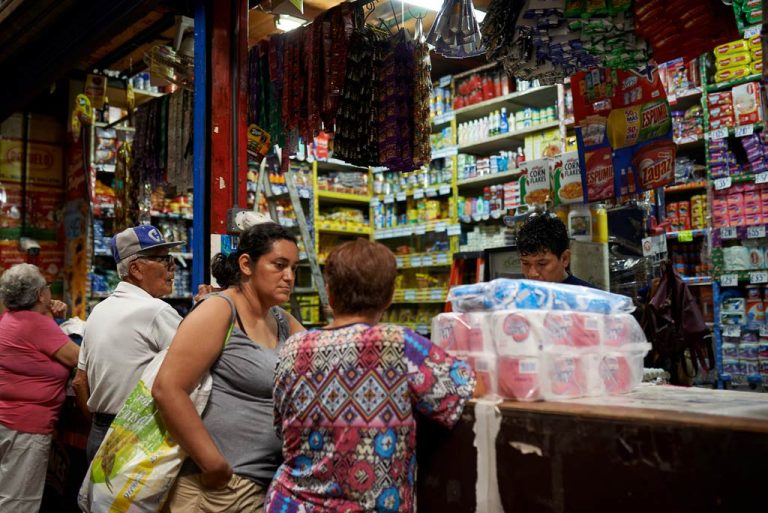
“The data show that wage levels are not sufficient to cover the cost of the basic food basket. The gap is deeply concerning, since even if people allocate 100% of their regular income, they still cannot afford a basic basket of 53 products,” explains the study’s author. “In this economy of discontent, even the essentials become unaffordable for many people,” he adds.
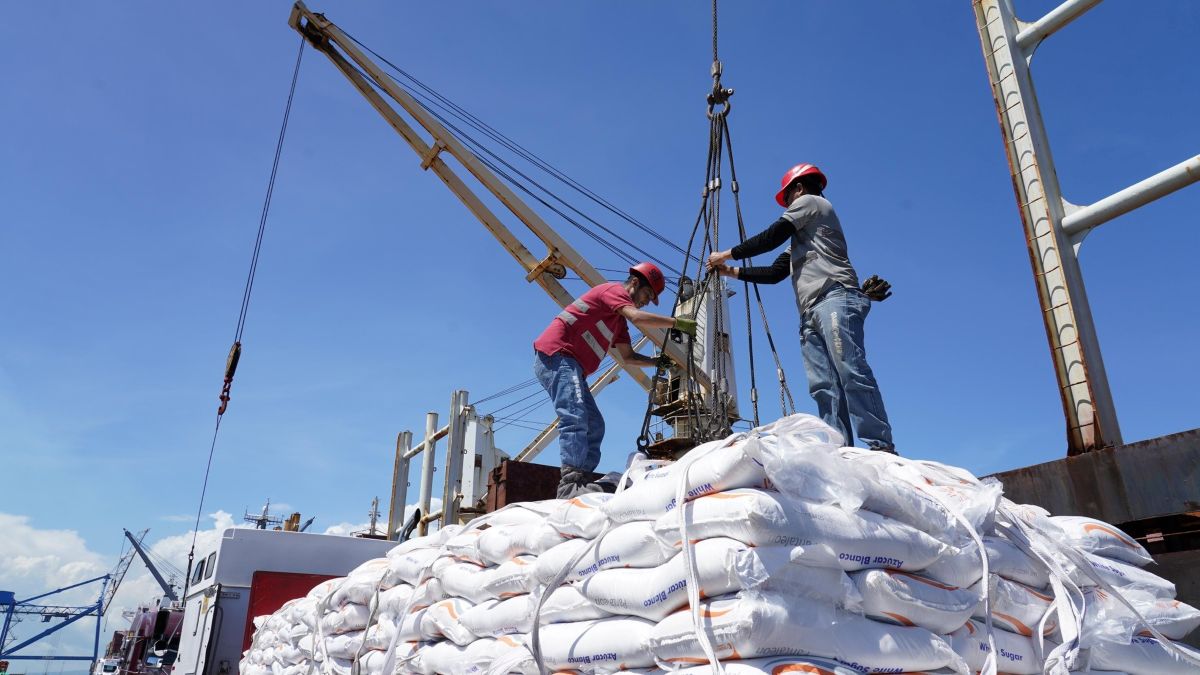
Nicaragua is largely self-sufficient in most basic food categories. With the exception of rice, the country produces enough beans, beef, sugar, corn, and cheese to meet domestic demand—and still has a surplus for export. Despite this, between December 2020 and December 2025, the “Food” component of the basic food basket increased by 53%, while the overall basket rose by only 43.3% over the same period.
“Therefore, it is the food component that structurally drives the rising cost of the basic consumption basket, eroding the real income of households, since it accounts for 71% of the total cost of the basket in 2025. This means that with a 500-córdoba bill, people can buy less food than before,” the expert explains.
Nicaragua is the cheapest country in Central America. Anyone who has traveled across two or more countries in the region can confirm this, as can anyone who looks at official data. And yet, people feel that their money isn’t enough, even for basic needs. Nor to aspire to owning a car, paying for private education for their children, traveling, or buying a home.
“Given the erosion of purchasing power driven by the cost of the basic food basket, the country feels expensive—not because prices are comparatively high, but because wages are low,” Peña concludes. The result is a downgrading of consumption: families opt for lower-quality goods at more affordable prices, consume more carbohydrates and fewer proteins, and buy smaller quantities.
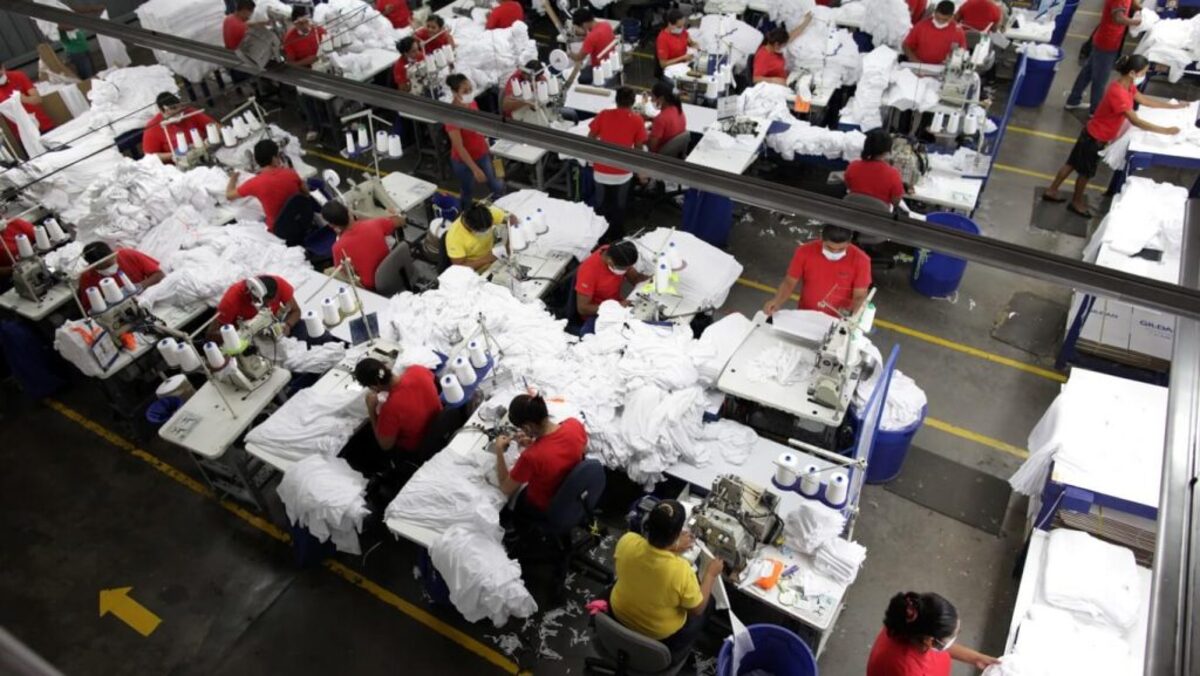
According to Nicaragua’s Central Bank, around 97% of people are employed. This, despite the structural weaknesses and lagging development of the Nicaraguan economy, where roughly 70% of economic activity is considered informal. This leads the economist to argue that “one of the best-kept mysteries is the empirical basis on which official figures claim that the country has full employment.”
Not even the two largest economies in Central America—Panama and Costa Rica— claim to have reached those levels of employment. “These ‘overly optimistic figures’ [from the Central Bank] defy common sense because they do not match the reality of people searching for job opportunities. Employment levels depend on the degree of a country’s economic expansion,” he noted.
Between 2023 and 2024, 11,926 new jobs were created in the country (based on data from the Nicaraguan Social Security Institute, INSS), while foreign direct investment (FDI) increased by 238.4 million dollars. But a decade earlier, between 2014 and 2015, 63,338 new jobs were created with an increase of just 65.8 million dollars in FDI. These figures lead the economist to question how it was possible that, with 3.6 times less foreign investment, 5.3 times more formal jobs were created.
Peña offers another data point to illustrate this paradox. The number of contributors to the INSS in 2024 stood at 802,814. That figure is lower than the 857,219 formal jobs recorded in 2016, “showing an employment lag of approximately ten years,” he explained.
PUBLICIDAD 3M
PUBLICIDAD 3D