AA
Share

 Las noticias del día en tu correo
Recibe lo más destacado de la cobertura de CONFIDENCIAL todos los días.
Más boletines
The best of our coverage, in English
Sign up for our weekly newsletter. We will send it to you every Friday at 10:00 am (Nicaragua time)
More Newsletters
PUBLICIDAD 4D
PUBLICIDAD 5D
Nicaragua no tiene la red hospitalaria más grande ni robusta de la región: la dictadura infla cifras con “hospitalitos”

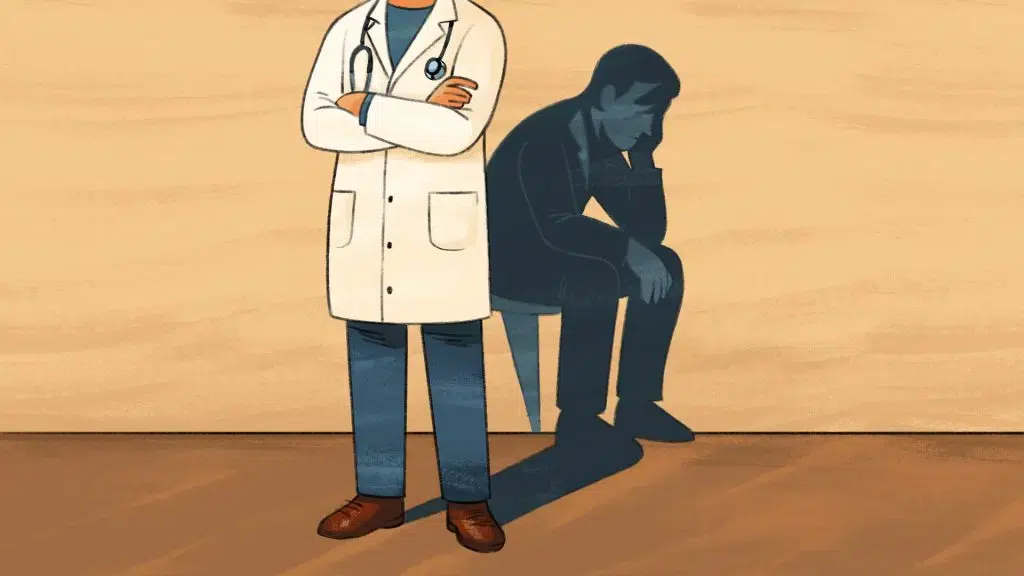
Al inflar las cifras con "hospitalitos" de primer contacto, el régimen en Nicaragua intenta vender el engaño de una gran red sanitaria, que no se traduce en atención especializada para la población. // Ilustración: CONFIDENCIAL
It is false that Nicaragua has the largest and most robust hospital network in Central America, as claimed by the Ministry of Health (Minsa) and repeatedly celebrated by Daniel Ortega and Rosario Murillo whenever they can.
The number of hospitals — as counted by the co-dictators — appears to have grown since Ortega returned to power in 2007. However, this is not due to the construction of new high-level hospitals, but rather to exaggerated propaganda involving the replacement of hospitals that had already reached the end of their useful life.
Another tactic is that the dictatorship counts primary hospitals as “new high-level hospitals.” These are small, limited medical units that have a couple more specialties than conventional health centers, but they are not full hospitals. In fact, that’s why they are popularly known as “little hospitals.”
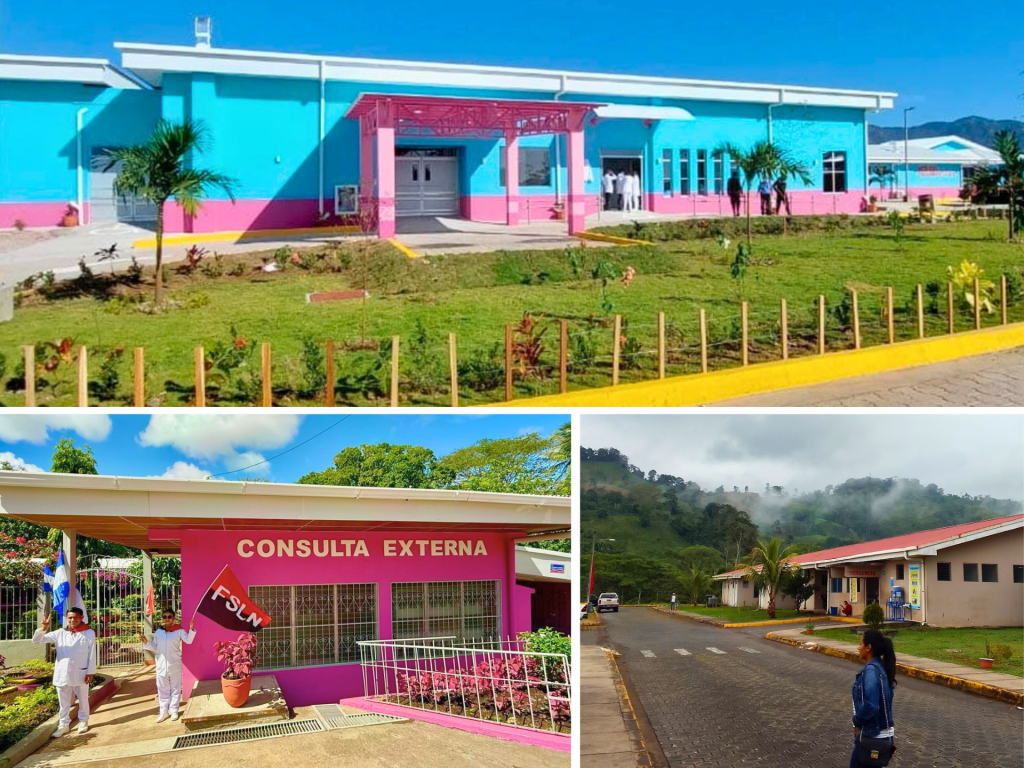
In January 2026, Health Minister Meyling Brenes stated that Nicaragua’s hospital network grew from 33 to 79 hospitals between 2007 and 2025. However, the figure promoted by the Ministry of Health (Minsa) is misleading, as it counts — as if they were entirely new — nearly thirty primary hospitals that already existed in 2007.
In healthcare systems, there are three levels of hospitals that provide services with varying degrees of complexity, capacity, and specialization:
According to the latest official data available from MINSA, Nicaragua’s public hospital network includes 75 hospitals: 44 primary and 31 third-level facilities. Among the latter are 8 regional hospitals, 12 departmental hospitals, and 11 with national referral services. All eleven of these are located exclusively in Managua.
The figure remains inflated because MINSA includes, among those 75 hospitals, four medical centers or provisional clinics (CMP) belonging to the Nicaraguan Social Security Institute (INSS), which by definition only serve insured patients, not the general population. These include:
Of these four hospitals for insured patients, MINSA’s list classifies one as a national referral hospital (Solidaridad), another as departmental (“El Maestro” in Diriamba), and two as primary hospitals: “Blanca Aráuz” in Jinotega and “Gaspar García Laviana” in Rivas.
Without the four hospitals that the minister does not explain and that do not appear on the official list, nor the four corresponding to the INSS, the total of 79 drops to 71 hospitals, including the “little hospitals,” and falls to just 29 when these are excluded.
Using these inflated figures, regime propaganda claims that Nicaragua has the largest hospital network in Central America. In the minister’s words: “Nicaragua is the country with the most robust service network in Central America and the most consolidated within our healthcare model.”
However, other countries in the region only count high-level hospitals in their networks, not “little hospitals.” If other countries used the same method as Nicaragua — including basic care facilities — they would easily surpass Nicaragua’s so-called “robust healthcare network.”
Guatemala, for example, has 48 second- and third-level hospitals, but also operates 180 Permanent Care Centers (CAP). These are equivalent to what Nicaragua calls “primary hospitals.”
The Pan American Health Organization (PAHO) defines what constitutes a hospital through a set of criteria fully applied by Costa Rica and Panama, and partially used by El Salvador, Honduras, and Guatemala, according to a public health specialist consulted by CONFIDENCIAL.
The number of available hospital beds in Central America also exposes the official narrative as false. While the regime of Daniel Ortega and Rosario Murillo boasts that Nicaragua has 79 hospitals, official data from the Ministry of Health (Minsa) shows that all of them combined have only 6,855 available beds (that is, for hospitalization), including 275 in Intensive Care Units (ICUs).
This number does not even meet the minimum of two to three beds per 1,000 inhabitants recommended by international health organizations, as it does not even reach one bed per 1,000 nationwide.
For example, in the North Caribbean Coast, there are only 207 available beds for a population of 574,398 people. That is less than half a bed per 1,000 inhabitants in one of the most vulnerable and hardest-to-access regions. This figure even includes the “new” hospital in Bilwi that Ortega inaugurated — from Managua, more than 520 kilometers away — in February 2026.
A similar situation exists in León, where in September 2025 a major new facility was inaugurated to replace the old hospital. In that department, there are 503 beds, but only 461 are available for continuous 24-hour hospitalization. With this number, León has just 1.1 beds per 1,000 inhabitants.
Meanwhile, the number of available hospital beds in other Central American countries is higher than in Nicaragua, even when counting only their third-level hospitals, according to data from the Pan American Health Organization (PAHO):
If the official narrative about a “robust” hospital network were true, Nicaragua would have more than 20,000 available beds with its “79 hospitals” — a figure that would triple the 6,855 it actually has.
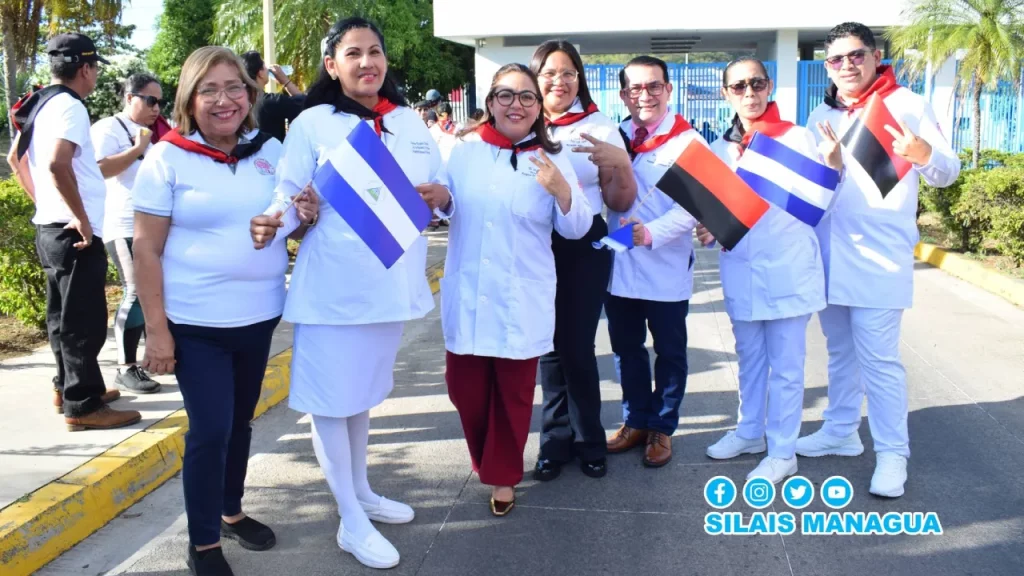
In addition to having fewer hospital beds than the internationally recommended minimum, Nicaragua also lacks a robust network of doctors and specialists.
On the contrary, Nicaragua has the lowest number of healthcare workers per capita in Central America, according to data from the World Health Organization (WHO).
In the region, the number of doctors per 10,000 inhabitants is:
Nicaraguan physician and Master in Public Health José Antonio Delgado, who remains in contact with medical personnel in Nicaragua from exile, estimates that “what we have is a shortage of beds and healthcare personnel, along with outdated data.” However, he acknowledges that “these are the figures handled by the WHO, because we do not have access to the information held by the Ministry of Health.”
He also points out that MINSA has already demonstrated that the data it releases is false or manipulated, recalling that the clearest evidence occurred during the COVID-19 pandemic in 2020. At that time, he explains, they showed they were “capable of denying deaths and illnesses in the context of a global emergency.”
A public health doctor who requested anonymity emphasized that “the government has demonstrated a lack of transparency in health information, which is a human right and should be public. By concealing it, they create a false sense of security and increase risks for the population by keeping them misled.”
According to official MINSA data, only 245 people died from COVID-19 in Nicaragua. However, an excess mortality analysis conducted by CONFIDENCIAL, along with subsequent WHO data, showed that up to 32,000 deaths were attributable to the virus.
Dr. Delgado believes that the construction of hospital infrastructure is ultimately propaganda by the regime.
“They build a large hospital because it’s visible—no one can deny, for example, that the new hospital in León is bigger than the old one. But in the end, it’s a fallacy,” he says.
He adds that medical staff “sent me a photo showing that when it rains, the basement roof leaks and there have already been short circuits. They sent me photos of the holes where the lamps used to be (which had to be replaced due to the leaks).”

Despite the supposed exponential growth in hospitals, Nicaragua’s medical workforce has remained stagnant for over a decade. Between 2007 and 2015, 3,391 new doctors were added to the health system. Growth was steady until the purge began in 2018.
According to INIDE, Nicaragua reached its highest number of doctors in 2018, with 6,538. However, the figure dropped the following year after more than 300 dismissals of those who participated in the April Rebellion protests or expressed opposition to state repression, which included orders to deny care to injured demonstrators.
One of the most emblematic cases was that of 15-year-old Álvaro Conrado. The teenager was shot in the throat while handing out water to protesters near the Managua Cathedral, but he was denied medical attention at Cruz Azul Hospital and died hours later. According to his parents, doctors at the (private) Bautista Hospital told them that his injuries were survivable if he had received timely care.
By 2020, the number of doctors had fallen to 6,179, according to official data from the National Institute of Development Information (INIDE). That same year, the country faced the pandemic with fewer medical personnel, yet the regime still chose to dismiss those who warned about the impact of the disease in Nicaragua. As a result, the number of doctors in the public system dropped to 6,110 by 2022.
In 2025, the regime claimed that the number of healthcare workers had increased to 6,855. However, this figure does not appear in any official document, as the latest statistical yearbook from INIDE was published in 2023. That year, 6,201 healthcare workers were reported, and the figures have not been updated since.
Meanwhile, data from the Central Bank of Nicaragua on public health system workers shows that the numbers have remained practically stagnant. In fact, they decreased from 21,097 in 2023 to 20,886 in 2025. However, these figures do not break down all personnel and do not allow for determining the exact number of doctors in the public system.
The latest detailed figures on Nicaragua’s healthcare workforce were published in September 2022 and come from a Ministry of Health (Minsa) workforce report. According to those data, at that time there were 6,118 doctors in the public system. Among them:
Since 2007, the figure that has grown is the allocation from the General Budget of the Republic (PGR) to the Ministry of Health, although the percentage assigned has remained the same for 19 years.
In 2008, the first year Ortega distributed the national budget, MINSA received 4.707 billion córdobas, representing 16.45% of the total. By contrast, for 2026, 27.715 billion córdobas were allocated. While this appears to be a significant increase, it still represents only 16% of the PGR.
The only years in which there was an increase in the percentage allocated were from 2020 to 2022, the first three years of the COVID-19 pandemic. However, these increases were tied to international aid and loans obtained to address a health emergency that the regime itself attempted to conceal.
Thus, Nicaragua’s “robust” hospital network is largely based on the construction of buildings to replace deteriorated hospitals or overwhelmed health centers, serving to create the appearance of growth.
But the increase in concrete and paint does not compensate for the decline in critical indicators: Nicaragua still has not overcome the deficit of one bed per thousand inhabitants and continues to have the lowest healthcare workforce in Central America. Behind the official figures, effective access to healthcare remains the major unresolved issue of a stagnant system.
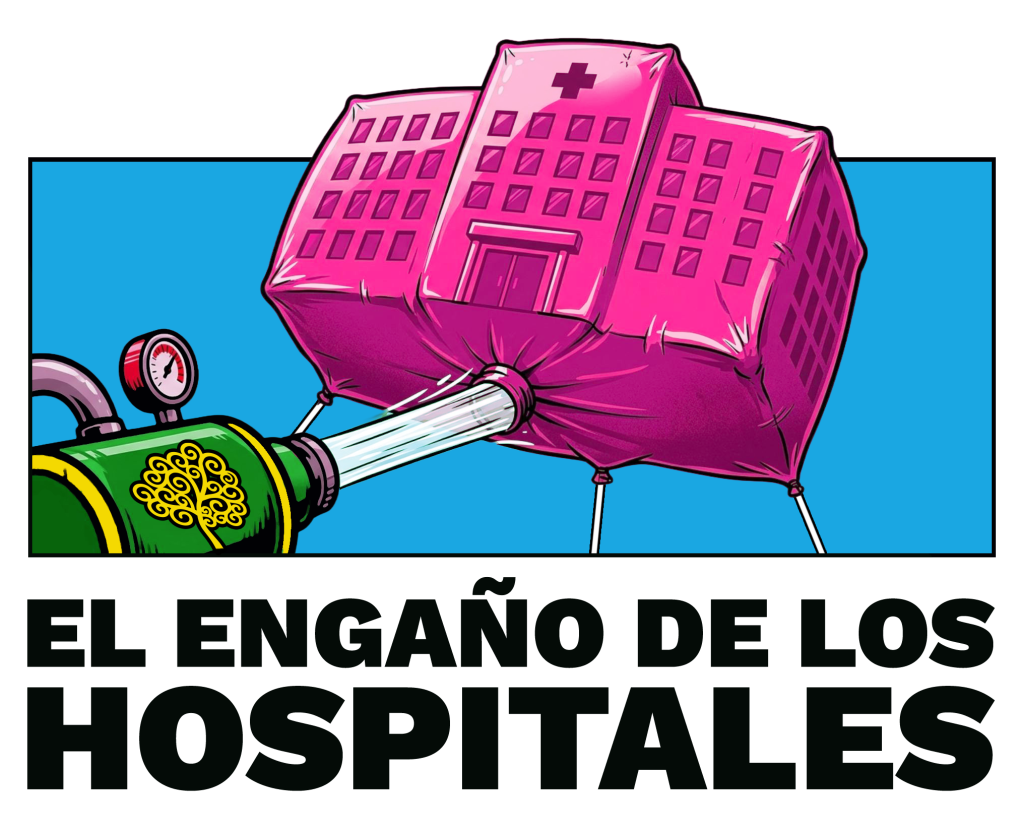
This report is part of CONFIDENCIAL’s special series: “The Hospital Deception,” an investigation that debunks official propaganda about Nicaragua’s healthcare system. The series examines the falsehoods and the human cost of a system that claims to have the largest hospital network in Central America, while concealing a critical shortage of beds and doctors.
Archivado como:
PUBLICIDAD 3M
PUBLICIDAD 3D