AA
Share

 Las noticias del día en tu correo
Recibe lo más destacado de la cobertura de CONFIDENCIAL todos los días.
Más boletines
The best of our coverage, in English
Sign up for our weekly newsletter. We will send it to you every Friday at 10:00 am (Nicaragua time)
More Newsletters
PUBLICIDAD 4D
PUBLICIDAD 5D
The former military officer was sentenced for “treason,” according to an Inter-American Court of Human Rights ruling concerning five individuals illegally detained by the regime

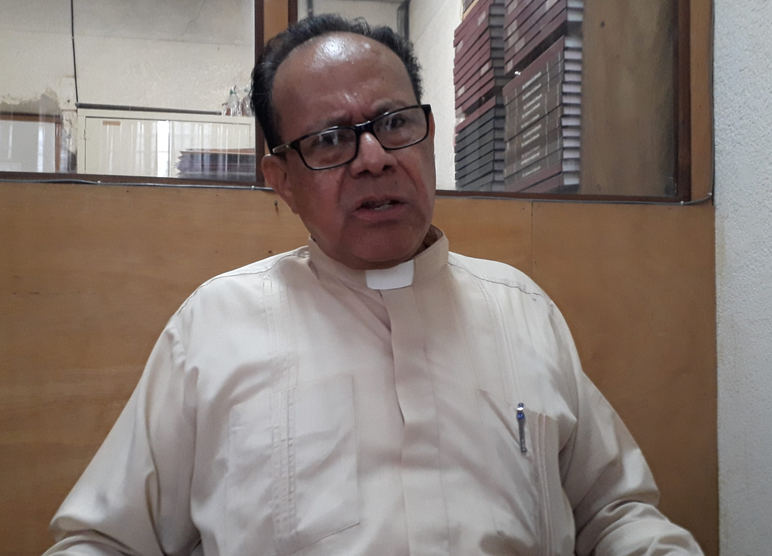
Imagen del coronel en retiro del Ejército, Carlos Brenes Sánchez, durante su injusta detención en agosto de 2018. | Foto: CCC
Retired army colonel Carlos Brenes Sánchez, 70, and his wife, Salvadora del Socorro Martínez Aburto, 68, have been sentenced to 15 years in prison for the alleged crime of “treason,” according to a resolution on “urgent measures” issued by the Inter-American Court of Human Rights (IACHR).
“The Presidency was informed that they were subjected to criminal proceedings for the crime of treason and that they received a sentence of 15 years,” the court stated in a resolution signed by its president, Rodrigo Mudrovitsch, on April 1, 2026.
The regional court was informed of the conviction after receiving, on March 30, 2026, a request to expand provisional measures from the Inter-American Commission on Human Rights (IACHR).
Carlos Brenes and his wife were arbitrarily detained by the National Police on August 14, 2025, and, according to the Mechanism for the Recognition of Political Prisoners, they are considered victims of “enforced disappearance.”
According to unofficial information cited by the court, they are believed to be held at the Jorge Navarro Penitentiary System, known as “La Modelo,” and the Comprehensive Women’s Penitentiary Facility, known as “La Esperanza.”
However, the court noted that the whereabouts of Carlos Brenes Sánchez and Salvadora Martínez Aburto have not been reliably confirmed.
“No family member or associate has had contact with them since their detention,” the president of the court stated.
Carlos Brenes Sánchez retired from the Sandinista Popular Army in 1994 with the rank of colonel. He was one of the founders and coordinator of the Patriotic Group of Retired Military Personnel and a member of the Broad Front for Democracy (FAD), which criticized the authoritarian turn of the Ortega government.
Following the April 2018 protests, Brenes was first detained on August 28 of that year at the Peñas Blancas border crossing while traveling to Costa Rica for a medical check-up related to his diabetes.
Originally from Monimbó, Masaya, a participant in the 1978–1979 insurrection and a former military leader within the FSLN’s Internal Front, Brenes was accused of “terrorism” by the Ortega-Murillo regime and remained imprisoned until his release on June 19, 2019, under a self-amnesty approved by the government.
Brenes was held in a punishment cell at La Modelo, accused without evidence of directing alleged armed attacks against police in Carazo and Masaya. As a result of more than ten months in prison, his chronic conditions—hypertension and diabetes—worsened, both of which require ongoing medical care.
The Inter-American Court of Human Rights (IACHR) has expanded provisional measures in favor of five prisoners held by the dictatorship. In addition to Carlos Brenes and his wife, the other beneficiaries of these urgent measures are retired brigadier general Álvaro Antonio Baltodano Cantarero, 73; his son, Álvaro Baltodano Monroy, 47; and Larry Javier Martínez Romero, 31.
The ruling is part of the case Juan Sebastián Chamorro et al. v. Nicaragua, a file that has been open since 2021.
The court found that the five Nicaraguans were detained and prosecuted “without due judicial guarantees,” in some cases under criminal charges that appear to have been used as retaliation for their “real or perceived participation in activities related to opposition to the Government of Nicaragua.”
In its resolution, the court urged the Nicaraguan state to:
The resolution describes the “precarious” conditions in which the five detainees are being held.
Carlos Brenes Sánchez—who has played a “leadership role among retired military personnel” and within communities in Masaya and Carazo—is reportedly being held in a cell under constant 24-hour camera surveillance.
According to the court, a light is kept on “day and night,” preventing him from resting, and he is allegedly subjected to psychological abuse, including verbal threats in which detainees are told they will die in prison and that their families have abandoned them.
His wife, Martínez Aburto—detained by police while “walking toward her home”—is also in a “situation of particular vulnerability.”
Álvaro Baltodano Cantarero, detained on May 14, 2025, during a raid on his property without a warrant or formal charges, and his son Baltodano Monroy “are not receiving the medical care or medications they require.” They are also being held in “conditions of isolation, without adequate access to sunlight, medical care, or food compatible with their serious health conditions.”
On June 10, 2025, CONFIDENCIAL confirmed through sources linked to the judicial system that Baltodano Cantarero had been sentenced to 20 years in prison for “treason.” On August 14, the Office of the Attorney General (PGJ) alleged “money laundering” to justify the imprisonment and asset seizure of Baltodano Cantarero and his son.
Larry Javier Martínez Romero was detained on August 13, 2025, in Masaya during an operation involving ten police officers who did not present a warrant. He was only told he would be taken in for a “police interview.”
Las autoridades penitenciarias de “La Modelo” permitieron que se le entregaran insumos básicos de comida e higiene en septiembre de 2025, pero sin confirmar que se encontraba “recluido en ese establecimiento”.
Since the case was opened in 2021, more than 100 political prisoners have been granted provisional measures under the same proceedings, none of which have been complied with by the regime of Daniel Ortega and Rosario Murillo.
In November 2022, the Inter-American Court of Human Rights declared the Nicaraguan state to be in “permanent contempt” for repeatedly failing to comply with orders to release political prisoners, and referred the situation to the General Assembly of the Organization of American States, from which the dictatorship later withdrew.
Nicaragua left the Organization of American States (OAS) in 2023, but the General Assembly has reiterated that this withdrawal “does not affect the country’s obligations” under other human rights treaties, which “remain binding on the State.”
PUBLICIDAD 3M
PUBLICIDAD 3D

Alertas en tu celular
Suscribite a las alertas informativas de Confidencial en Telegram.

Boletines
Lo mejor de nuestra cobertura noticiosa en tu correo electrónico.

Anuncios
Obtené una propuesta comercial de acuerdo a tus objetivos y presupuesto.

Test Político
Explorá tus ideas sobre nuestra política, economía y sociedad con nuestro Test Político.