AA
Share

 Las noticias del día en tu correo
Recibe lo más destacado de la cobertura de CONFIDENCIAL todos los días.
Más boletines
The best of our coverage, in English
Sign up for our weekly newsletter. We will send it to you every Friday at 10:00 am (Nicaragua time)
More Newsletters
PUBLICIDAD 4D
PUBLICIDAD 5D
Ortega regime brands Chile and the Dominican Republic “interventionists” and demands that Bolivia and Guatemala “respect” Nicaragua’s legal order

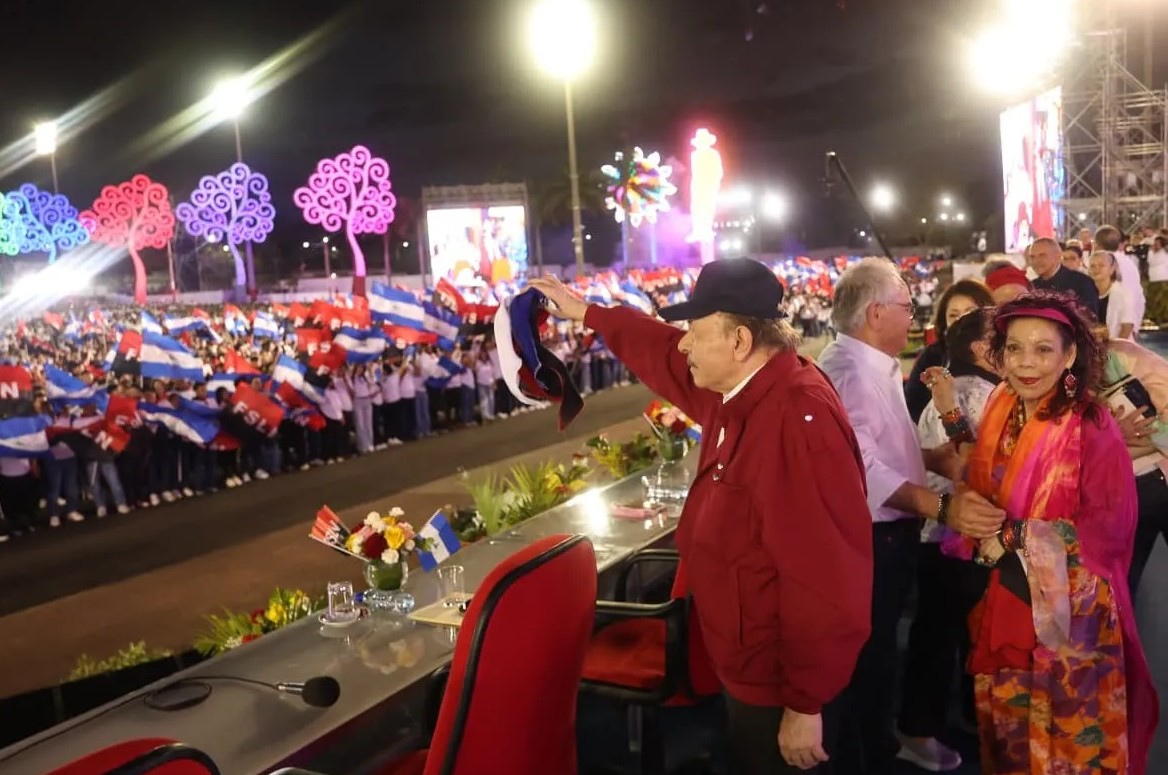
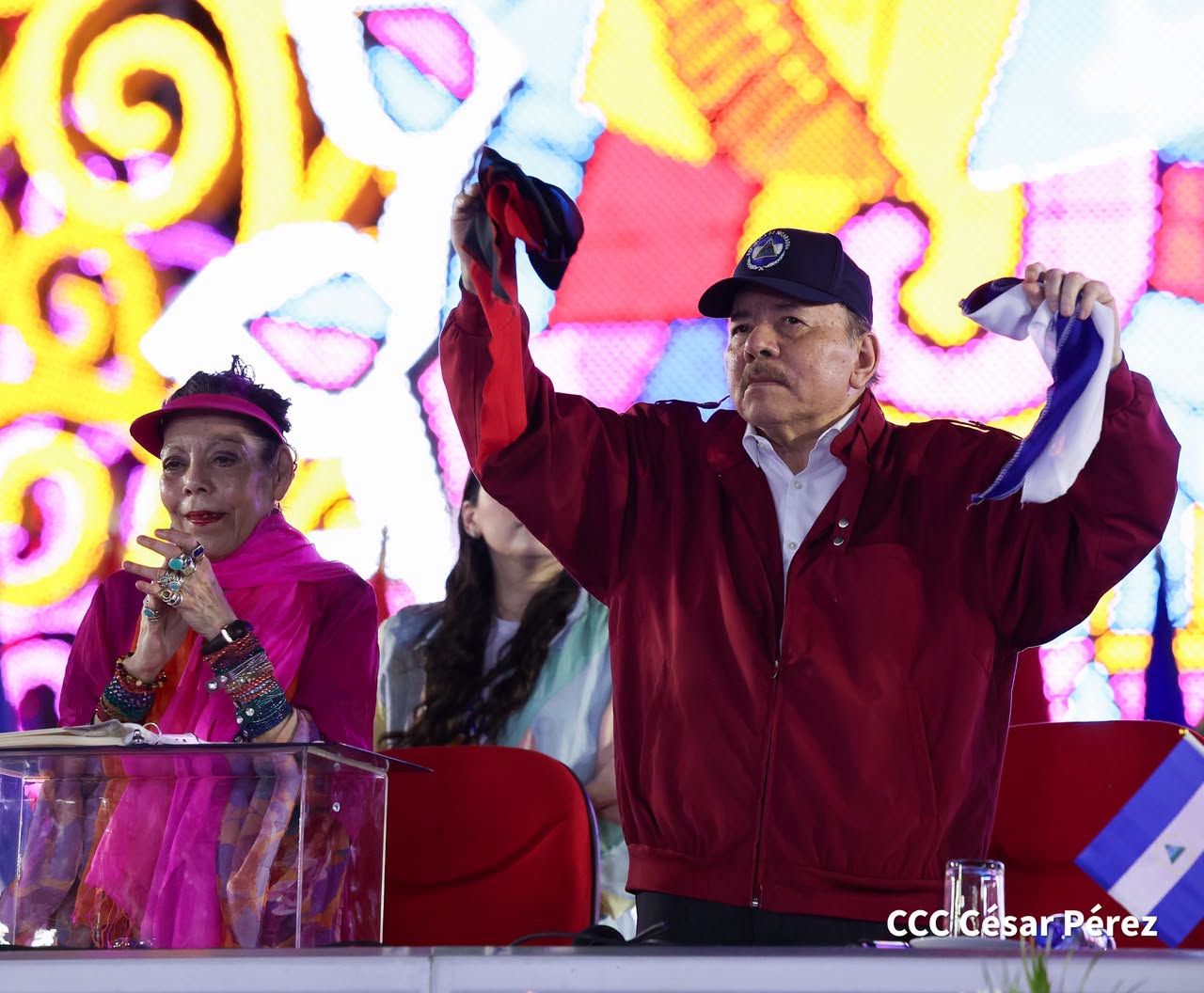
Daniel Ortega y Rosario Murillo participan en el acto oficial por los 47 años de la Revolución Sandinista, el 19 de julio de 2026, en la Plaza de la Fe, en Managua. // Foto: CCC
The possible abolition of elections in Nicaragua has sparked concern and condemnation among several Latin American countries. The governments of the Dominican Republic, Chile, Brazil, Bolivia, and Guatemala have denounced the measure announced by the dictatorship of Daniel Ortega and Rosario Murillo, who have dismissed their critics as “interventionists.”
Ortega, who has ruled Nicaragua since 2007, declared on Sunday, July 19, during the commemoration of the 47th anniversary of the Sandinista Revolution, that “there will never again be elections in Nicaragua so that they (the opposition) can try to seize the government, seize power.”
The Dominican government condemned Ortega’s remarks “in the strongest possible terms,” stating that such a measure represents “a blatant disregard for the essential principles of representative democracy and for the right of the Nicaraguan people” to freely choose their leaders through periodic, free, fair, transparent, and pluralistic elections.
“The Dominican Government calls on the Nicaraguan authorities to reverse this position and fully guarantee the political rights and fundamental freedoms of the Nicaraguan people, including their right to participate in genuine, competitive, and democratic elections,” the Dominican Foreign Ministry said.
In response to the Dominican government’s condemnation, Nicaragua’s Foreign Ministry said it was “astonishing” that the Dominican people “have vassal voices and shameful servants installed in their highest institutions.” It added, “We have endured the same hardships, and the people are not to blame for the disgraceful conduct of certain figures who believe themselves to be authorities.”
Like the Dominican Republic, Chile expressed its “deep concern” over the statements made by the Nicaraguan leader and reaffirmed that holding free, periodic, and transparent elections is an essential element of representative democracy, as established in the Inter-American Democratic Charter. It added that “statements such as these undermine the right of the Nicaraguan people to choose their own authorities.”
Nicaragua’s regime responded by accusing the Chilean government of “interventionism.” In a statement, Nicaragua’s Foreign Ministry said: “We acknowledge receipt of the statement issued by the Ministry of Foreign Affairs of the Republic of Chile and reject its interventionist comments regarding our sovereign and dignified political, legal, and institutional processes.”
The Bolivian government also expressed its “deep concern” over the Nicaraguan president’s remarks, recalling that “the holding of free, periodic, and transparent elections is an essential element of representative democracy and a cornerstone of the democratic rule of law in the hemisphere.”
In response to the statement issued by the Bolivian government, Nicaragua’s regime replied that “the political, economic, and legal decisions of our countries are our own, dignified, and sovereign.”
Brazil’s Ministry of Foreign Affairs also stated that “holding free, periodic, pluralistic, and transparent elections is one of the fundamental pillars of democracy, a value to which the country remains deeply committed.” It therefore urged the Nicaraguan authorities to guarantee the people’s right to choose their leaders.
In its response to Brazil, Nicaragua’s Foreign Ministry stressed that “this is our democracy, our elections.”
The Guatemalan government also rejected Ortega’s intention to eliminate elections in Nicaragua. In response, Nicaragua’s Foreign Ministry invoked the 1987 Esquipulas Accords and paraphrased Mexican President Benito Juárez.
“From before Esquipulas, through Esquipulas, and to this day, the message remains the same: Respect for the rights of others is peace,” Nicaragua’s Foreign Ministry said in a note sent to Guatemala’s Foreign Ministry.
Meanwhile, Mexican civil society organizations—including the Mexican Committee for Democracy and Freedoms in Nicaragua and the Puebla Group on Nicaragua—condemned Ortega’s announcement and called on Mexico’s political parties and the government of President Claudia Sheinbaum to take a public stand on the issue.
“We call on the Mexican government to take a position on this declaration, which seeks to deprive the Nicaraguan people of their ability to hold free and fair elections and violates the rights of the people of Nicaragua,” the Mexican Committee said.
*With information from EFE.
PUBLICIDAD 3M
PUBLICIDAD 3D

Alertas en tu celular
Suscribite a las alertas informativas de Confidencial en Telegram.

Boletines
Lo mejor de nuestra cobertura noticiosa en tu correo electrónico.

Anuncios
Obtené una propuesta comercial de acuerdo a tus objetivos y presupuesto.

Test Político
Explorá tus ideas sobre nuestra política, economía y sociedad con nuestro Test Político.