AA
Share

 Las noticias del día en tu correo
Recibe lo más destacado de la cobertura de CONFIDENCIAL todos los días.
Más boletines
The best of our coverage, in English
Sign up for our weekly newsletter. We will send it to you every Friday at 10:00 am (Nicaragua time)
More Newsletters
PUBLICIDAD 4D
PUBLICIDAD 5D
The defender of Nicaragua’s political prisoners speaks publicly for the first time about her fight against breast cancer and her enduring hope for justice in her country

Fotoarte: Confidencial
Since 2018, Nicaraguan lawyer Yonarqui Martínez has overcome one obstacle after another: persecution by the Ortega regime, a lifetime ban from practicing law, and exile alongside her children. Yet since May 2025, she has been fighting an even greater battle. She was diagnosed with advanced breast cancer that had metastasized throughout her body. Receiving the diagnosis far from her homeland became, in her own words, an “opportunity” to “go beyond the limits of death.”
“I know that if I had faced this health situation in Nicaragua, the outcome might have been very different. Perhaps today people would be talking about my death. So, I believe that through everything that has happened, God has always been there,” she says.
Yonarqui has always been seen as a strong woman. She was that way during the years when she defended more than a hundred political prisoners of the Ortega regime. She showed that same strength when she literally supported with her own body the mothers of prisoners of conscience who cried out for justice—or simply for the chance to see their loved ones. She showed it again when she had to cross the border under cover of darkness to protect her life and freedom, together with her young children. And she has shown it ever since deciding to confront cancer and share her struggle publicly.
“Dear friends, a few months ago I was diagnosed with cancer. The news devastated me. After a period of reflection and asking God for wisdom, I have decided to fight and overcome this illness,” she wrote on social media in May 2025.
She admits the road to defeating cancer has been difficult. She questioned God about why this was happening to her, but she has also thanked Him for saving her life. After a year and a half of treatment, her body is now free of the disease. She will continue remission therapy for the next three years while coping with the lasting effects of her fight for survival.
This is the first interview Yonarqui Martínez, Nicaragua’s best-known political prisoners’ lawyer, has given since this difficult chapter of her life. She is currently living “somewhere in Europe,” a country she prefers not to identify for security reasons.
At 42, Yonarqui Martínez is convinced that becoming a lawyer was her life’s purpose. She admits she didn’t always think so. As a little girl she wanted to become a doctor, but the law eventually won out. Now that she is no longer allowed to practice, she watches courtroom dramas and documentaries about legal cases, remembering the years when she was the one leading the defense.
“I don’t regret anything,” she says in the firm, decisive voice she has always had.
Yonarqui’s professional life has been anything but ordinary. Because of her work she received death threats, was kidnapped, and was even offered bribes. “A lot of things happened to me, but I never imagined leaving Nicaragua the way I did. It would be a lie to say I foresaw that everything would end this way.”

Before 2018, she did not practice criminal law. She worked as a legal advisor for a bank. But the injustice unfolding in Nicaragua became so overwhelming that she could no longer remain on the sidelines. She began taking on political defense cases without charging fees, until, almost without realizing it, she found herself responsible for more than a hundred cases, either as defense attorney or legal advisor. Her dedication was so complete that she pushed her own health—and even her children—to the background.
“One thing I did regret for a time was the life my children had during those years. They never lived in peace; they lived under persecution. The first thing my youngest son asked me after we left the country was to take him to a park. That was heartbreaking for me,” she says.
Yonarqui Martínez also neglected her health during the years she defended political prisoners. It was only after settling in a third country that she underwent a medical examination that ended with a cancer diagnosis.
“I had symptoms that seemed minor. I was always dealing with certain aches and pains, but I ignored them,” she confesses.
The diagnosis was grim. Doctors told her there was no hope because the cancer was already advanced and had metastasized. All they could offer was palliative treatment.
“At first I thought it couldn’t be true. Honestly, I cried and asked God, ‘Why? Why after everything I’ve suffered? Why after leaving my country, losing my home, losing so many things?’” she recalls.
She says that in one of the darkest moments of her illness, her anguished questioning was answered with a miracle. “A miracle that today allows me to be alive and share my testimony.”
“I had undergone two MRIs and two biopsies. Both the biopsies and the MRIs showed metastatic cancer. While I was waiting to see whether I would receive chemotherapy—and before starting any treatment—they performed a third examination and told me the cancer could be operated on and that I no longer had metastases. The doctors simply could not understand how the metastases had disappeared.”
Following what she calls this “miracle,” the Nicaraguan lawyer underwent surgery and began chemotherapy. “The process is unbelievably painful,” she emphasizes. “When the chemotherapy entered my body, it felt as though it was burning me from the inside. My fingernails turned black. I lost all my strength. I would fall asleep, and I fainted in the bathroom.”
“After the surgery I was in intensive care, and I’ve been left with damage to my bones. My joints hurt, I’m at risk of fractures in my spine, and I have to be very careful not to fall,” she explains. “But now I’m doing better. The cancer is no longer in my body.”
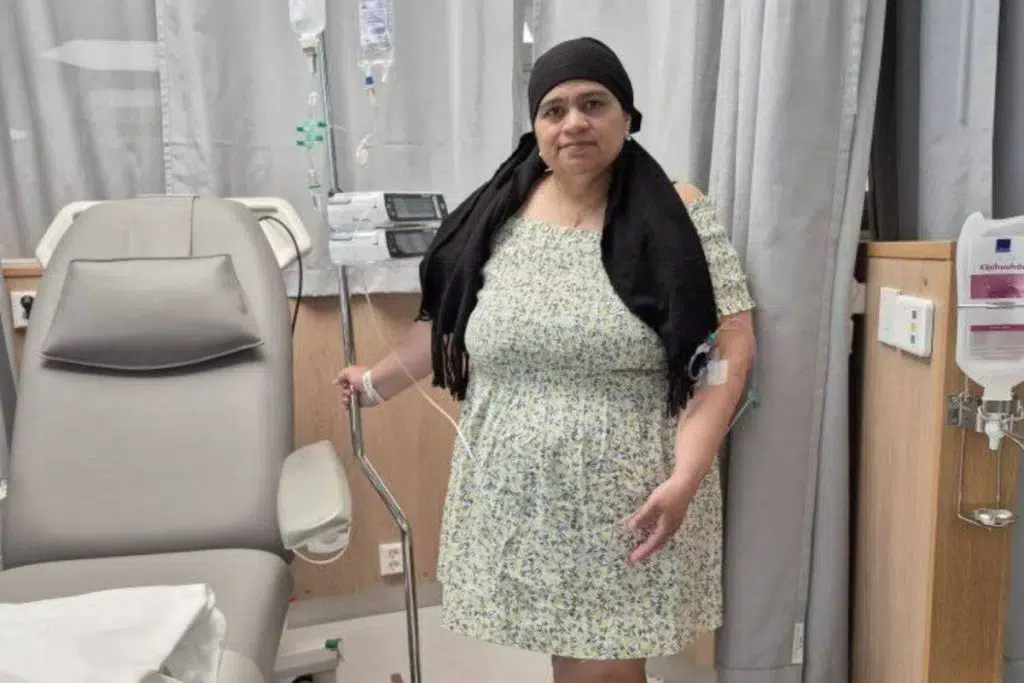
Yonarqui Martínez says the support she received from people who know her was essential in helping her confront the illness—both emotionally and financially. “Every phone call, every encouraging message on social media, every prayer people said for me was like fertilizer helping a plant grow,” she says.
“There were times when I couldn’t even read. I couldn’t look at my phone. But someone would play me an audio message from a friend, and just hearing that familiar voice felt like coming back to life.”
One of the hardest parts of facing cancer, she explains, was doing so abroad, in another language and far from her family. Even so, she is convinced that had she received this diagnosis in Nicaragua, “I would have died.” During the COVID-19 pandemic, she says she was denied medical care.
“When I contracted COVID-19, the public hospital refused to treat me. I had serious complications from the virus… The healthcare system where I am now at least gave me hope that I could survive what seemed like death itself. In Nicaragua, without medicine, without proper medical care—or with inadequate care—I might be in a very different situation today.”
Yonarqui Martínez has spent little time thinking about returning to Nicaragua. Under current conditions, she says, returning is impossible because there are no security guarantees. She is also focused on building the future that the regime stole from her children. “Right now my responsibility is to ensure the safety and well-being of my children, who are still minors.”
Her three children are now trilingual, are preparing for their professional careers, and are gradually recovering the peace they lost. Even so, although she remains far from home, she hopes to contribute one day to building a better Nicaragua.
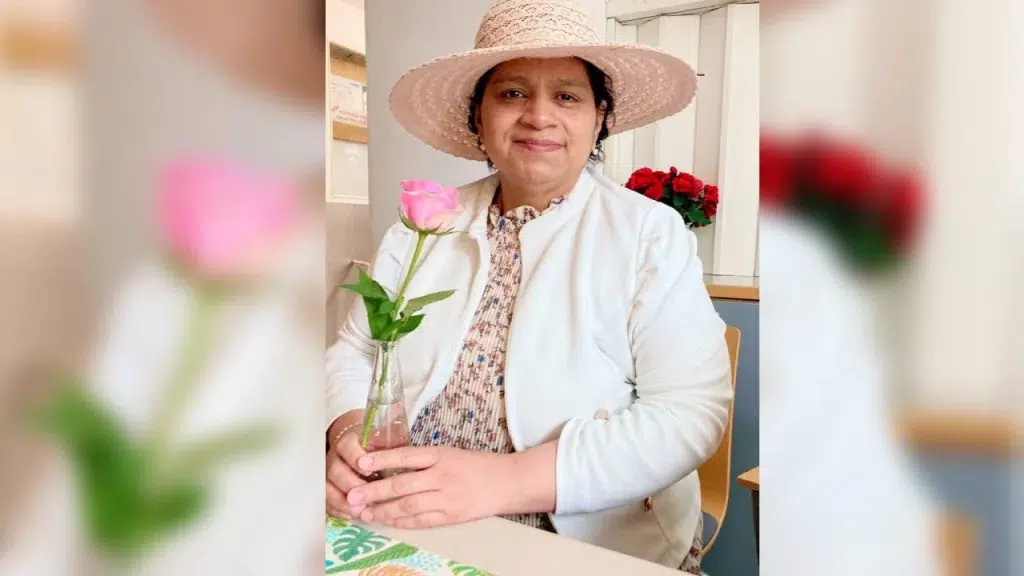
“I would very much like to help bring about justice. I want to contribute in some way so that justice is done for all those who became victims during different periods and in different ways. If I once stood there defending them, I would like to continue contributing in that way.”
She adds: “Perhaps we cannot bring back the lives of those whose lives were taken, nor erase the scars of those who endured torture and suffering. However, knowing that justice is finally being done will bring profound relief and restore dignity to their memories. Moving toward that justice, and witnessing that their suffering was not invisible, is one of the stages I most long to experience and accompany.”
The longing to see justice was the driving force that sustained her throughout all these years. Because of her calling, she lost everything. Now, she is fighting to rebuild her life, even if it means doing so thousands of kilometers away from her homeland.
PUBLICIDAD 3M
PUBLICIDAD 3D

Alertas en tu celular
Suscribite a las alertas informativas de Confidencial en Telegram.

Boletines
Lo mejor de nuestra cobertura noticiosa en tu correo electrónico.

Anuncios
Obtené una propuesta comercial de acuerdo a tus objetivos y presupuesto.

Test Político
Explorá tus ideas sobre nuestra política, economía y sociedad con nuestro Test Político.