AA
Share

 Las noticias del día en tu correo
Recibe lo más destacado de la cobertura de CONFIDENCIAL todos los días.
Más boletines
The best of our coverage, in English
Sign up for our weekly newsletter. We will send it to you every Friday at 10:00 am (Nicaragua time)
More Newsletters
PUBLICIDAD 4D
PUBLICIDAD 5D
The European Parliament approved a resolution demanding the release of political prisoners and the suspension of the EU trade agreement with Nicaragua.

El Parlamento Europeo votó a "mano alzada" una resolución en la que condenan la represión sistemática ejercida por el régimen Ortega-Murillo. Foto | Parlamento Europeo
On June 18, 2026, the European Parliament approved by a show of hands a resolution calling for “accountability” for the violations committed by the regime of Daniel Ortega and Rosario Murillo in Nicaragua since 2018, which “may constitute crimes against humanity.” In addition, lawmakers demanded the release of all political prisoners, an end to repression, and the suspension of the implementation of the Association Agreement with the country.
The resolution, titled Political Prisoners in Nicaragua: The Cases of Carlos Brenes, Salvadora del Socorro Martínez Aburto, and Brooklyn Rivera, highlights the deepening human rights crisis in Nicaragua since 2018 and “strongly condemns the systematic repression by the Ortega-Murillo regime, arbitrary detentions, enforced disappearances, sham trials, exile, denationalization, confiscation, and crimes against humanity.”
The text, which merges seven separate motions, calls for compliance with the ruling of the Inter-American Court of Human Rights and “supports accountability efforts, including through universal jurisdiction and referral to the International Criminal Court.”
The lawmakers also agreed on increasing pressure on the Ortega-Murillo regime through additional “targeted sanctions” against those responsible for the repression so that they may be held accountable before international justice.
Through the resolution, they called for greater support for “democratic actors” and civil society both inside Nicaragua and in exile and requested that “no multilateral or European Union funds strengthen the regime.”
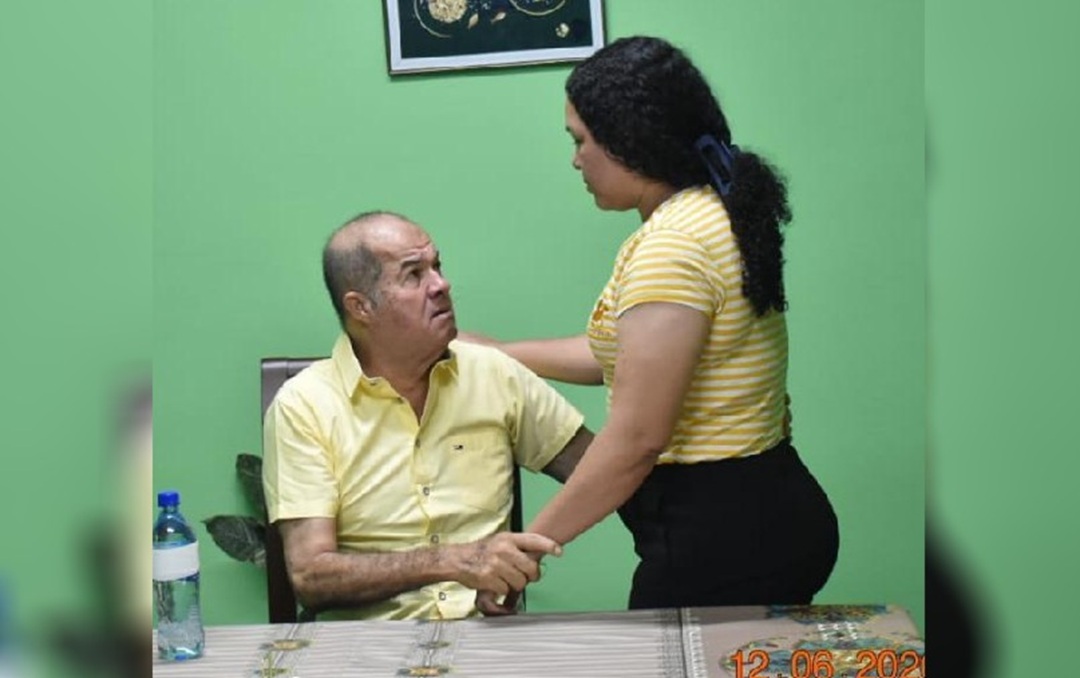
Members of the European Parliament demanded the “immediate and unconditional release” of Carlos Brenes and his wife, Salvadora Martinez, who were detained in August 2025, as well as the release of all political prisoners. They also demanded information about their whereabouts and health conditions.
Brenes and Martínez are being held under a “regime of incommunicado detention” and were sentenced without due process guarantees to 15 years in prison for “treason.” According to family members, the former military officer suffers from diabetes and has been denied medication.
“The resolution further demands the immediate and unconditional release of Brenes, Martínez, and all political prisoners, the annulment of politically motivated convictions, information on their fate and whereabouts, and immediate proof that they are still alive.”
During the debate preceding the resolution on June 17, 2026, MEP Elena Nevado del Campo of the European People’s Party (EPP) stated that “Europe should not tolerate the regime’s systematic repression and the dismantling of the rule of law.”
“We must decide whether we stand with those who oppress or with those who fight for their freedom. We must stand with the victims,” Nevado del Campo said.
“The case of Carlos Brenes, Salvadora Martínez, and the tragic death in prison of Indigenous leader Brooklyn Rivera are recent examples of this cruel repression,” said MEP Francisco Jose Millan Mon, also of the EPP, who accused the European External Action Service of limiting itself to “tepid statements” in the face of the deterioration of human rights in the country.
The parliamentarians used these three cases to highlight the situation of people imprisoned for political reasons in Nicaragua.
They agreed that the state of fundamental freedoms in Nicaragua remains “deeply concerning and unacceptable.” Civic space has been restricted, and critical voices in the country are being threatened.
The lawmakers also demanded a “swift investigation” into the death of indigenous leader Brooklyn Rivera, the “return of his remains, the release of disappeared family members, and accountability.”
Rivera was held under forced disappearance for more than two years before dying in State custody. “The death of Brooklyn Rivera in prison is a striking example of this reality. A broad, thorough, and independent investigation is necessary,” they stated during the debate.
According to the resolution, the Ortega-Murillo regime has “dismantled democratic institutions and the rule of law through constitutional reforms that eliminate political pluralism while persecuting opposition figures, journalists, clergy, Indigenous leaders, human rights defenders, and civil society.”
The approved resolution also calls for:
The lawmakers called for activation of the democratic clause of the Association Agreement between the European Union and Central America and for the suspension of its application to Nicaragua “for as long as repression persists.” The resolution also “emphasizes that Parliament will not cooperate with representatives of the regime within the framework of the recently established Parliamentary Association Committee.”
“Europe can and must act,” MEP Elena Nevado del Campo reminded the chamber during the debate, noting that “the democratic clause in the Association Agreement between the European Union and Central America exists precisely to respond to violations of fundamental rights.”
MEP Nora Junco García, of the European Conservatives and Reformists (ECR) Group, warned that “out of respect for the victims and for the credibility of the European Union,” the time has come to activate the democratic clause.
“The question is whether we are willing to act as though we truly believe it, because there is a democratic clause in our agreement with Nicaragua, and it exists precisely for situations like these—not for times when everything is fine, but when a regime systematically violates human rights,” Junco García stated.
In February 2025, the European Parliament had already urged the European Union to activate the democratic clause.
Uno de los momentos más emotivos del debate ocurrió cuando la eurodiputada María Noichl leyó una carta enviada por Thelma Brenes, hija del coronel retirado en prisión.
“Dad, wherever you are, I want you to know something: we haven’t forgotten you. You are not alone. They may hide you behind prison walls, but they will never erase you from our lives. Nor will they be able to destroy the legacy of your life,” Noichl read from the letter.
The resolution proposes strengthening the European response against those directly responsible for the repression.
Another parliamentarian questioned why European sanctions still do not directly target Daniel Ortega and Rosario Murillo. “How is it possible that the European Union has sanctioned everyone around Ortega except Ortega himself, who, together with his wife, are the principal persons responsible?” he asked.
PUBLICIDAD 3M
PUBLICIDAD 3D