AA
Share

 Las noticias del día en tu correo
Recibe lo más destacado de la cobertura de CONFIDENCIAL todos los días.
Más boletines
The best of our coverage, in English
Sign up for our weekly newsletter. We will send it to you every Friday at 10:00 am (Nicaragua time)
More Newsletters
PUBLICIDAD 4D
PUBLICIDAD 5D
Informe de Human Rights Watch revela “la peor situación en democracia y derechos humanos en EE. UU., en las últimas décadas, hay un deterioro brutal”.

El subdirector de la División de las Américas de Human Rights Watch (HRW), Juan Pappier, en una fotografía de archivo. // Foto: EFE | Gustavo Amador
The 2025 World Report on Human Rights released by Human Rights Watch on Wednesday, February 4, 2026, highlights the worsening totalitarian drift of Nicaragua’s dictatorship, while also documenting “the worst situation for democracy and human rights in the United States in recent decades,” summarized Juan Pappier, HRW’s deputy director for the Americas.
In a conversation on the program Esta Semana, broadcast on CONFIDENCIAL’s YouTube channel due to television censorship in Nicaragua, Pappier analyzed the implications of U.S. President Donald Trump’s policies for the promotion of human rights and international justice.
“Unfortunately, the United States has stopped supporting international justice efforts, and that will have an enormous cost for Nicaraguan victims. In the HRW report we call on middle-sized countries such as Brazil, Japan, the European Union, and Canada to fill the gap and help support these international justice mechanisms so that victims—Nicaraguans, Venezuelans, and those from many dictatorships around the world—continue to have access to justice,” said the human rights defender.
The Human Rights Watch World Report highlights a greater concentration of power in Nicaragua and a new wave of repression in 2025 under the leadership of co-president Rosario Murillo. What are the consequences and the evidence of that repression?
Nicaragua continues on a totalitarian trajectory. I have said it many times and repeat it: today Nicaragua is the North Korea of our hemisphere, the most repressive country in our part of the world.
In 2025, two new phenomena were added to this totalitarian wave. First, the Constitution approved in January, which enshrines in law the absolute concentration of power in the co-presidency and makes the human rights established in the Constitution subject to the will of co-presidents Rosario Murillo and Daniel Ortega.
The other phenomenon that deepened in 2025 was the allegations of transnational repression, with the death of Roberto Samcam in Costa Rica—his assassination—and very serious reports from the United Nations Group of Experts on Nicaragua pointing to acts of repression, harassment, and even deaths of dissident critics of the Nicaraguan regime occurring outside Nicaraguan territory.

The report also highlights a new wave of arrests against regime supporters, including several former senior officials who are now imprisoned. The regime, which is based on corruption, accuses them of economic crimes. Are these former officials victims of human rights violations?
It is important that we denounce human rights violations regardless of who the victim or perpetrator is. That is what gives credibility to human rights work. In Nicaragua we are seeing a regime that is cannibalizing itself, with factions and internal struggles, and where, by decision of Rosario Murillo—who is preparing her total succession in an attempt to crown herself in Nicaragua—there are efforts to arbitrarily detain people, with due-process violations, sometimes enforced disappearances, even people who worked for Daniel Ortega’s regime.
The report mentions the renewal of the mandate of the UN Group of Human Rights Experts, who have gathered evidence to bring the Nicaraguan state and more than 50 senior officials before international courts. At the same time, however, it highlights that U.S. President Donald Trump’s policies tend to weaken international law. Can Nicaraguans still maintain expectations of international justice? Are there political conditions to pursue cases through international courts?
The work of international justice has become increasingly difficult. We are seeing that the United States has reduced funding to the United Nations, including the International Court of Justice, which would be a key mechanism for bringing Nicaragua before the courts. The United States owes nearly $40 million to international tribunals, including the International Court of Justice. In addition, it has taken actions against the International Criminal Court, sanctioning its prosecutor and some of its judges because they made the courageous decision to investigate the Netanyahu government in Israel for crimes against humanity committed in Gaza.
Unfortunately, the United States has stopped supporting international justice efforts, and that will carry an enormous cost for Nicaraguan victims. In the report, we call on middle-sized countries—such as Brazil, Japan, the European Union, and Canada—to step in, help sustain these international justice mechanisms, and ensure that victims like those from Nicaragua, Venezuela, and many other dictatorships around the world continue to have access to justice.
What possibilities exist regarding justice based on universal jurisdiction? In Nicaragua’s case, proceedings were opened in Argentina—could cases also be opened in other countries? The assassination of Roberto Samcam was carried out in Costa Rica, but there have also been Costa Rican victims, as well as victims from Brazil and other countries.
It is very important that the investigation into Roberto Samcam’s assassination move forward decisively and that Costa Rican authorities publicly report on its progress. Regarding universal jurisdiction, efforts should be made to bring the Nicaragua case before other domestic courts, not only Argentine courts. Unfortunately, Argentina’s federal courts do not have the best reputation; they are highly influenced by politics. These are courts where judges often think more about Argentina’s electoral calendar than about justice—that is the reality. It is important to bring the case before other courts as well, in Latin America and in Europe, so that there can be accountability for the grave human rights violations and crimes against humanity committed in Nicaragua.
This week the OAS issued a resolution condemning Nicaragua’s regime for repression, demanding the release of all political prisoners, and asking the Inter-American Commission on Human Rights to continue monitoring violations in Nicaragua, despite the dictatorship’s withdrawal from the OAS. Given the current climate of polarization in Latin America, do the voices of the OAS and Latin American governments have any impact on Nicaragua’s crisis?
The OAS vote is useful for two reasons. First, it serves as a reminder that the OAS and the countries of the region have not forgotten what is happening in Nicaragua and are not normalizing it. It is important that there be periodic reminders that grave human rights violations are taking place in Nicaragua and that a dictatorship exists there. The statements by Commissioner Rosa María Payá, who is responsible for Nicaragua, were very forceful, clear, and important.
Second, the resolution received the support of virtually all countries in the region. That demonstrates the positions held in Latin America and the United States regarding what is happening in Nicaragua. It is important that those countries move forward with serious international justice mechanisms, including bringing Nicaragua’s case before the International Court of Justice.
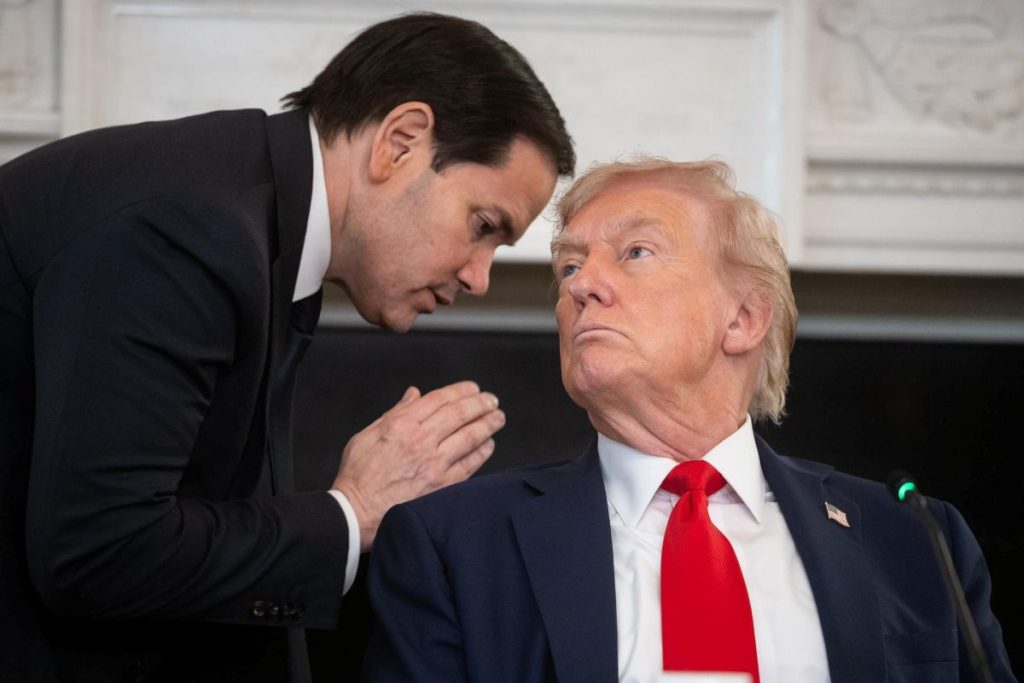
This Human Rights Watch report contains extensive findings on human rights violations in the United States and the country’s democratic deterioration. How has the Trump administration responded to these allegations?
So far, we have not received a response from the U.S. government. We launched the report yesterday (Wednesday, February 4) in Washington and were very clear about the human rights violations occurring in the United States, the deterioration of American democracy, and the campaign of persecution against migrants and asylum seekers in the country. This is not the only report we have published, and unfortunately the Trump administration’s response tends to be evasive; there is usually no acknowledgment of the serious human rights violations taking place, nor any commitment to take meaningful measures to prevent these abuses. However, we continue working to ensure that our findings reach national courts in the United States so they can halt these decisions, to influence congressional decision-making, and to encourage steps that mitigate or stop the human rights violations committed by the administration.
But has there ever been another report presenting stronger or more exhaustive criticism of human rights violations in the United States than this one?
We have condemned abuses at Guantánamo, the torture that occurred during the war on terror, military operations carried out during the (Barack) Obama administration, and the inconsistencies of the (Joe) Biden administration. But the current situation in the United States regarding democracy and human rights is clearly the worst in recent decades. The deterioration over the past year has been brutal, which is why this report is so severe and critical about what is happening in the country today
What role can the United States play at this time in promoting democracy and human rights in other countries if, within its own nation, they are being systematically violated and democratic institutions are being weakened?
Unfortunately, the trend toward authoritarianism in the United States is reflected in its foreign policy. We have seen support for authoritarian governments, such as Nayib Bukele’s government in El Salvador, and even in the case of dictatorships they criticize—such as Nicolás Maduro’s regime in Venezuela—the measures they take do not help advance a democratic transition but instead risk helping consolidate the dictatorship in Venezuela in exchange for that regime serving U.S. commercial, economic, and political interests. This is a very troubling situation for the struggle for democracy and human rights throughout our hemisphere, and it is also a signal that governments in the region—Mexico, Brazil, and others—should strengthen the promotion of human rights and democracy in their foreign policies to fill the vacuum left by the United States in this crucial task.
The messages issued by the U.S. Bureau of Western Hemisphere Affairs regarding Nicaragua—calling for the release of political prisoners or questioning the co-presidency system—do they reflect political pressure from the Trump administration against the Nicaraguan regime, or are they simply bureaucratic actions by a State Department office?
There are different currents within the U.S. government. The one led by Secretary of State Marco Rubio has historically taken a critical stance and shown commitment regarding the situations in the dictatorships of Venezuela, Cuba, and Nicaragua, and Undersecretary Landau is aligned with that position. In meetings I have had with some embassies in Central America and other parts of the region, it is clear that there is an honest, genuine criticism of the human rights violations occurring in those countries.
On the other hand, there is another sector within the Trump administration that has no interest in democracy and is focused solely on cooperation on migration issues to achieve higher deportation numbers, as well as on economic cooperation, and that wants democracy to play no role in U.S. foreign policy. President Trump himself is not interested in the issue of democracy and human rights. These are the internal tensions within the administration, which at times produce mixed and difficult-to-interpret messages, and we hope there will be stronger, more serious efforts to promote democracy than we have seen so far.
You mentioned that some middle-power countries such as Canada, Japan, the European Union, and Brazil could play a counterbalancing role to this wave of democratic backsliding and human rights violations. Is a new international democratic order possible?
The current order is in crisis—it is at a breaking point—and the only hope we have is that middle-sized countries commit themselves to the values that formed the post-World War II consensus in the United Nations Charter and the Universal Declaration of Human Rights. That is the only hope left to protect this international legal architecture, which has enabled the work of the United Nations and the recognition and promotion of human rights—efforts that are not merely bureaucratic at the international level but have direct implications for the human rights of all people. We are working to ensure that these middle powers take firmer positions, act jointly, and promote respect for international human rights law. It is the only hope we have left.
PUBLICIDAD 3M
PUBLICIDAD 3D

Alertas en tu celular
Suscribite a las alertas informativas de Confidencial en Telegram.

Boletines
Lo mejor de nuestra cobertura noticiosa en tu correo electrónico.

Anuncios
Obtené una propuesta comercial de acuerdo a tus objetivos y presupuesto.

Test Político
Explorá tus ideas sobre nuestra política, economía y sociedad con nuestro Test Político.