AA
Share

 Las noticias del día en tu correo
Recibe lo más destacado de la cobertura de CONFIDENCIAL todos los días.
Más boletines
The best of our coverage, in English
Sign up for our weekly newsletter. We will send it to you every Friday at 10:00 am (Nicaragua time)
More Newsletters
PUBLICIDAD 4D
PUBLICIDAD 5D
Workers fear a wave of layoffs. Exporters are exploring new markets, though they acknowledge that China “is too far” to be profitable

Fotoarte con las imágenes de las banderas de Nicaragua (izq.), Estados Unidos (der), y, en medio, una obrera de la Zona Franca. | Fotoarte: CONFIDENCIAL
The fear of losing the tariff advantages for exports to the United States is something rarely spoken about openly within Nicaragua’s Free Trade Zone companies, according to three workers in the sector. Additionally, two producers shared how they see the situation and what alternatives the country has in the face of potential U.S. trade sanctions.
“It would be an incredible blow both for the exporting sector and for those who produce for export,” says a coffee grower interviewed by CONFIDENCIAL, referring to the risk of a full or partial suspension of CAFTA benefits or the imposition of tariffs of up to 100% on Nicaraguan exports. Both possibilities are the main trade measures against the regime proposed by the U.S. Trade Representative (USTR) at the end of October 2025.
The coffee grower admits that importers technically pay the tariffs, but he believes U.S. buyers will not want to absorb the cost—and neither will Nicaraguan exporters—so “they will try to pass it on to the producer.”
Options for the business sector are limited if the U.S. government ultimately decides to impose trade sanctions. Given Nicaragua’s current reality, there is little room to improve efficiency in production processes, but there is room to explore market diversification and review pricing strategies.
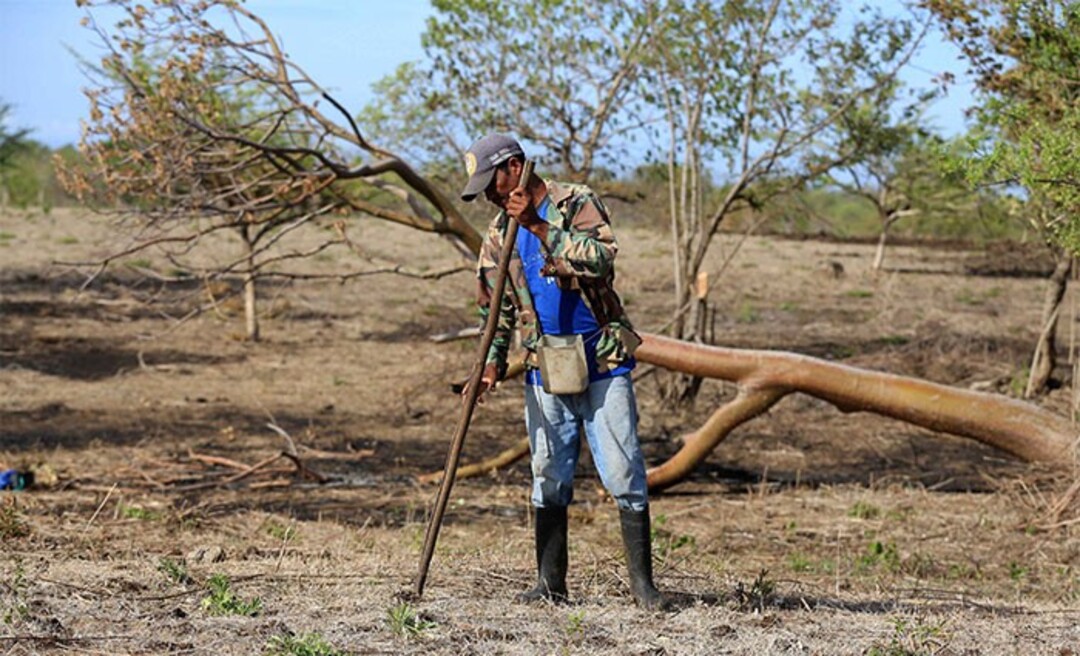
The coffee grower believes exporters need to start looking at other markets, such as Europe, the Middle East, or Canada. The fact that 56% of Nicaragua’s coffee exports go to the United States makes this task even more urgent. Among the available options, he points to two as the most plausible: negotiating prices and selling to China.
To implement the first measure, exporters would need to launch an offensive in the European market, offering coffee at a generous discount. Although this would reduce profits across the sector in Nicaragua, the result is less damaging than facing a 100% tariff to enter the U.S. market.
There is also the option of China, both due to a free trade agreement between Nicaragua and China and the regime’s eagerness to attract new investments and expand exports there. But winning over the Chinese market is not easy. In 2022, Nicaragua exported only $12 million (0.3% of the total) in products to China.
Two years later, in 2024, that figure rose to $61.3 million (1.5% of total exports), according to the Central Bank of Nicaragua’s fourth-quarter 2024 Foreign Trade Report. By comparison, Nicaragua imported $1,073.5 million in 2022 (13.5%) and $1,436.3 million in 2024 (15.9% of total imports).
One reason Chinese consumers remain distant from our products is precisely the distance. This is true whether we want to sell them coffee, since we cannot compete with India, which also produces coffee and shares about 3,400 kilometers of border, or meat.
Nicaraguan meat has potential in the Chinese market, due to China’s growing middle class with sufficient resources to purchase products their grandparents considered a luxury. With a population of nearly 1.4 billion, the market is highly attractive. Distance, however, remains a major non-tariff barrier, keeping Nicaraguan products away from Chinese ports, markets, and tables.
Concern is not limited to business owners (producers or exporters). Workers in Free Trade Zone companies are also worried, as the threat of layoffs looms. The threat feels so real that some are resigning as a precautionary measure. Others, like Melissa, didn’t have the chance to leave before it was too late—she was dismissed eight days ago.
She recounts that her supervisors complained about her because “they said I went to the clinic too often and got sick a lot. What I really think they’re doing is getting rid of workers they feel aren’t productive enough, anticipating the possibility that they may have to lay off more people.”
Mariana works at Formosa de Nicaragua and has a similar perception. Along with her coworkers, she has begun to notice that the company is laying people off. “Management doesn’t tell us anything, but among the staff there are rumors that it’s because of the sanctions against Nicaragua,” she says.
Faced with increasing pressure—which many believe is meant to make them leave on their own—another group has simply started resigning. Their reason is pragmatically speculative: they fear an abrupt closure, and that companies will use it as an excuse to declare bankruptcy and avoid paying what the law requires. Their solution, even if it means losing their jobs before that happens, is to submit their resignations so they can collect severance pay.
Octavio is part of the workforce producing pants at the USLC Apparel factory. There, conversations about the risk of losing employment are minimal, almost nonexistent. This is due to fear, but also because “the bosses don’t mention the topic at all. I think that’s why the workers don’t bring it up either, and if they do, it’s only minimally, without going into details.”
Both Mariana and Octavio report noticing unusual movements in the companies where they work. Changes in the production structure suggest that owners may be taking precautionary measures in case the imposition of tariffs diminishes Nicaragua’s appeal as a platform for exporting to the United States.
Octavio expresses the concern he feels seeing the changes happening within the company. The first is that “we stopped manufacturing certain styles of Dickies Boys pants.” The second is the anticipated closure of a production line where a garment called a coverall is made.
Although this could be just a circumstantial occurrence, he notes that on the company grounds there were containers in use that disappeared a week ago. One stored boxes of pants, others held unused machinery, and some were used by mechanics as workshops. Octavio considers these movements could be some of the first steps the company would take if they decided to close or scale down production. “We’ve heard there will be staff cuts, but neither the administrators nor the line supervisors say anything. They never do until the day they’re firing you,” he said, visibly frustrated.
Mariana and her coworkers primarily manufacture jackets in various styles for different foreign clients. The work is organized so that each module produces different styles or batches. Some recent changes have caused concern among batch owners, who fear their orders might be delayed.
One reason is that the production area has three modules, but one of them no longer has staff because the workers either resigned or “were fired for reasons that didn’t justify dismissal,” she observes.
After closing that production line, management ordered the machinery from the empty module to be loaded into a container. In theory, this equipment was supposed to be sent to El Salvador, “but the government wouldn’t allow them to remove it, so they had to unload everything they had put into the container,” she said.
Neither Mariana nor her colleagues want to lose their jobs, but she and several of the older employees are more worried than the rest. Her reason is that “our retirement date is approaching, but we fear we might be fired before we can process our pension with the Social Security Institute (INSS),” she admitted.
PUBLICIDAD 3M
PUBLICIDAD 3D

Alertas en tu celular
Suscribite a las alertas informativas de Confidencial en Telegram.

Boletines
Lo mejor de nuestra cobertura noticiosa en tu correo electrónico.

Anuncios
Obtené una propuesta comercial de acuerdo a tus objetivos y presupuesto.

Test Político
Explorá tus ideas sobre nuestra política, economía y sociedad con nuestro Test Político.