AA
Share

 Las noticias del día en tu correo
Recibe lo más destacado de la cobertura de CONFIDENCIAL todos los días.
Más boletines
The best of our coverage, in English
Sign up for our weekly newsletter. We will send it to you every Friday at 10:00 am (Nicaragua time)
More Newsletters
PUBLICIDAD 4D
PUBLICIDAD 5D
The repatriation of many Nicaraguans’ bodies is delayed for months due to the absence of immediate family members and a lack of financial resources

No existe estadística oficial de cuántos nicaragüenses han muerto en los últimos años fuera de Nicaragua o cuántos de ellos han sido repatriados. | Ilustración: Confidencial
The body of Nicaraguan national Bryan Rogelio Cruz Calderón remained in the morgue of the San Francisco Office of the Medical Examiner in California for more than eleven months. No one could officially claim it because he had no relatives in the United States, nor any documents to facilitate the process. Even in death, he remained stateless.
Thousands of miles away, another Nicaraguan family faced a different, but equally painful, situation. The body of Francisco Antonio Lumbi Chavarría had been in a morgue in Jacksonville, Florida, for more than six months. His relatives had gathered part of the money needed to repatriate him, but not enough. Without full payment, no funeral home would agree to retrieve the body. Time passed, and so did the anguish.
Bryan Cruz was a farmer who was tortured, exiled, and stripped of his nationality for opposing the dictatorship of Daniel Ortega and Rosario Murillo, while Francisco Lumbi was a citizen pursuing the “American dream.” Their stories ultimately became linked by a shared reality: the solitude of migrants or exiles who die abroad, and the struggle of their families to bring their remains back to Nicaragua.
Repatriating a body is neither a single procedure nor a quick one. It involves a chain of arrangements and expenses that vary depending on the country where the person dies. In Costa Rica, due to its proximity to Nicaragua, the cost is around $2,000; from the United States, it can reach up to $10,000; while from Spain, it would range between $6,000 and $6,500. These costs are cut in half if families choose to cremate the body and repatriate the ashes.
Bryan Cruz grew up in the rural areas of Estelí, in northern Nicaragua. He could neither read nor write. He was an opponent of the regime of Daniel Ortega and Rosario Murillo, and he took part in the marches organized by the Movimiento Campesino de Nicaragua between 2013 and 2017 against Law 840, also known as the Interoceanic Canal Law.
He also became involved in the mass protests of April 2018, which were violently suppressed by the Ortega regime, leaving more than 350 Nicaraguans dead and thousands injured, according to national and international human rights organizations.
Following the demonstrations, police and paramilitary forces in the municipality of Pueblo Nuevo, in the northern department of Jinotega, captured Bryan Cruz in the rural community of El Dorado, where one of his sisters lived. He was accused, without evidence, of stealing a cell phone.
In prison he suffered torture, including rape with a bayonet that perforated his colon and left him near death. He was even transferred to the morgue of Victoria Motta Hospital in Jinotega, where the medical examiner discovered he was still alive.
Bryan Cruz was the first political prisoner to denounce torture in Ortega-Murillo prisons in 2018. Besides the rape, the skin of his testicles was flayed, and he suffered constant abuse, beatings, lack of medical care, and total isolation as punishment. His wife was groped when she came to visit him.
The Nicaraguan never stayed silent about the torture and abuse he endured. “Many people don’t say they were raped, but he spoke openly about it and allowed photos to be taken (of the aftereffects of the torture). He said this government had to pay for everything it has done,” recalls Juana Maria Porta, a Nicaraguan resident in California who helped and accompanied Bryan Cruz in exile.
The farmer was released from prison and expelled from the country along with 221 political prisoners in February 2023. He arrived in Washington with severe physical aftereffects, including a stomach hernia caused by the torture, for which he underwent surgery in the United States. Those who knew him recall that the trauma never left him.
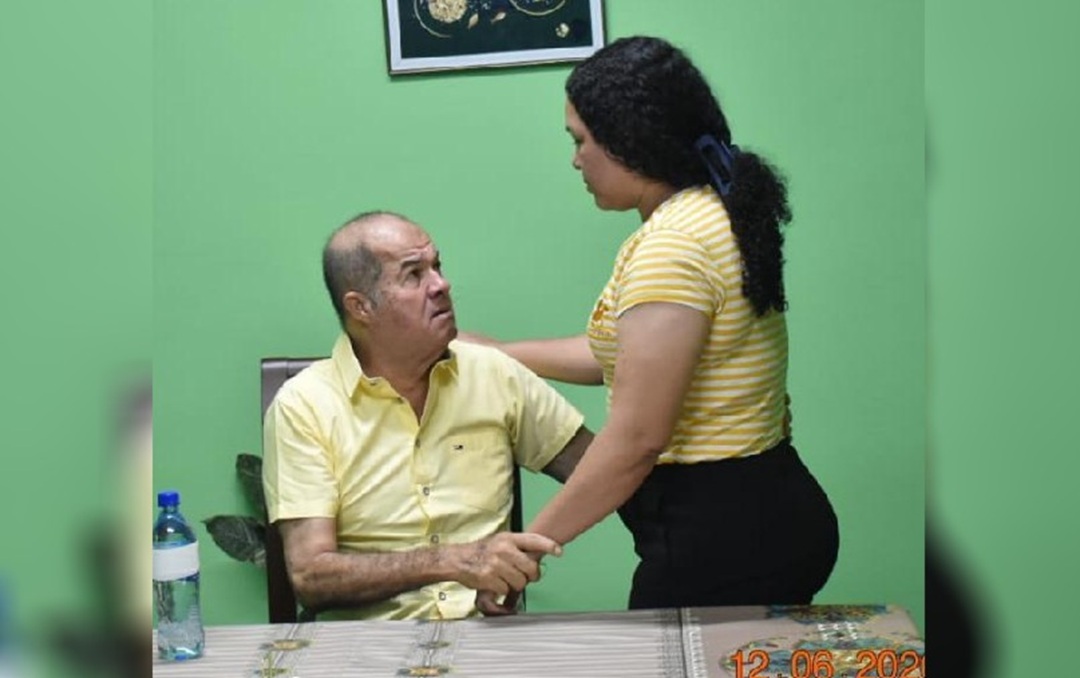
In the United States, he began a “difficult” but hopeful process of adaptation: he was learning to live alone in a new city, washing dishes, and sending money back to his family in Nicaragua. Juana María Porta says Bryan alternated between moments of enthusiasm and episodes of sadness. At times, he felt lonely, especially at night. The trauma was like his shadow, always clinging to him.
“He would call me at odd hours, around midnight or in the early morning, to play me songs or videos by Karol G, because he knew I liked her. I would answer out of fear it might be an emergency, and I’d say, ‘Do you think people don’t sleep?’ And he would just reply, ‘Oh, oh, I’m sorry.’ I think he just wanted someone to talk to,” the Nicaraguan woman recalls.
Bryan Cruz died at the age of 37 on Friday, April 18, 2025, in a small apartment that the U.S. government under Joe Biden had assigned to him in 2024 in downtown San Francisco, California. There were no visible signs of violence, and the cause of death was recorded as “undetermined,” according to Porta.
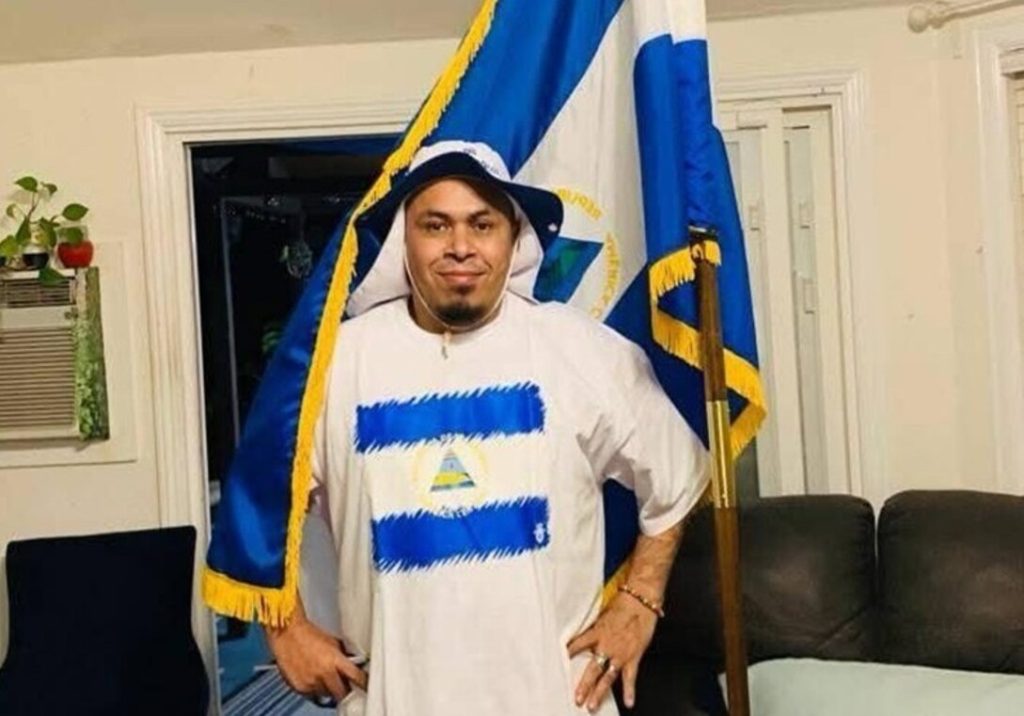
Hours before his death, Bryan Cruz had been at Juana María’s home in Hercules—a city about 30 kilometers from San Francisco—so she could help him with his asylum application. “He spent the afternoon at my house, joking around with some guys who are here. He took photos with them next to the Nicaraguan flag. It was something he always did,” the Nicaraguan woman recalls.
“When it got late,” she continues, “I gave him $100 for transportation and as a bit of help. Once he got home, he called to let me know he had arrived safely and that the next day he would come back to pick up some papers. That was the last time we spoke.”
At first, U.S. authorities did not issue a death certificate because Bryan Cruz was stateless and had no immediate family members who could legally represent him. As a result, the Nicaraguan’s body was “close” to being cremated and buried in a mass grave; that outcome was prevented thanks to the intervention of Porta and Anita Wells, another Nicaraguan in the United States who had helped Bryan Cruz.
Juana María Porta was designated as the legal representative of the farmer’s family.
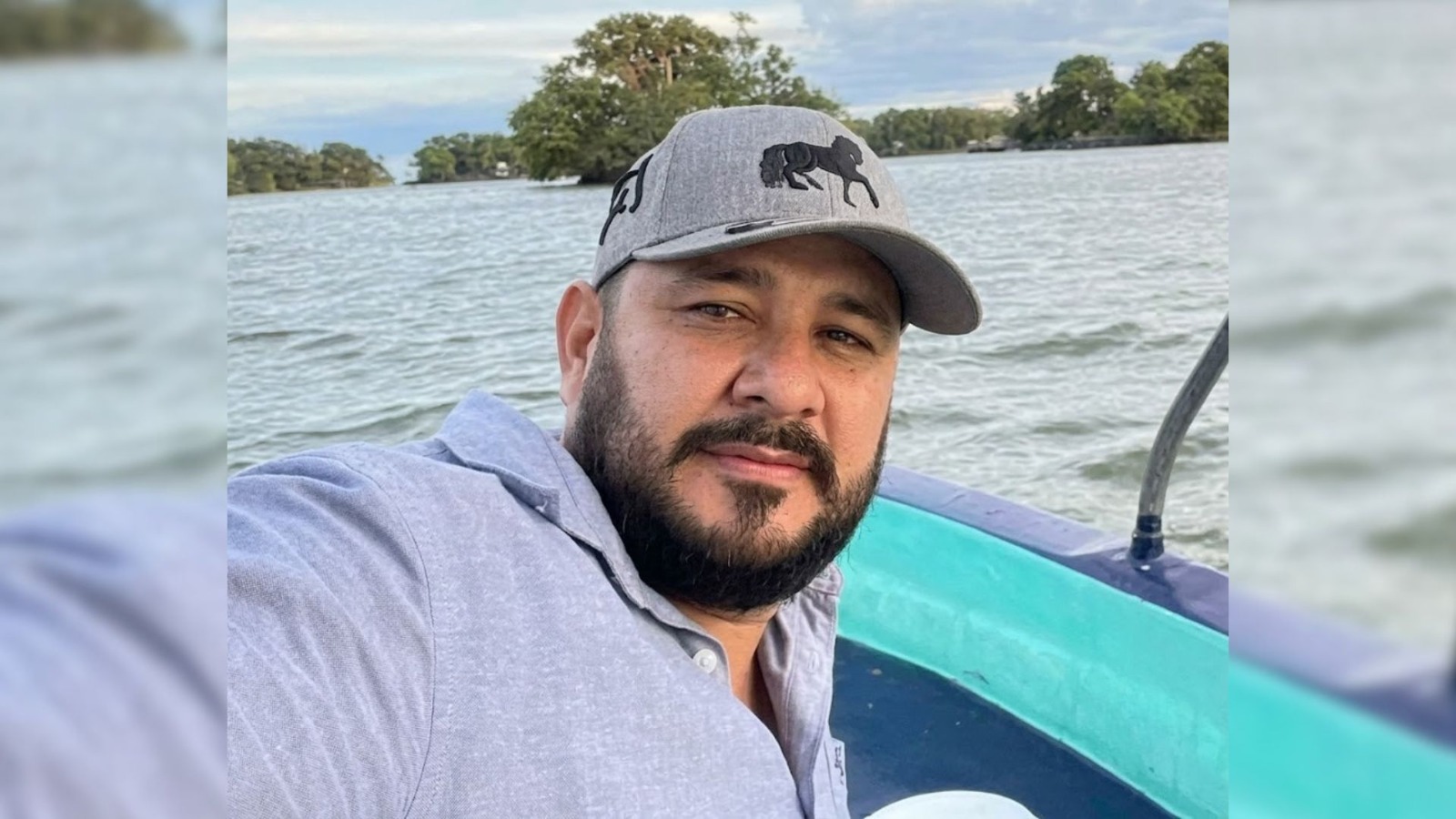
Francisco Antonio Lumbi Chavarría had always worked as a security guard in Nicaragua. His last job was with the Empresa Nicaragüense de Acueductos y Alcantarillados (Enacal), at its offices in Juigalpa, Chontales, in the central part of the country. He was originally from that city, located in a cattle-raising region.
“He dreamed of starting a pig farm, but he said that with what he earned, he wouldn’t be able to. So he decided to set out on that adventure of the so-called American dream,” recalls Marjorie Lumbi Chavarría, Francisco’s sister.
The Chontales native left Nicaragua on December 6, 2022, with a friend, as part of one of the groups that, at the time, organized departures in so-called “tours,” guided by smugglers, from Managua to Guatemala, and from there to the U.S.–Mexico border. They were also called “excursions,” and were one of the methods thousands of Nicaraguans used to migrate to the United States, especially between 2021 and 2022.
Francisco Lumbi’s journey from Nicaragua to the U.S. border in Laredo, Texas, took two weeks. He encountered no setbacks, and on December 17 he turned himself in to U.S. authorities to request asylum for “political reasons.”
“He called me on December 19 (2022) to tell me he was getting out (of the detention center where they processed his asylum request). He told me he was fine and had been lucky because some gringos gave him money so he could continue on to where he was headed, to an uncle in Jacksonville, Florida,” recalls his sister.
His life in the United States was marked by ups and downs. On several occasions, he complained that some Americans wouldn’t pay him for the work he did, taking advantage of the fact that, because of his immigration status, he couldn’t take legal action against them. He always worked as a construction laborer—first applying joint compound to walls, and later in roofing (installing and repairing roofs). “When things were going badly, I’d tell him, ‘Come back, you don’t need to be there; we’re waiting for you here.’ But he would reply that it was just a rough patch; then he’d find another job and everything would go back to normal,” Marjorie Lumbi recalls.
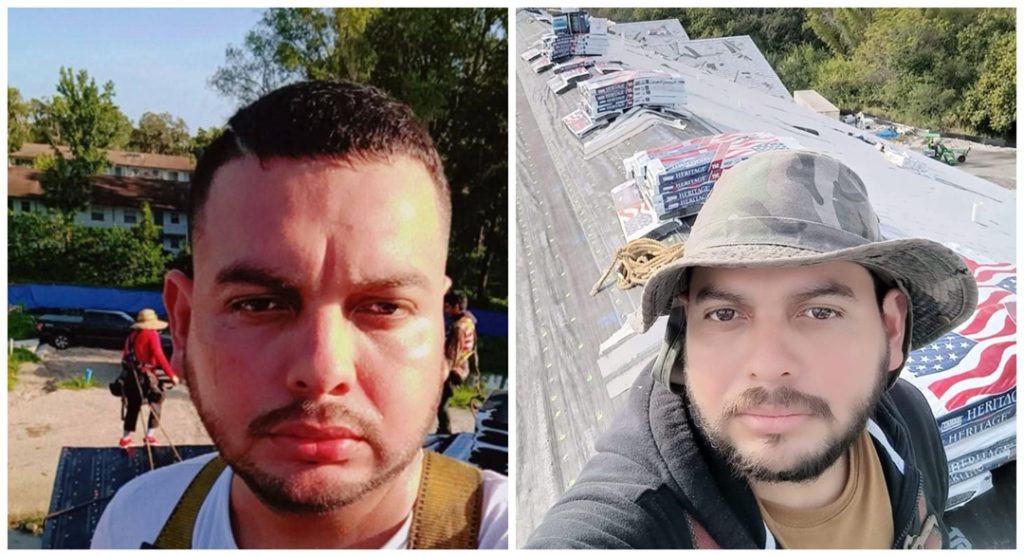
The Nicaraguan always held on to his plans of starting a pig farm in his hometown, but he no longer wanted to return to his country. “His idea was to keep living there and only come back to visit,” his sister says. “He told me he felt good there, that he had adapted to that way of life. The only thing was that being alone always weighed on him. He missed his family—sometimes he would cry when he spoke with me.”
Francisco Lumbi died at the age of 34 on Sunday, September 22, 2024, in an apartment he rented in Jacksonville. He was going through a difficult moment because he hadn’t been paid for a job, although he was confident he would get through it. Marjorie spoke with him by video call between Saturday night and early Sunday morning. “Since they hadn’t paid him, and I kept urging him to come back (to Nicaragua), he told me: ‘No, tomorrow I’ll be better—tomorrow they’ll pay me and I’ll take on another job; it’ll be a fresh start.’”
“He died on the 22nd at seven in the morning. They didn’t find him until Monday (the 23rd) at midday, in his room. He died alone. No one came to his aid,” his sister emphasizes. Marjorie Lumbi asked that the cause of Francisco’s death be omitted.
Bryan Cruz and Francisco Lumbi were among the nearly 900,000 Nicaraguans who have left Nicaragua—forced out for political, security, or economic reasons—since the beginning of the sociopolitical crisis that started in April 2018.
There are no official statistics on how many Nicaraguans have died outside Nicaragua in recent years or how many of them have been repatriated. CONFIDENCIAL requested that information from Nicaragua’s Ministry of Foreign Affairs, but there was no response.
Every week, exile media outlets report the deaths of Nicaraguans in the United States, Costa Rica, and Spain, which are the main destinations of Nicaraguan migration.
The NGO Texas Nicaraguan Community estimates that more than 1,000 Nicaraguans died in the United States between 2019 and early 2026. For other countries, only what is reported in the media is known.
Repatriation is a process handled by two funeral homes: one in the country where the death occurred and another in Nicaragua. They are responsible for requesting and processing the autopsy, death certificate, transport permits, and authentication of documents. They also embalm the body and handle delivery to and collection from airports.
First, the death certificate must be obtained and the identity of the deceased confirmed. Then, the international funeral home is responsible for removing the body from the morgue, preserving it, and preparing it in an airtight coffin suitable for air transport.
Transportation requires specific documentation: the deceased’s passport, family authorizations, international shipping documents, and compliance with health regulations.
While all of the above is taking place in the country where the person died, relatives in Nicaragua must coordinate receipt of the coffin, hire a local funeral home, and organize the funeral.
The time required depends on several factors. If the death was natural, the process may take between 20 and 25 days. If there was violence or a judicial investigation, it can extend for months.
On average—according to funeral homes—a repatriation should be completed in two or three weeks, as long as the family has enough money and the deceased’s papers are in order. Many Nicaraguan families do not meet both requirements, which causes the process to drag on for several months.
If the family cannot gather the money in time, there is a risk that the body will be cremated and placed in a mass grave.
Delays in repatriation also represent an extra expense. US morgues charge a daily fee to keep a body in their vaults. The cost varies depending on whether the body is in a hospital, a private funeral home, or a county (public) morgue. There is no fixed rate, but on average the charge ranges from $50 to $150 per day.
Francisco Lumbi’s family received news of his death without clear information about the cause and without the financial means to cover funeral expenses. For months, his body remained in a morgue while they tried to gather the necessary funds to repatriate him.
Faced with a lack of money, families increasingly turn to crowdfunding campaigns. Social media and digital platforms have become the main mechanism for financing repatriation.
In Francisco Lumbi’s case, a campaign sought to raise $5,000, but months after his death it had reached only a fraction of the goal.
These campaigns are usually organized by close relatives, friends, or members of the migrant community. The fundraising time varies: some gather the money in weeks; others remain open for months while the body continues in the morgue, accumulating costs.
Financial support mainly comes from fellow Nicaraguans abroad, from people who have lived through similar situations, and from community organizations that help spread the campaigns.

In the United States, Texas Nicaraguan Community is the organization that has most supported crowdfunding campaigns and, in exceptional cases, has run them directly. Generally, families contact the NGO through Messenger or WhatsApp, according to Norlando Soza, a member of Texas Nicaraguan Community.
“The first thing we do is verify that the family’s information and that of the deceased are true, that everything is in order,” says Soza.
“We don’t usually run fundraising campaigns. Those have been extreme cases in which we have raised money for the family—for example, people with zero financial resources who live in rural areas,” he explains.
In most cases, Texas Nicaraguan Community simply reposts donation campaigns on its social media. However, it does support families through the repatriation process by putting them in touch with the funeral home it works with in Houston, Texas.
Repatriation has a profound psychological dimension. Prolonged waiting prevents the grieving cycle from closing and can turn it into a traumatic process, according to the Documentation and Support Area of the Nicaragua Nunca Mas Human Rights Collective, an organization working in exile to document repression by the Ortega-Murillo regime.
Psychological theory explains that grief is experienced in different stages:
These stages are not suffered linearly or sequentially, and each person experiences them differently and uniquely.
“Grief becomes traumatic when you cannot reach closure and acceptance, but instead begin to present symptoms: excessive worry, severe emotional distress in the sense that your emotions are uncontrollable, behavioral outbursts, irrational conduct,” the Collective explains.
They add that “the situation becomes complicated” when close relatives cannot fulfill their loved one’s final wish, such as returning them to their place of origin and carrying out funeral rituals, which are also part of the acceptance process.
For exiled Nicaraguan priest Edwin Román, former pastor of San Miguel Arcangel Church in Masaya, religious traditions such as “prayers and masses for the dead, as well as funerals” are moments to “comfort” grieving families.
“Friends call you or visit you. It is a moment when the family also comes together, perhaps relatives who are far away. It is the moment to be together, to share,” says the priest.
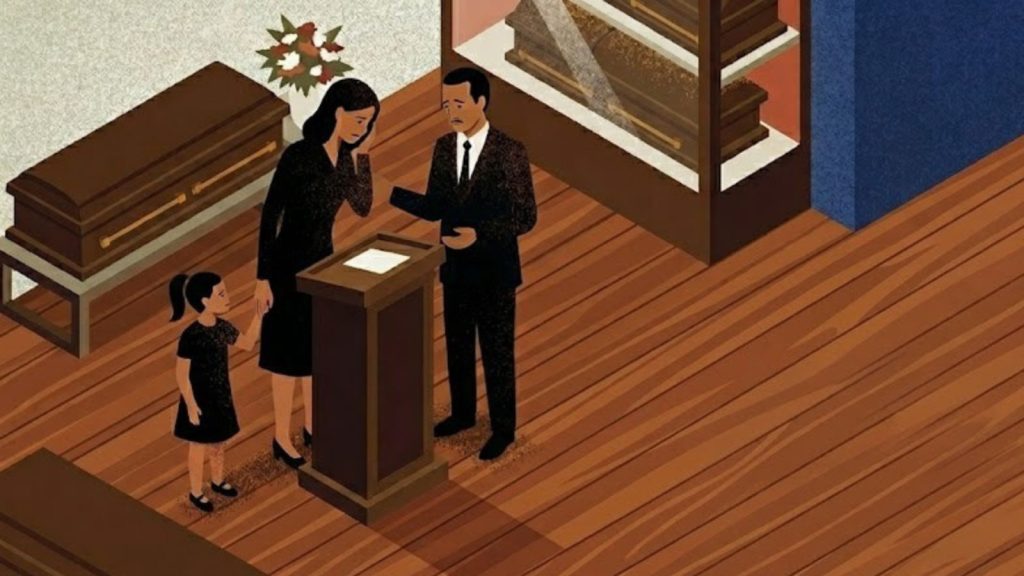
“I was in Monimbo, Masaya, and in many places people share a candle, bring coffee, bread, flowers, or a little monetary help. They also help at the cemetery, preparing the grave,” he describes.
“It is part of solidarity,” he continues. “The family is not alone. First of all, if they are Christian, they are with God. And they have the friendship of their neighbors.”
The Collective warns that it is difficult to “begin a process of acceptance if you have not seen a body, if you have not said goodbye, if you do not have that visual closure with the body as well.”
Marjorie Lumbi recalls that the process of repatriating her brother was an “agony”; it took nine months. “I was desperate. My mother and father would cry, and I couldn’t cry in front of them. I would go to my room alone to think, ‘What do I do?’ Because every day that passed, my brother’s body still wasn’t coming home. I was afraid his body would be lost.”
The repatriation of the Chontales native was delayed because there was no immediate family member to handle the arrangements. After Francisco’s death, a Mexican woman—who was his partner at the time—assured the family she would take care of it. “We didn’t know anything about the process. She asked us for the money (for the repatriation), but she kept it. She didn’t pay the funeral home and kept misleading us until December (2024),” his sister recalls.
“She (the Mexican woman) blocked us on all social media and wouldn’t answer our calls. That was another kind of pain—it was like starting the anguish all over again,” the Nicaraguan woman says.
Francisco Lumbi’s family truly began the repatriation in January 2025, three months after his death. One of the young man’s uncles called the state morgue and begged for “clemency” so that the Nicaraguan would not be cremated and buried in a mass grave.
In addition to a crowdfunding campaign, the family sold a piece of land to complete the more than $5,000 the repatriation would cost.
When Francisco Lumbi’s relatives finally gathered the money, the funeral home informed them it was “not possible” to transport the body because of its condition, and suggested cremation instead.
Francisco Lumbi’s ashes were honored at a wake on Saturday, June 7, 2025, and buried on the morning of Sunday, June 8, in the cemetery of Juigalpa—259 days after his death in Jacksonville. Before leaving for the cemetery, his sister paid musicians to sing Mi última caravana, by Mexican singer Gerardo Díaz y su Gerarquía. It had been a wish expressed by her brother.
“I said goodbye to him and told him: ‘I kept my promise, brother. We didn’t leave you there (in the US), and I said farewell to you the way you wanted,’” says Marjorie Lumbi.
After news of Bryan Cruz’s death became known, Ortega supporters threatened the farmer’s relatives, saying they would “burn the corpse” if it were repatriated. This frightened and alarmed Bryan’s family and friends in Nicaragua and the United States.
In a video published in late May 2025 on the crowdfunding platform GoFundMe, Bryan’s mother and older sister acknowledged that they would not see him again, and instead asked for help to give him a “Christian burial” in the United States.
The body of the Nicaraguan farmer was cremated in late March 2026, after eleven months in the public morgue in San Francisco. The cremation was carried out after the Office of the Medical Examiner waived the debt for the time the body had been kept in storage and agreed to perform the cremation free of charge.
“We only paid for the transport from the morgue to my home,” says Juana María Porta, who adds: “On Holy Thursday (April 2, 2026), Bryan returned to the same house he had left for the last time (on the night of April 17, 2025).”
The waiver came after multiple letters and efforts by the Nicaraguan woman with the Medical Examiner’s Office, the San Francisco Mayor’s Office, and several state legislators in Sacramento, California.
“Bryan’s mother wanted us to bury his body in the United States, but here (in San Francisco) a burial costs $20,000,” she explains. “At first, the idea was to cremate him and send the ashes to Nicaragua, but that wasn’t possible either.”
“Bryan’s dream was to return to Nicaragua, alive or dead; but he was aware that he was an exile, and that the dictatorship did not want him there—neither alive nor dead,” she recalls.
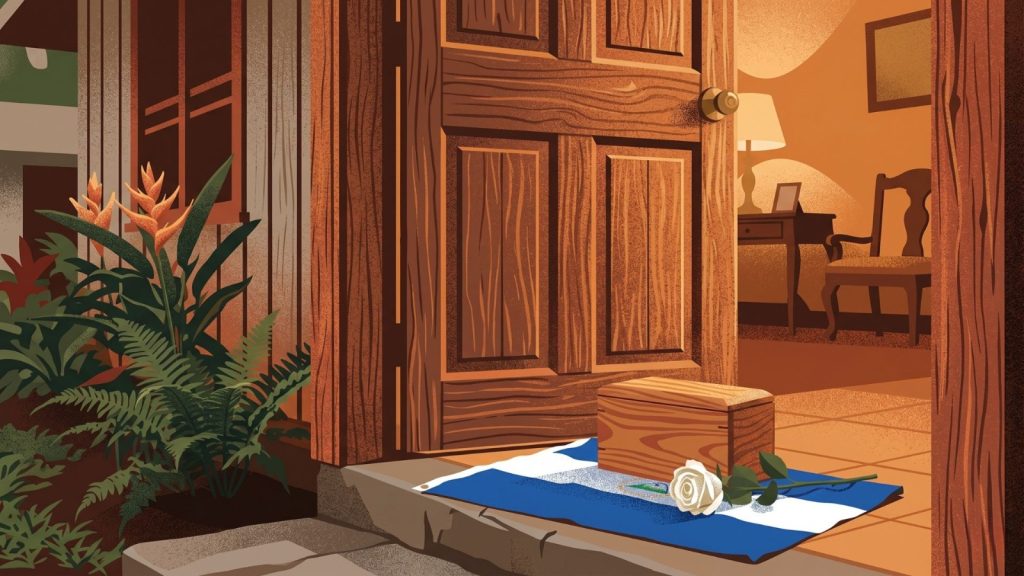
“It is one more injustice against Bryan—that he does not have a place in Nicaragua where someone can bring him a flower,” she says.
Bryan Cruz’s ashes cannot be sent to Nicaragua because he was stateless and has no right to a grave in the country. In February 2023, the Ortega regime declared him—along with 221 released political prisoners—a “traitor to the homeland” and stripped him of his nationality. To legally bring ashes into the country, the deceased’s passport is required, a document he no longer had. The peasant was the second of that group of exiles to die abroad; the first was former president of the Superior Council of Private Enterprise (COSEP), Michael Healy, in January 2024.
The fates of Francisco Lumbi and Bryan Cruz were different, even in death. The first has a place in Nicaragua where his sister can cry for him or sing to him. Meanwhile, the ashes of the dissident farmer wait for a place where someone may pray for him or bring him a flower. Bryan still waits to be able to return home.
*This report was produced with support from the DW Akademie journalism grant and the Institute for Press and Freedom of Expression (IPLEX). The grant is part of the global “Space for Freedom” project of the Hannah Arendt Initiative, sponsored by the German Federal Foreign Office.
Archivado como:
PUBLICIDAD 3M
PUBLICIDAD 3D