AA
Share

 Las noticias del día en tu correo
Recibe lo más destacado de la cobertura de CONFIDENCIAL todos los días.
Más boletines
The best of our coverage, in English
Sign up for our weekly newsletter. We will send it to you every Friday at 10:00 am (Nicaragua time)
More Newsletters
PUBLICIDAD 4D
PUBLICIDAD 5D
Nearly 10,000 Nicaraguans have been deported to Nicaragua between 2025 and March 2026. Government officials say they are ordered to investigate them.

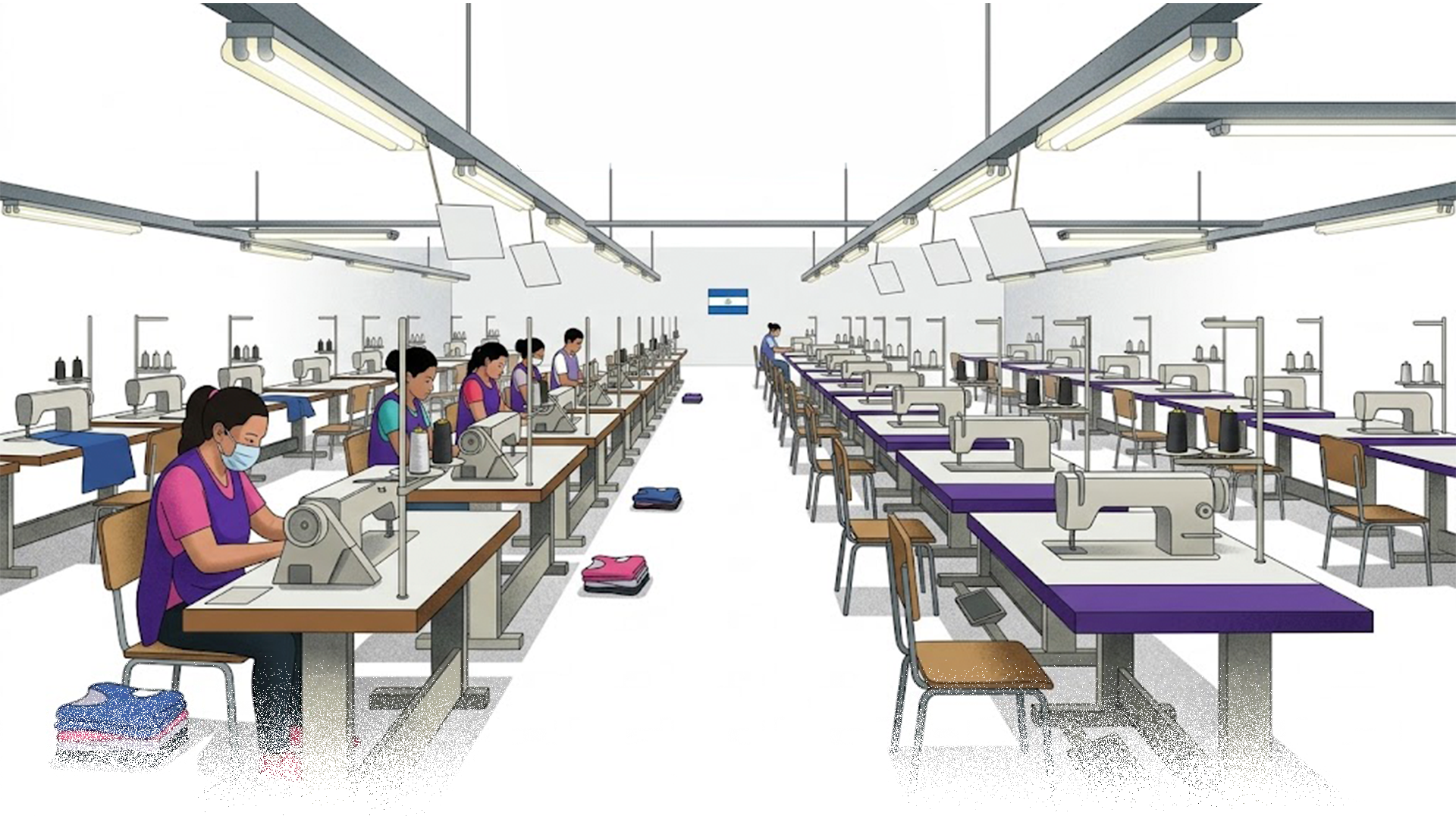
Trabajadores del Estado, la Policía e instituciones públicas participan en el espionaje contra los deportados. // Ilustración: CONFIDENCIAL
“The work of investigating deportees has been intense,” says Róger, a public official at the Civil Registry. He details that the requests are constant, at least every two weeks. “We’re told to find out whether they are actually Nicaraguan, whether they are registered, and to gather all available information about these individuals,” he says.
For Róger, this is part of Rosario Murillo’s paranoia, which has grown since 2025 and “multiplied” after the capture of Nicolás Maduro in the early hours of January 3, 2026. “Surveillance and investigations into who the deportees are has been an order from Rosario Murillo since last year, but it has intensified in recent months,” he explains.
Verifying names, place of birth and registration, identifying parents, marital status, and whether they have children are all part of the details Róger must provide “as quickly as possible” regarding the lists of deportees he regularly receives.
“The fear is that they may be sending infiltrators, or people trained by the United States to organize some form of protest,” Róger suggests. That’s at least the impression he says he’s gotten during the meetings where he receives instructions.
“It’s information they request and are desperate to obtain, because there is also a broader surveillance process targeting these individuals,” he adds.
Claudia, an official at the Social Security Institute (INSS), reveals that many deportees are taken to their homes in special enclosed buses equipped with cameras and audio. “These buses belong to the INSS. They’re monitored from the moment they arrive, and they’re also interrogated at the airport,” she explains.
“The idea of taking them all the way to their homes is to identify where they live, so it’s easier to keep them under surveillance afterward,” she says.
According to Claudia, a driver from that institution was sanctioned because they realized that he “talked too much” during one of the transfers of deportees to their homes.
“They do this, and describe it to us in some way, to intimidate us as well,” she notes.
As part of the investigation ordered by Murillo, the INSS is also asked to provide information on where these individuals have worked, how many weeks they contributed to the system, and what their income was when they lived in Nicaragua before leaving for the United States.
The Donald Trump administration deported 7431 Nicaraguans in 2025, according to official U.S. data compiled by CONFIDENCIAL. Migrants arrived in Managua on 56 flights. That number exceeded the total of 50 flights recorded over the previous two years combined: 2023 and 2024.
The quiet deportation flights continue to arrive in Managua. At least ten flights were reported in January 2026.
Between January and the first week of March 2026, the United States deported 2,486 Nicaraguan migrants who were undocumented, according to information provided by a U.S. official to 100% Noticias.
The increase in flights corresponds to the anti-immigration policies promoted by Donald Trump, who, in his second term beginning January 20, 2025, pledged to deport one million undocumented migrants within his first 365 days in office. However, the deportation policy has continued into his second year.
The regime of Daniel Ortega and Rosario Murillo has remained silent about the deportation flights. Despite the crisis facing migrants in the United States, Ortega has only addressed the issue on four occasions.
Deportees have been labeled as “persons of interest” by the government, and orders have been given at the neighborhood level to keep them under watch, confesses Esther, a Sandinista Front (FSLN) worker in a city in central Nicaragua.
“They’re being told to investigate them—to see who comes to their homes, who they meet with, and what they’ve been doing since returning to Nicaragua. They’re also asked to find out whether they have been opposition supporters or not,” she explains.
Twelve hours after the United States captured Venezuelan President Nicolás Maduro, “co-president” Rosario Murillo called an emergency meeting on the afternoon of January 3, 2026. The meeting included party operatives from the Sandinista Front as well as senior officials from the government, the army, and the police. During it, she ordered all territorial party structures to remain on “alert status” and decreed increased surveillance in neighborhoods and on social media, sources linked to the FSLN Secretariat confirmed to CONFIDENCIAL.
During that closed-door meeting, Murillo ordered increased vigilance on “radical opposition elements”, particularly in relation to “deportees from the United States”, and warned about the possible “formation of groups that could disturb our peace.”
Esther believes that surveillance of deportees had already been in place since 2025, but this “new measure to intensify monitoring” was quickly implemented across municipalities following Murillo’s directive.
“From that moment on, the order was to double down on the police-state presence and party surveillance from within neighborhoods,” she says.
Monitoring deportees’ social media activity, as well as tracking their movements in the neighborhoods where they live, are among the measures adopted by the Sandinista National Liberation Front (FSLN). “So-called revolutionary surveillance command posts were set up in every neighborhood and community across Nicaragua, with particular focus on individuals considered opposition figures or persons of interest, such as deportees,” Esther explains.
But surveillance of deportees is not only carried out discreetly by the regime. “The police came to my house to ask why I’ve been receiving money from the United States,” says Ulises, a Nicaraguan deported in 2025.
He told them that his parents still live in the United States and occasionally send him money to support him financially or to make improvements to his home.
-“But isn’t someone funding you to do something against the government?” one of the officers asked.
—“Not at all. You can verify that the money I’ve received as remittances comes from my family,” Ulises replied.
—“You know we’re watching you,” the other officer said in a seemingly casual tone.
For Ulises, these visits are a way to keep them “intimidated” and to show them “that they know all our movements, including the financial transactions we make.”
Since being deported, Ignacio has been “rebuilding” the life he had before leaving for the United States. “I’m working in a family business and living with my family, whom I missed a lot,” he says.
However, he says he is aware of the FSLN’s surveillance—both of him and of others he knows who were also deported.
“Patrols are constantly passing by my house, and I know they assigned party members to keep an eye on me, because a friend who works for them told me,” he explains.
Most Nicaraguans deported from the United States are men between 20 and 40 years old, and had spent fewer than five years in the U.S., according to data extracted and analyzed by CONFIDENCIAL from the Deportation Data Project.
The same data shows that most Nicaraguan migrants did not have criminal records, but were deported for lacking legal status to live in the United States.
Nearly half of those deported in 2025 had migrated to the United States in 2022—the year Nicaragua experienced an unprecedented wave of migration to the U.S.
“I think what worries Rosario Murillo is not a military attack from the United States, but rather infiltration—that deportees like us might be people trained to create chaos and spark protests,” Ignacio says.
In his neighborhood, friends and relatives are constantly “checking up” on what Ignacio does or says. “I think I’m aware that this is something I’ve earned, at least until their paranoia passes—or maybe it’s permanent. But if you’ve done nothing wrong, you have nothing to fear,” he insists.
PUBLICIDAD 3M
PUBLICIDAD 3D