AA
Share

 Las noticias del día en tu correo
Recibe lo más destacado de la cobertura de CONFIDENCIAL todos los días.
Más boletines
The best of our coverage, in English
Sign up for our weekly newsletter. We will send it to you every Friday at 10:00 am (Nicaragua time)
More Newsletters
PUBLICIDAD 4D
PUBLICIDAD 5D
Jan-Michael Simon: Nicaragua is a giant prison—even outside La Modelo jail there is no freedom; UN experts urge Red Cross presence

Fidel Moreno (izquierda) junto a Daniel Ortega y Rosario Murillo en la celebración del 19 de julio de 2021. Foto: CCC
Political repression in Nicaragua during “Operation Cleanup” in 2018 was financed through the diversion of funds allocated in the national budget, on the orders of then–Vice President Rosario Murillo (now “co-president”), and carried out through the FSLN’s secretary of organization, Fidel Moreno—also responsible for paramilitary operations—according to the latest report by the United Nations Group of Human Rights Experts on Nicaragua (GHREN).
The report states that, following Murillo’s directives, Fidel Moreno coordinated with the then head of INIFOM, Guiomar Irías, the Managua Mayor’s Office, and FSLN political secretaries to divert at least five million dollars to finance the logistics of repression over a two-month period.
GHREN president Jan-Michael Simon told CONFIDENCIAL that the group has documentary evidence involving at least 13 social assistance and public service projects whose funds were diverted through accounting manipulation techniques and reassigned to finance repressive operations.
In an interview about the findings of the report—which will be debated Monday, March 16, 2026, at the UN Human Rights Council in Geneva—Simon detailed the operations of “transnational repression” involving both Nicaragua’s military intelligence and its diplomatic service.
Current deputy foreign minister Valdrack Jaentschke used positions he held in diplomatic missions in Central America “to recruit collaborators, monitor the diaspora, and map opposition networks as part of a political intelligence apparatus abroad, which is also dedicated to acts of transnational repression,” Simon said.
The GHREN report presents a catalogue of demands and recommendations to the State aimed at ending the repression, and calls for the presence of the International Committee of the Red Cross in Nicaragua to monitor the situation of the disappeared and political prisoners.
“Nicaragua is a giant prison, whether or not you are in La Modelo, because the surveillance system and the punitive capacity they have created across the territory mean that no one dares to exercise their freedoms,” Simon said. “But the mechanism that can be deployed most quickly on the ground to protect people who are in prison is the International Committee of the Red Cross,” he added.
This new GHREN report examines the profile of the victims of human rights violations after 2023. Who are the victims in these most recent years of repression, after some political prisoners were released in 2024 and 2025?
What began as a direct attack on demonstrators—once the regime regained control of street protests—and later, after the electoral process, with the neutralization of immediate political adversaries, gradually expanded as the repressive machinery identified gaps outside its control. The main gap, since internal control had already been consolidated, was abroad. In Nicaragua what operates is what in other countries is called transnational repression, and what we describe as transnational human rights violations.
The Government of Nicaragua has applied a very broad range of methods—among the worst practices observed internationally in cases of transnational repression. These range from physical violence—the most striking case being the killing of Roberto Samcam last year—to an entire portfolio of administrative repression, including measures against relatives of people abroad who might, even remotely, represent a threat to the regime. We also cannot rule out other motives such as revenge or internal consolidation within the apparatus.
The report describes “an architecture of transnational repression.” Who directs these repressive policies and which state structures are involved?
It is directed by the highest levels of the State, which we have clearly identified in the Presidency, followed by its closest advisers. But there is also another component, beyond what we described in last September’s report (2025), related to the use of Nicaragua’s diplomatic service. We had already described the tactical operational side under the command of military intelligence, and we had identified its links even with structures outside the country. However, the direct link between intelligence services and the use of the diplomatic infrastructure was something we did not yet have information about last year, and we have been able to consolidate that information in recent months.
In the report you mention espionage activities carried out by Foreign Minister Valdrack Jaentschke before he assumed that position. If the foreign minister is involved, does that mean the diplomatic service is also an instrument of these policies of transnational repression?
Yes, exactly. That is one of the main findings, in addition to the issue of financing repression. We can see how the current foreign minister used positions he held to recruit collaborators, monitor the diaspora, and map opposition networks while serving in diplomatic missions in Central America. This allows us to conclude that his role was part of a structured political intelligence apparatus abroad, which in turn carried out acts of transnational repression. I should clarify that at this time we do not have information about political intelligence activities in his current role as foreign minister—a position he assumed in 2024—and we are referring to his previous posts, although we are continuing to expand this body of information.
The GHREN report confirms that 452 citizens have been stripped of their nationality and had their property confiscated through decrees published by the State. But it also refers to those who have been de facto denationalized—people who have been unable to renew their passports, who lack identification documents, and who are barred from entering the country. How many people are de facto denationalized?
The real figure is likely much higher. We can make estimates based on data from UNHCR on political asylum applications abroad, which reach nearly 360,000. As a working hypothesis, we start from the premise that a request for political asylum presupposes political persecution, and there must be many more people who suffer from administrative forms of transnational repression—such as the refusal to renew passports or the denial of certifications needed to prove nationality. What we mostly have is anecdotal information, but the patterns we see suggest the number must be far higher. An interesting point is that whoever has access to the government’s digital archives would have the exact figure. Until one has that access, it is difficult to project.
What did you conclude about the international surveillance and espionage mechanisms developed by the regime? Many people are afraid to communicate or travel to the country precisely because of these surveillance mechanisms. .
Yes, alongside our report you will see a web in which you can identify the very specific nodes involved in intelligence related to transnational repression. If you add this web to the one we published with our report in September last year and earlier in the April 2025 report, you will have a very clear picture of where the nodes that carry out these attacks are located, and where the risks lie when exercising those rights.
How do you assess the reaction of Latin American and European governments to these violations, and of institutions such as Interpol? Is there cooperation with the regime, or protection for Nicaraguan victims?
Interpol, as a very old organization, is a body for cooperation between police agencies—older even than the United Nations—and it has a duty of due diligence in protecting human rights. The misuse of these instruments creates responsibility for the agency itself. We have been in contact with Interpol to point out that in many cases of red notices—and more subtly in the system for lost and stolen documents—there has been misuse by the government. We hope that the relationship we have established will ensure that this entity will not be manipulated by this government in the future.
The GHREN report refers for the first time to the mechanisms used to finance repression. It mentions the diversion of funds from the General Budget of the Republic through co-president Rosario Murillo and Fidel Moreno to finance repressive activities. Is this a parallel budget, a private budget? How does it work?
It is an official budget from which funds are diverted using different accounting manipulation techniques. These are funds mainly allocated to social assistance and other public services. The public officials behind this are political secretaries who are instructed to reassign portions of the budget that are easy to divert—that is, to reallocate. For example, economic assistance payments, social aid programs, sanitation projects, and humanitarian assistance. It also includes consumable and operational expenses such as fuel and travel allowances. This is a classic practice in corruption: these expenses are projected as legitimate expenditures. In this case, we have access to documentary evidence.
Has the total amount of the budget used for repression been quantified?
Not in total, but in 13 very specific projects we have been able to identify the figures. That is not included in this report and we are still working on it—this is the first installment—but it can be done. The issue here is not so much the amount as the way these funds are used, because I have worked on these matters for decades. We focus on which funds are diverted for improper purposes.
We can demonstrate the direct link between embezzlement or diversion of funds and human rights violations. It is a question of causality, which is usually established in corruption cases in order to ensure accountability. The same principle applies to human rights violations, and this case has a solid legal basis under Article 17 of the United Nations Convention against Corruption (UNCAC).
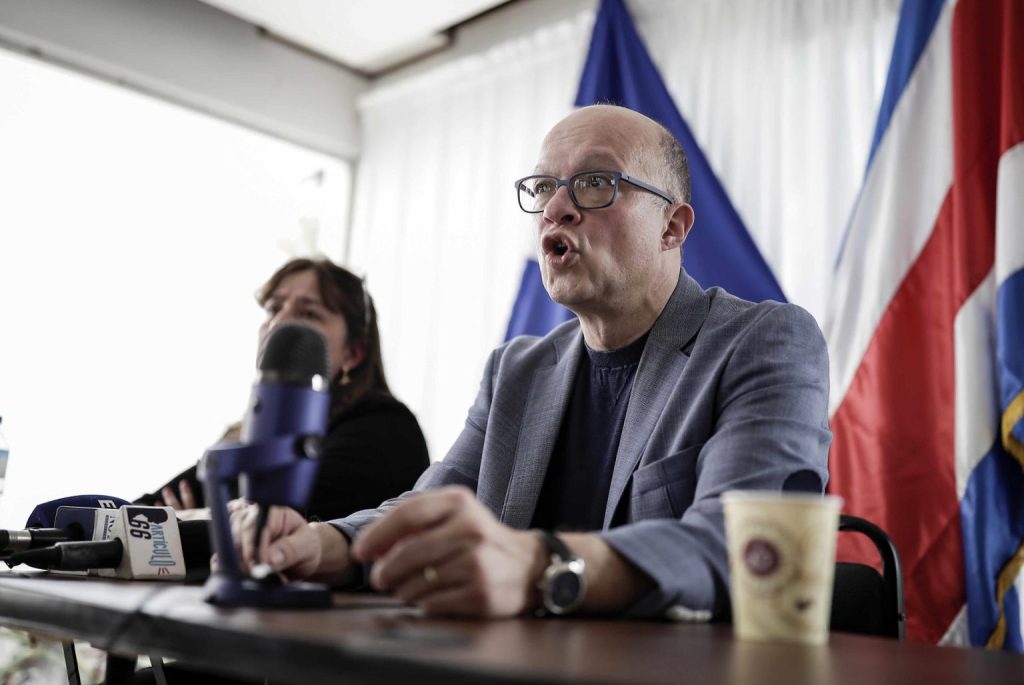
The report also addresses internal repression, including enforced disappearances in prisons, political detainees, repression against victims’ relatives, and repression specifically targeting women’s groups.
Yes, the system of political prisoners that the State takes as hostages continues—what we call in English bargaining chips—to have something in hand to negotiate with the international community.
The profile of the people who remain in prison is diverse, ranging from individuals linked to religious groups, Indigenous and peasant movements, to people from within the State structure itself. I am aware that there is a somewhat complex debate about whether these individuals should be considered political prisoners or not. The category of “political prisoner” does not exist in international law, which is why we do not take a position on that. However, it is clear that they have been victims of arbitrary detention following trials—so-called trials—within a so-called justice system that is not worth referring to as a justice system, and that is why their detention is arbitrary.
On the other hand, one can also see that Nicaragua is essentially a giant prison, whether or not you are in La Modelo, because the surveillance system and the punitive capacity they have created across the country mean that no one dares to exercise their freedoms.
GHREN confirms that crimes against humanity continue to be committed in Nicaragua, with primary responsibility resting on the “co-presidents.” Are there any specific findings regarding the individual responsibilities of the 54 senior officials in the chain of command that you have mentioned before?
Not only the United States, but other countries have sanctioned five individuals in recent weeks, and that is due in part to the findings in our reports.
It depends on the level of the chain of command we are talking about. As we deepen our lines of investigation, we will have much more information regarding responsibilities further down the chain. The responsibilities at the top are now well established, and countries interested in holding these individuals accountable—whether through criminal proceedings, universal jurisdiction, the principle of passive personality, or other avenues—will be able to access information that is not public at this time. Under our mandate, we collaborate with countries that wish to exercise jurisdiction to hold these individuals accountable.
In its conclusions, GHREN says that the Nicaraguan State continues to refuse to engage in dialogue with the United Nations and calls on governments and the international community to act and pursue legal action against these crimes. Are there political conditions today for international action by different countries to bring these individuals to justice?
If these individuals leave the country, yes. There are also jurisdictions such as France, for example, that can exercise criminal jurisdiction even without the presence of the accused in their territory.
But the State must also be held accountable, and there are sufficient avenues to do so. There is an ongoing process at the International Labour Organization (ILO), which will culminate in a report that has the potential to reach international justice. These avenues are also important. From our first report we said that the State should be held accountable for violations before the UN Committee Against Torture and under the 1961 Convention on the Reduction of Statelessness. So far we do not see anything on the horizon, but perhaps more countries will step forward.
In its recommendations, GHREN highlights urgent issues such as the disappeared, political prisoners, and repression under the police state—matters on which the government has refused to respond. Do you expect any international pressure on the Government of Nicaragua to open the prisons?
This is the first time you will see such a broad set of recommendations addressed to the government. We believe that after four years of work, and with the information we have generated, this is now an opportunity for the State to demonstrate its good will to change the situation. If it does not, we do not rule out that there will be increased pressure on the government.
Last year you appeared before the United Nations General Assembly. This report will be presented next week to the Human Rights Council. What do you expect from the Council’s members and from the international community?
Exactly that the international community take very seriously the catalogue of urgent actions we have recommended to the government and monitor whether these actions are implemented in the short term. If they are not implemented, by next September we will report to the Council in a much more emphatic way about the lack of progress regarding these recommendations.
In the meantime, what kind of protection can victims of internal repression—and also of transnational repression—have?
As we described in our first report, the State of Nicaragua has effectively taken its own population hostage, which is why we concluded that crimes against humanity are being committed. That was precisely the rationale when this category of crime was developed in international law in the mid-20th century.
As for protection, the mechanism that can be deployed most quickly on the ground is the International Committee of the Red Cross, to protect people who are in prison. We will continue insisting on access and monitoring. At this moment, that is the only form of protection that can realistically be provided on the ground. It is the paradox of state sovereignty: when a State takes its own citizens hostage, there are very few tools left.
At the moment when GHREN presents these recommendations, the world is going through a period of what many describe as a rules-less international environment. How does this affect the call for respect and enforcement of international human rights norms?
My colleagues, Reed Brody and Ariela Peralta, and I continue to believe that the international response to the situation in Nicaragua must be guided by international law, the protection of human rights, and the peaceful restoration of democracy in Nicaragua. Even if in other countries we see, counterfactually, the idea that the world has supposedly changed, we insist on the value of those norms. That is our mandate. If we did not believe in those norms, we should simply go home.
Is there any basis for optimism—for hope that those norms and international justice can prevail?
Little by little, actors will realize that a world without rules is very difficult to live in, even for those who believe themselves to be the strongest. And a small country like Nicaragua, which is not among the most powerful, may still make a difference in demonstrating that these values remain valid. We strongly believe that will be the case.
PUBLICIDAD 3M
PUBLICIDAD 3D