AA
Share

 Las noticias del día en tu correo
Recibe lo más destacado de la cobertura de CONFIDENCIAL todos los días.
Más boletines
The best of our coverage, in English
Sign up for our weekly newsletter. We will send it to you every Friday at 10:00 am (Nicaragua time)
More Newsletters
PUBLICIDAD 4D
PUBLICIDAD 5D
Former President Luis Guillermo Solís suggests “reviewing” the diplomats that Valdrack Jaentschke appointed to the Nicaraguan embassy in San José.

El presidente de Costa Rica, Rodrigo Chavesm camina junto a simpatizantes luego de comparecer ante una comisión de la Asamblea Legislativa, en San José, el 23 de septiembre de 2025. | Foto: EFE/Alexander Otarola
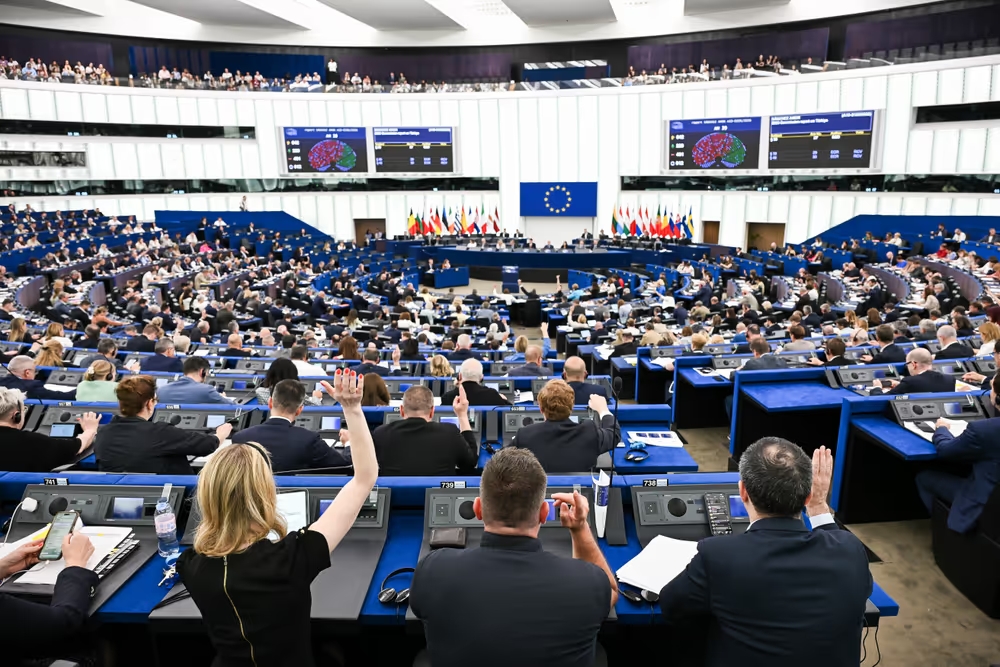
Eight former presidents of Costa Rica endorsed a report presented by the Group of Experts to the UN General Assembly on October 30, 2025, on the crimes against humanity committed by the Nicaraguan dictatorship, and called on the international community—and in particular the government of President Rodrigo Chaves of Costa Rica—to support the GHREN report’s recommendations to bring the Managua regime to international justice.
The statement, signed by Oscar Arias, Rafael Ángel Calderón, José María Figueres, Miguel Ángel Rodríguez, Abel Pacheco, Laura Chinchilla, Luis Guillermo Solís, and Carlos Alvarado, urges the Costa Rican government to “implement comprehensive measures to protect Nicaraguans living in exile and seeking refuge in our country,” following the shock caused by the murder of Nicaraguan refugee and opposition figure Roberto Samcam in San José on June 19, 2025.
In an interview on the program Esta Semana, broadcast on CONFIDENCIAL’s YouTube channel due to television censorship in Nicaragua, former Costa Rican President Luis Guillermo Solís emphasized that “if there is political will, Costa Rica can do much more” in the crisis caused by the Nicaraguan dictatorship, maintaining a principled stance even if it comes at some cost. He also stressed that Costa Rica must and can “protect refugees” who are threatened by transnational repression.
Among other measures, Solís suggested strengthening the preventive work of Costa Rica’s Directorate of Intelligence and Security, seeking international support from friendly security agencies, and reviewing the résumés of diplomatic officials who were placed in the Nicaraguan embassy in Costa Rica during the tenure of Valdrack Jaentschke, an expert in “state intelligence and security” and now Nicaragua’s deputy foreign minister.
What is the significance of this report on crimes against humanity, attributed by the Group of Experts on Human Rights (GHREN) to the Ortega-Murillo dictatorship, being presented at the UN General Assembly rather than at the UN Human Rights Council in Geneva, from which Nicaragua had withdrawn?
It is a tragic report that causes consternation. On one hand, it confirms what other reports had already shown: the ongoing human rights violations committed by the Nicaraguan dictatorship, and the crimes against humanity that these violations entail. But on the other hand, it reveals a new strategy which, although it has been present in the dictatorship’s actions outside of Nicaragua, has now intensified. This is the deliberate persecution of exiles and refugees who oppose the regime and are outside of Nicaragua, which has involved all kinds of intimidation and even the assassination of some of these opponents, as tragically happened here in Costa Rica with Roberto Samcam. The report is very solid, credible, and carries enormous legitimacy, and I hope it will have consequences, as the debate at the General Assembly seems to suggest.

A dozen representatives from democratic governments in Latin America and Europe spoke out, demanding accountability from the Nicaraguan state and endorsing the GHREN report and its recommendations. On the other hand, we also saw about a dozen countries supporting the Ortega-Murillo dictatorship.
As for those backing the Ortega-Murillo regime—Belarus, Iran, North Korea, China, Cuba, Venezuela, and the outgoing government of Bolivia—none of this surprises me. These are other dictatorships or authoritarian governments that fear coordinated international action on humanitarian law and human rights violations because it directly affects them.
But among those supporting the adoption of the report’s conclusions and recommendations, I was particularly struck by the position of Mexico, for example, which has always been very reluctant to intervene in what it considers a violation of the right to self-determination of peoples, and also by Brazil, which, for reasons of diplomatic pragmatism dating back to the times of the Marquis of Rio Branco, generally prefers not to take a stand on this matter. Both countries, along with others who emphasized its importance and necessity, suggested that Nicaragua should, transparently, be held accountable before international forums—forums from which Nicaragua has conveniently excluded itself, yet participates in and invokes their principles when it suits them.
One of the recommendations made by the Group of Experts is that states should bring a case before the International Court of Justice (ICJ), one of those forums Nicaragua has frequently turned to. In this instance, however, GHREN proposes using it to denounce and hold Nicaragua accountable for violations of the Convention Against Torture and the Convention on the Reduction of Statelessness, both of which Nicaragua has signed but flagrantly violated. This is not a new proposal; nevertheless, to this day, no case has been brought against Nicaragua at the ICJ. Is this a legal issue, or a matter of political will?
I believe it is a matter of political will. Legally, there is no doubt regarding Nicaragua’s violations of the treaties it has ratified, nor of the more recent violations that amount to crimes against humanity. We must use every forum—legal, political, diplomatic—and implement measures such as commercial sanctions, like those announced by the United States excluding Nicaragua from the Free Trade Agreement. These sanctions make other partners very nervous, but in my view, they are among the measures most likely to affect conditions in the country, though unfortunately they would also seriously harm many Nicaraguan workers.
But we need to use all of them. Right now is a good moment, and the first step is to make this highly visible. Afterward, we can debate whether it will have an effect or not, which opens a complex chapter where other factors must be weighed, including local politics in countries that could eventually act collectively in these multilateral legal forums. The recommendation is valid, and I believe the conditions are somewhat more favorable than they were in the past.
The other path to justice being proposed is universal jurisdiction, like the trial opened in Argentina against dozens of high-ranking officials of the Nicaraguan regime. Another option is to turn to the International Criminal Court, although Nicaragua is not a party to the Rome Statute. What are the possibilities for advancing these processes in criminal justice?
The space opened by Argentina is effective, and therefore I believe it is a mechanism that can have a very positive impact. The situation with the International Criminal Court has its complications, and not just in Nicaragua’s case. This has been a headache for the Court in the former Yugoslavia and in cases in Africa. There is a whole set of complexities in criminal justice that could lead to positive outcomes for Nicaragua, but it also has its own dynamics that will need to be analyzed in greater detail.
But without a doubt, for those of us who— and I think we are the vast majority, including opposition organizations—believe that the solution in Nicaragua must be peaceful and not of any other nature, this is the arena in which we have to act and where we must use all available options.
After the debate at the General Assembly, eight former presidents of Costa Rica, including yourself, spoke out in support of the GHREN report and called on the current Costa Rican government to back it. What role can Costa Rica play in this crisis, even from a regional perspective, caused by the Nicaraguan dictatorship?
If the government of Rodrigo Chaves is willing, it can play a role as positive as it has on other occasions. I feel very proud of the Forum of former presidents and the former president (Laura Chinchilla), as it is now common for us to speak out in favor of democracy in Nicaragua and elsewhere, because we are convinced that this is the destiny of Central America. We cannot be a region where dictatorships or autocratic governments take us backward in history. We have to look forward, and I believe the Forum of former presidents and the former president helps shed light on that perspective.
The Costa Rican government can do a lot. In fact, yesterday (October 30, 2025) it took a critical stance against Nicaragua, which is unusual. At times, the Costa Rican government has been very timid in response to events in Nicaragua, invoking a certain pragmatism that, in matters of principles and human rights, has no place. Costa Rica’s position on this must be strong, firm, and clear, and it may have consequences for the bilateral relationship—but it has had them in the past, and we have never hesitated to invoke the principles and foundations of international law in our relations with Nicaragua and with the dictatorships that the region has suffered over the years.

Another recommendation that the former presidents make to the Costa Rican government is to adopt measures to protect Nicaraguan refugees and provide comprehensive protection against the threats they face from transnational repression in Costa Rica, especially after the murder of Roberto Samcam in San José. So far, the government has remained silent on this issue. Authorities conducting investigations, such as the OIJ, and at some point the Ministry of Foreign Affairs, have made statements. What else can the Costa Rican government do in response to this security crisis faced by refugees?
It has to do much more—and it can. Political will is essential here. For example, the Costa Rican government can greatly strengthen the work of the DIS, the Directorate of Intelligence and State Security, in terms of protection, analysis, and intelligence gathering regarding the refugees in the country. They must be especially protected; in this case, they are Nicaraguan exiles and refugees, but if they were of any other nationality—or Costa Ricans threatened by organized crime—they would need protection as well, and the conditions exist to do so.
There is financial tightness, and the government does not want to give the impression that it is spending too much, so as not to upset the numbers before the IMF or the World Bank. But this is a security issue, and it must be addressed.
There are national security agencies we can turn to, friendly partners around the world who can help us with their own intelligence sources to know when such acts might occur.
Another thing I would suggest—but this needs to be considered carefully—is to look into the Nicaraguan diplomatic representation in San José. I do not know how many officials are there or what they are doing. It would be useful, especially after having had a Nicaraguan ambassador who was an expert in intelligence and state security, to know who they placed in the embassy.
Obviously, these are not Nicaraguan diplomats pulling triggers, but they operate as intelligence agents with contacts to hitmen, who may be local. It would be worth a review by the Ministry of Foreign Affairs, which could be done quietly; there is no need for it to be public, because all of this must be handled discreetly. But counterintelligence work—whether carried out directly by the DIS, the Ministry of Foreign Affairs, or both in partnership with international agencies—is something that can be done and should be implemented urgently.
Were you referring to the former Nicaraguan ambassador to Costa Rica, Valdrack Jaentschke, who is now Nicaragua’s foreign minister?
Yes, Mr. Valdrack, whom we knew back when we were both advisors during the Esquipulas process. Valdrack has had a long and loyal career with Ortega and the dictatorship. Given that high profile, he was appointed here as chargé d’affaires, not even as ambassador, for a prolonged period. I would like to understand better what he came here to do. Well, now we probably understand—he likely came to set up part of the intelligence apparatus that the Nicaraguan government operated. I don’t have proof, of course, but I wouldn’t be surprised at all if that were the case.
So, taking a careful look at the résumés of the diplomatic and consular staff accredited by the Nicaraguan embassy in Costa Rica is something I don’t consider offensive. The same could be done with our staff there, which is very small. It would give us a much clearer perspective on what they are doing here and the functions they perform.
Costa Rica’s foreign policy, and particularly its policy toward Nicaragua, has always been a state policy guided by certain unchanging principles. Now, it seems there is a lack of alignment between current policy and the general vision promoted and shared by you, the former presidents. What is expected for the future—given that Costa Rica will hold elections on February 1 next year—in terms of its foreign policy?
I would expect that this state policy remains consistent on certain core issues in our diplomatic history: the fight for human rights, opposition to militarization, opposition to war. This puts us in conflict with powers that today are engaged elsewhere—in wars. Exacerbated nationalism, and excessive and indecent growth in military spending worldwide. As Oscar Arias has very clearly stated in various forums over many years: the amount of money being spent on weapons is unacceptable while there is so much need, so much hunger, so much disease in the world.
Costa Rica cannot be anywhere else; it must be present in this fight. There are permanent threats everywhere, even in our hemisphere, from unilateral military actions that are inappropriate for the moment humanity is living in, and which could lead us to an atomic holocaust.
The new administration—whoever it may be in Costa Rica—must continue to defend these principles. Doing so has costs; it has had them in the past and will have them in the future, but it is part of a logic that has allowed us, as a small country, to have a powerful voice in a universe where great powers tend to impose themselves. I consider it even more urgent to maintain that position, because it is precisely when it is most necessary to hear dissenting voices in the world regarding these deeply concerning trends we are seeing.
PUBLICIDAD 3M
PUBLICIDAD 3D