AA
Share

 Las noticias del día en tu correo
Recibe lo más destacado de la cobertura de CONFIDENCIAL todos los días.
Más boletines
The best of our coverage, in English
Sign up for our weekly newsletter. We will send it to you every Friday at 10:00 am (Nicaragua time)
More Newsletters
PUBLICIDAD 4D
PUBLICIDAD 5D
Beijing’s loans are the most expensive on the market. The dictatorship has already paid more than USD 64 million in “interest and fees” in exchange for receiving just USD 14.2 million.

La trampa de los préstamos de China en Nicaragua. // Ilustración: CONFIDENCIAL
“Long live the solidarity and cooperation of the People’s Republic of China!” shouted dictator Daniel Ortega, while dozens of soldiers and civilians responded: “Long live! Long live!” The cheer stands in stark contrast to the reality: China has given little or nothing compared to what it will take from Nicaraguans — more than two billion dollars in exchange for loans under onerous conditions.
Ortega’s exaltation took place on Tuesday, July 29, 2025, during the ceremony marking the 46th anniversary of the Air Force. The president also said that Nicaragua is a “nation blessed by God” because it counts China and Russia among its allies. However, neither of these “allies” appears on the list of Nicaragua’s main donors, although China does appear among the lenders.
Between 2023 and 2025, Nicaragua signed eleven loan agreements with Chinese companies, totaling more than USD 1.437 billion in principal. But far from being a source of favorable financing, these agreements impose on the country “an onerous burden” through high interest rates and hefty commissions.
million is the total principal of the eleven loans Nicaragua signed with Chinese companies between 2023 and 2025
million is what Nicaragua will pay China due to high interest rates and commissions on these loans.
The final amount Nicaragua will repay to China is around USD 2.0486 billion, according to an analysis by political scientist and exiled former political prisoner Félix Maradiaga, prepared for CONFIDENCIAL.
The detailed analysis of the loans indicates that the cost of this debt “is high both financially and strategically.” The agreed interest rates range from 4% to 6%, with relatively short terms and initial commissions that range from 2% to as high as 3.5% of the principal.
Typical fees include: an initial fee (1.3% to 3.5% of the amount), an opening fee (0.5%), a commitment fee (0.6% to 0.7% annually on undisbursed funds), and annual agency fees of nearly USD 100,000.

China’s interest rates and commissions stand in stark contrast to the concessional financing traditionally offered by multilateral organizations such as the World Bank, the International Monetary Fund (IMF), or the Inter-American Development Bank (IDB), with rates close to 1% and terms of up to 40 years.
Every dollar borrowed from China means Nicaragua must pay between 20% and 50% extra in interest and commissions.
“China has become Nicaragua’s lender of last resort, imposing tough financial conditions that reflect the country’s risk level and the Ortega regime’s lack of financing alternatives,” argues the Nicaraguan political scientist and academic, who is currently a professor of Political Science at the University of Virginia in the United States.
The most illustrative case is the Punta Huete airport, whose total cost — debt plus local counterpart — approaches USD 800 million, nearly double the originally announced base cost of USD 440 million.
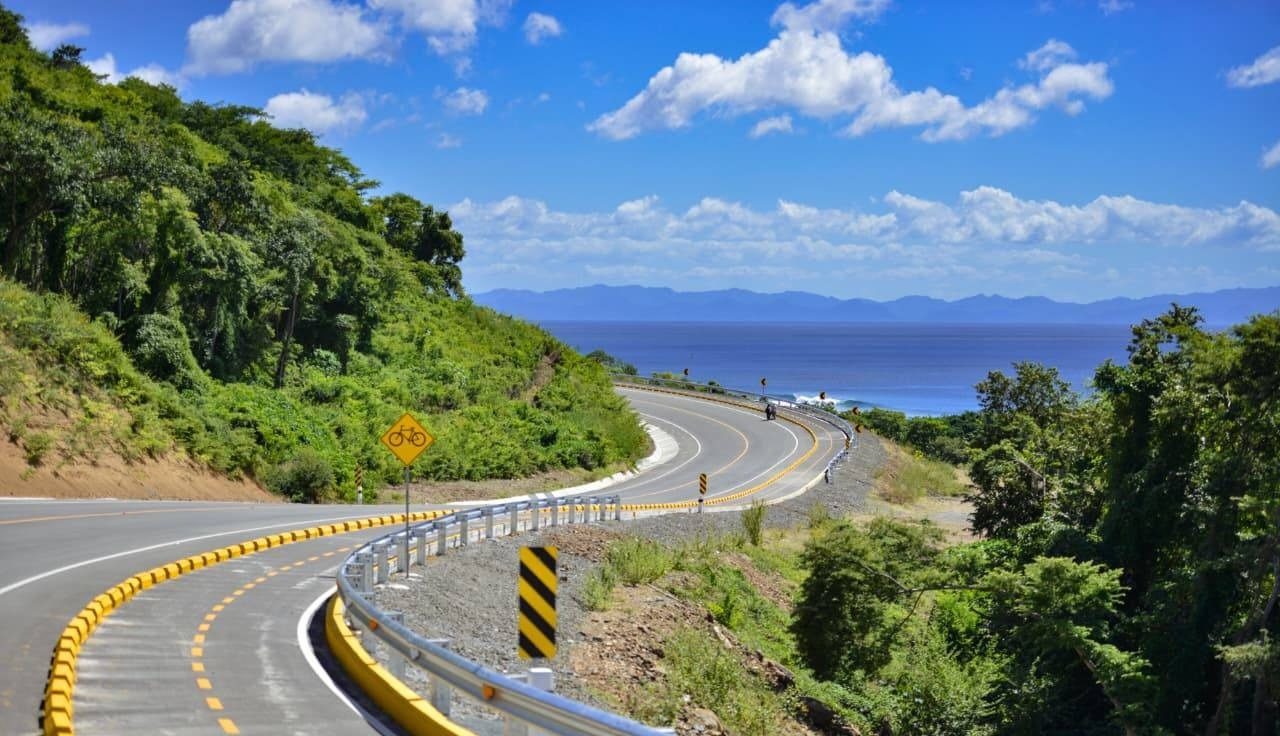
The same occurs with Phase II of the Coastal Highway and the expansion of the “Julia Herrera de Pomares” logistics center near the Port of Corinto in Chinandega.
In both projects, interests and fees inflate the bill by more than USD 100 million. Even the smaller loans, such as the one for the National Emergency System (Sinarem), end up costing 30% more than the amount actually received.
The Ortega regime’s odes to China’s “solidarity” and “cooperation” are not backed by official statistics, which show that —between 2023 and September 2025— about 6.99 billion córdobas (around 191 million dollars) were disbursed for six of the eleven contracted projects.
Of the 6.99 billion disbursed, only 7.4% —about 522.6 million córdobas (more than 14.2 million dollars)— came from “external loans.” The rest —around 6.47 billion córdobas (more than 176 million dollars)— came from state accounts, according to the budget execution reports for 2023, 2024, and up to September 2025 prepared by the Ministry of Finance and Public Credit.
The Punta Huete airport project and the National Emergency System (Sinarem) are the only ones that have received Chinese funds. Both projects are being carried out by the Chinese company CAMC Engineering Co., Ltd. (CAMCE).
Chinese disbursements for both projects occurred only after the first half of 2025, according to the Budget Execution Report for January–September 2025.
For the Punta Huete project, about 485.96 million córdobas (around 13.2 million dollars) were recorded as “external loans.” Meanwhile, Sinarem received about 36.7 million córdobas (just over one million dollars), according to official figures.
CAMCE is also building three Liquefied Petroleum Gas (LPG) storage spheres in Miramar, León. However, no disbursements have been made for this project.
The company China Communications Construction Company (CCCC), which is in charge of five Nicaraguan projects (solar plants and wind farms), has not delivered a single córdoba between 2023 and 2025. For 2025, it had promised about 1,017.7 million córdobas (around 27.7 million dollars), but up until September it had not made any disbursement.
The meager Chinese funds stand in stark contrast to the punctual payments Nicaragua makes to the companies CAMCE and CCCC. Between 2024 and 2025, the Government has paid both companies more than 2.348 billion córdobas (about 64.11 million dollars), according to budget execution reports.
In 2024, the Ortega regime paid China CAMC Engineering about 574.41 million córdobas (around 15.6 million dollars) in “commissions,” while CCCC received 82.48 million córdobas (about 2.2 million dollars) for the same concept.
The 2024 Execution Report details that the state-owned Nicaraguan Gas Company (Enigas) was assigned an extra 243.8 million córdobas to pay the Chinese company CAMCE a 20% advance on the “contract” to build the three LPG storage spheres. Despite already receiving this payment, the company has not made any disbursement for the project.
In 2025, CAMCE has already received about 12.39 million córdobas (around 338,579 dollars) in “interest” payments, and an additional 1.0962 billion córdobas (about 29.9 million dollars) in “commissions,” according to official data.
The company CCCC has already been paid about 35.7 million córdobas (more than 976,000 dollars) in “interest,” and 546.7 million córdobas (more than 14.9 million dollars) in “commissions,” according to the January–September 2025 Budget Execution Report.
The official document indicates that CCCC still has a pending “amortization” payment of 310.6 million córdobas (more than 8.4 million dollars). This amount is budgeted but has not yet been executed.
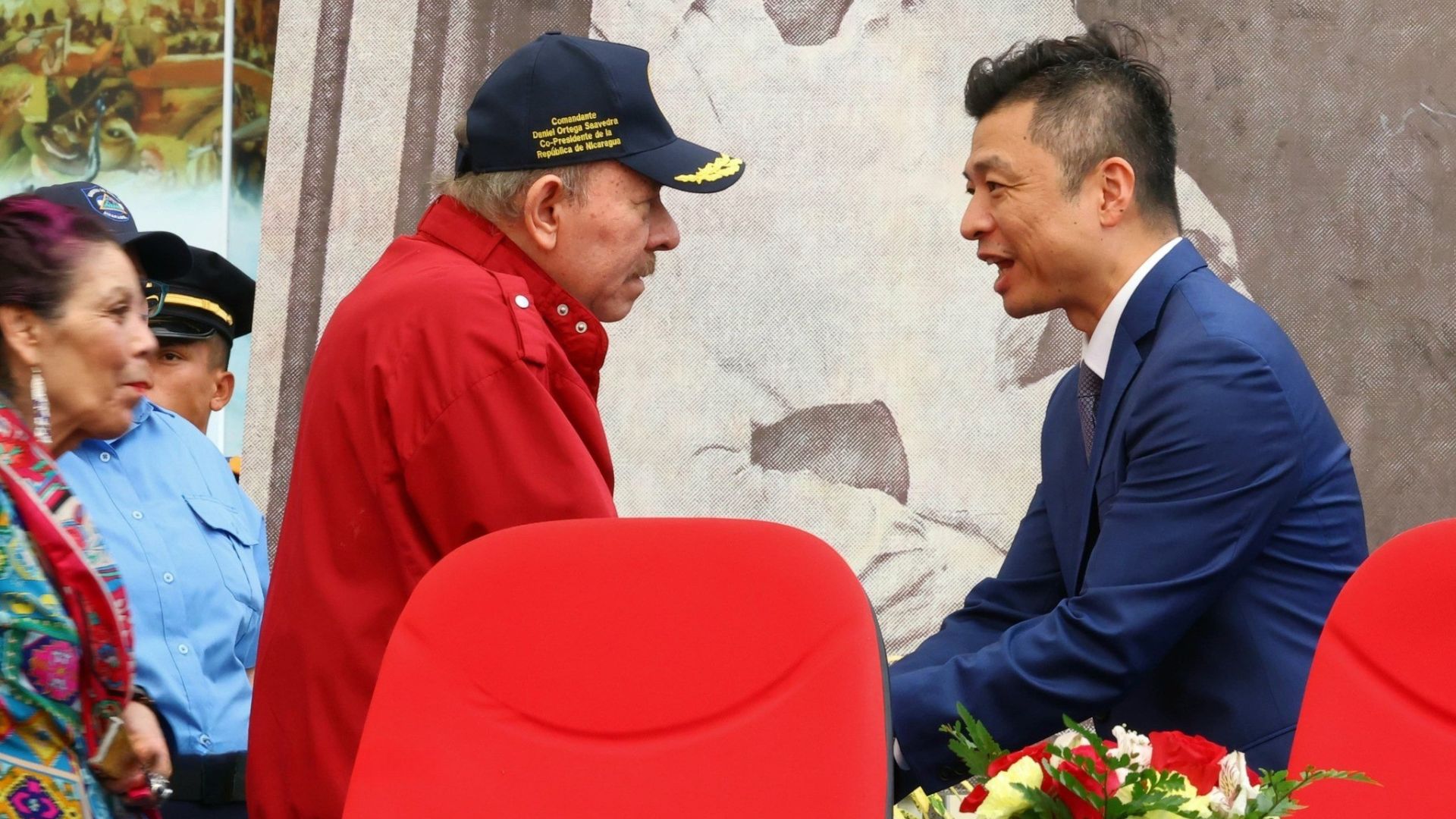
Argentine analyst Hernán Alberro, a specialist in International Relations, argues that it is not necessary to take on debt in order to maintain a good relationship with China. However, in the case of small, developing countries like Nicaragua, China uses lending “discursively to claim it is providing development assistance.”
He emphasizes that in Nicaragua’s case, China’s influence is practically “zero,” because China does not need to do anything for Nicaragua to align itself with its interests.
On the political and strategic front, the relationship with China has deepened quickly. Immediately after diplomatic relations were restored in December 2021, a friendship association between the Nicaraguan and Chinese parliaments was established, sister-city agreements were created, and trips by officials from both countries multiplied. Alberro notes this in his analysis for the China Index 2024, an annual study that measures the level of Chinese penetration around the world. Evan Ellis, a researcher in Latin American Studies at the U.S. Army War College’s Strategic Studies Institute, argues that for Chinese companies, the key issue is ensuring their investment gets paid back.
Evan Ellis
U.S. researcher
“If they are certain they’ll get paid, the Chinese will build anything — a wall in the middle of the desert. Whether this creates value in the country or not is not their concern.”
Maradiaga’s analysis highlights one of the most “alarming” conditions: the mandatory 20% advance payment on the contractual value of each project — a payment the Nicaraguan government must deliver even before the Chinese company begins mobilizing equipment. He describes this as an “exceptional” and “highly unusual” requirement.
In this setup, the commercial viability of the projects becomes the responsibility of the partner — in this case, Nicaragua. Ellis points out that in the case of the Punta Huete airport, the investment is “difficult” to justify commercially, especially at a time when Nicaragua is becoming more isolated and facing weak demand for international tourism.
Beyond the exorbitant sums, the loans from China have reshaped how Nicaragua finances and executes its projects. All credits are now tied to Chinese contractors, ensuring that much of the money flows back to Beijing in payments for services, equipment, and materials.
In practical terms, this limits the multiplier effect within Nicaragua and creates technological dependency. Solar panels, wind turbines, telecommunications systems, and port equipment all come from Chinese companies, committing the country to continue relying on these suppliers for spare parts, maintenance, and upgrades.
Maradiaga warns that “this arrangement—enabled by opaque contracts awarded without public bidding—consolidates Beijing’s influence in Nicaragua’s strategic sectors.” Energy, road infrastructure, telecommunications, and ports: all key areas are now intertwined with Chinese debt and technology. Added to this is the risk of the so-called “debt trap.”
Once the grace periods end, between 2026 and 2028, Nicaragua will face a payment peak of around 150 to 200 million dollars per year, just in interest and principal amortization. If the economy does not grow at the necessary pace, the country could be forced to renegotiate under unfavorable conditions or even cede strategic assets.
This dynamic of accelerated indebtedness and growing dependence on China — not only as a creditor but also as a supplier of technology and infrastructure — raises questions about whether the driving force behind these projects is economic logic or a geopolitical alignment with Beijing.
The lending relationship between Nicaragua and China must be understood in the context of the Ortega-Murillo regime’s international isolation. According to Alberro, Nicaragua is a country facing serious “economic problems” and one that does not have “economically powerful allies.”

This report is part of CONFIDENCIAL’s special series: “Solidarity Made in China”, which examines the real impact of the diplomatic relationship between Nicaragua and China — reestablished in 2021 — through an analysis of loans, projects, accumulated debt, and the expansion of China’s presence in Nicaragua. Published in December 2025.
PUBLICIDAD 3M
PUBLICIDAD 3D

Alertas en tu celular
Suscribite a las alertas informativas de Confidencial en Telegram.

Boletines
Lo mejor de nuestra cobertura noticiosa en tu correo electrónico.

Anuncios
Obtené una propuesta comercial de acuerdo a tus objetivos y presupuesto.

Test Político
Explorá tus ideas sobre nuestra política, economía y sociedad con nuestro Test Político.