AA
Share

 Las noticias del día en tu correo
Recibe lo más destacado de la cobertura de CONFIDENCIAL todos los días.
Más boletines
The best of our coverage, in English
Sign up for our weekly newsletter. We will send it to you every Friday at 10:00 am (Nicaragua time)
More Newsletters
PUBLICIDAD 4D
PUBLICIDAD 5D
For migrants protected under TPS, this represents immediate deportation. Enforcing their return to Nicaragua is inconsistent with the declarations of Secretary of State Marco Rubio

Activistas asisten a una vigilia para pedirle al presidente de los Estados Unidos, Joe Biden, que otorgue una nueva designación del TPS. Foto: EFE | Archivo | Confidencial
It is surprising that many people expected preferential immigration treatment from President Trump’s new administration, despite his campaign promises.
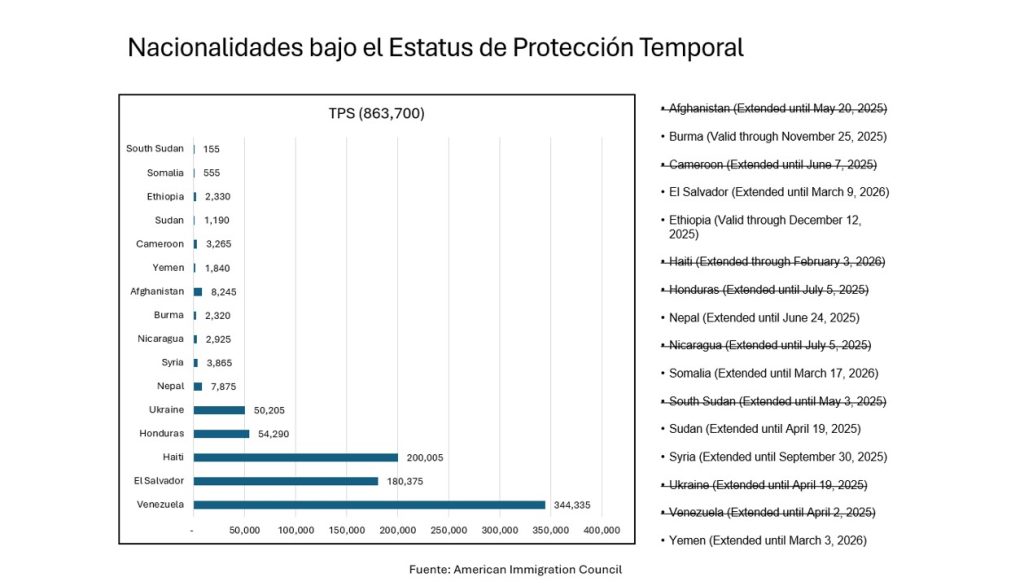
However, in truth, the recent suspension of Temporary Protected Status for Hondurans and Nicaraguans is consistent with Trump’s declared agenda of eliminating as many of the temporary residency permits for foreigners as possible. Of the estimated 900,000 people who were protected under TPS, only a few countries will still be eligible for the program, chief among them El Salvador.
This decision joins other forms of immigration control including the cancellation of Humanitarian Parole that affects a nearly equal-sized contingent of 900,000 people. Like TPS, most of them come from countries in political crisis who run high risks if forced to return to their countries of origin.
In addition to these two suspended programs, there are other measures such as tighter controls and cuts to university student visas, as well as visitor visa restrictions for several countries.
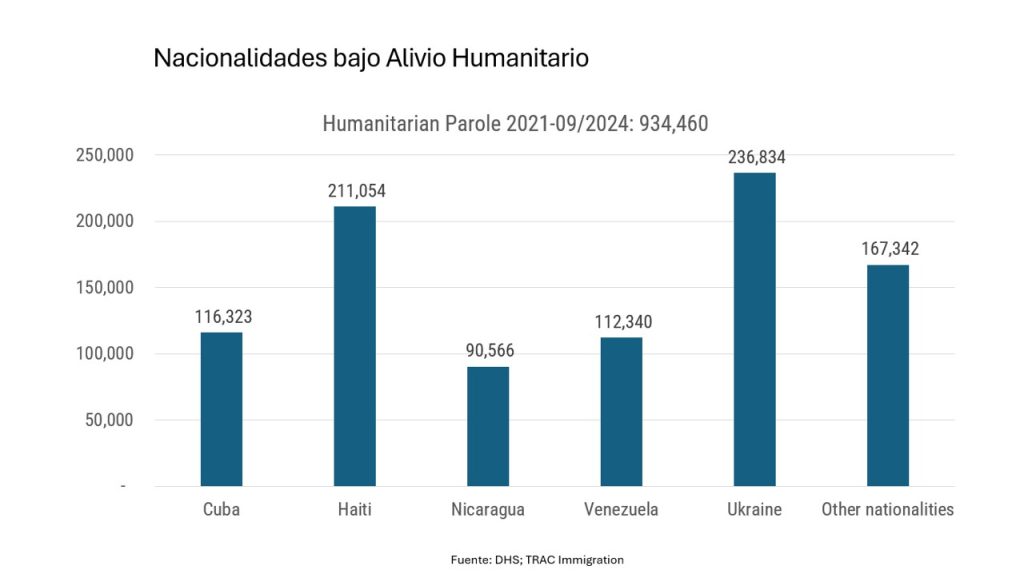
This measure is accompanied by a strategy of deportation of foreigners, supposedly following a roadmap that begins with deportations of people with criminal records who remained in the country after serving their sentences, and then the deportation of people who already have a deportation order.
It should be kept in mind that, of the more than 13 million migrants in irregular status, 7.5 million have deportation cases pending in the courts. Of those, 3.9 million already have deportation orders.
To date, the number of deportees in 2025 amounts to less than 120,000. However, these deportations are occurring to people who have been living in the United States for several years, if not decades. In other words, they are not people who were detained and deported upon trying to cross the border, but are deportations effected directly from the US territory.
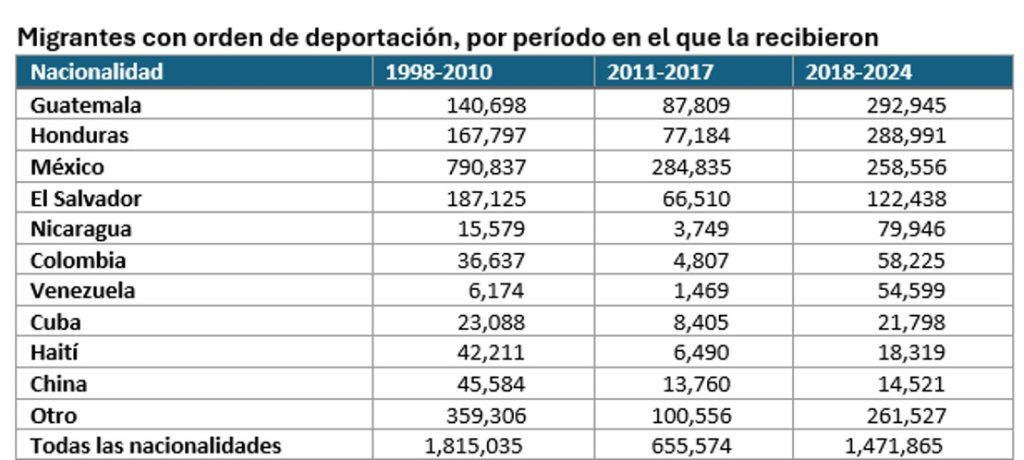
Apart from the impact of canceling humanitarian parole – potentially meaning the return of 60,000 Nicaraguans – the measure to cancel TPS affects 5,000 Nicaraguans and 54,000 Hondurans.
The effects represent a radical alteration of these people’s lives.
In both cases, these citizens have lived under TPS for more than 25 years. While 1100 Nicaraguans and 24,000 Hondurans succeeded in becoming permanent residents, the rest – whose protection will end in September – also have established roots in the United States, with family obligations that include children in school or college, stable tax-contributing jobs, home mortgages, and other investments in the United States. Many of these people are approaching their sixties, already nearing retirement.
Returning to Nicaragua entails psychosocial disruption as well as a risk to their lives. Nicaragua today is a police state where democracy is criminalized, citizens are denied their civil and political rights, state institutions have been hijacked for the benefit of the Ortega-Murillo family, the use of violence goes unpunished (including allowing extrajudicial executions outside the country), censorship and disinformation are rampant, and the regime prioritizes its alliances with rogue states over the welfare of its people.
This measure is inconsistent, considering that Secretary of State Marco Rubio himself declared the Ortega-Murillo regime to be enemies of humanity, and that legal certainty is nonexistent: political power is so concentrated that the country’s entire judicial system is controlled by the dictators.
From a strictly economic perspective, these people return to their countries at an age when they face competitive limitations in the job market. Additionally, wages in Nicaragua are fifteen times lower than those in the United States, which would prevent them from meeting their financial obligations. It would be naïve to advise anyone to organize their finances before leaving amid this reality.
The risk of many of these people being subjected to human rights violations is high because many are individuals opposing the prevailing dictatorship in Nicaragua.
This is not the first time this situation has occurred. But now it is more complicated and painful because it is accompanied by a punitive philosophy that generates fear. The cancellation of TPS could be challenged through a lawsuit claiming inconsistency between the conditions presented by the Government and the reality prevailing in the destination country. However, given a Supreme Court that has already validated the Executive’s discretion regarding humanitarian relief, it remains to be seen whether claims about procedural lapses related to TPS will hold up.
It is difficult to predict what people will do in this situation; however, based on past experiences, many migrants may choose to adjust their status if possible (through the regularization of adult children). Others are considering taking the risk of staying in the shadows and living under the constant threat of deportation, changing their modus vivendi, looking for another job, and becoming ‘illegal’ or ‘undocumented.’
The reality is more difficult, because it is not economically and humanly possible to leave to rebuild life with 60 days notice for people who have been in the United States for more than two decades. It is a banishment and a problem of shared responsibility on the part of a State (with leaders of both parties) that allowed the temporary status to be extended for decades, without offering an alternative path and addressing the causes of migration as a foreign policy problem.
Public opinion is beginning to understand that Executive actions can be more flexible, and the Budget Act debate in Congress showed that support for the Executive is shifting. The fundamental mission is to build on the philosophy of conservative compassion promoted by former President George Bush, and to show that the TPS community, including many under humanitarian relief, are an added value and not a burden to the country.
PUBLICIDAD 3M
PUBLICIDAD 3D

Alertas en tu celular
Suscribite a las alertas informativas de Confidencial en Telegram.

Boletines
Lo mejor de nuestra cobertura noticiosa en tu correo electrónico.

Anuncios
Obtené una propuesta comercial de acuerdo a tus objetivos y presupuesto.

Test Político
Explorá tus ideas sobre nuestra política, economía y sociedad con nuestro Test Político.