AA
Share

 Las noticias del día en tu correo
Recibe lo más destacado de la cobertura de CONFIDENCIAL todos los días.
Más boletines
The best of our coverage, in English
Sign up for our weekly newsletter. We will send it to you every Friday at 10:00 am (Nicaragua time)
More Newsletters
PUBLICIDAD 4D
PUBLICIDAD 5D
CONFIDENCIAL presents a documentary on the life and work of writer Sergio Ramírez, winner of the Cervantes Prize, exiled in Spain.
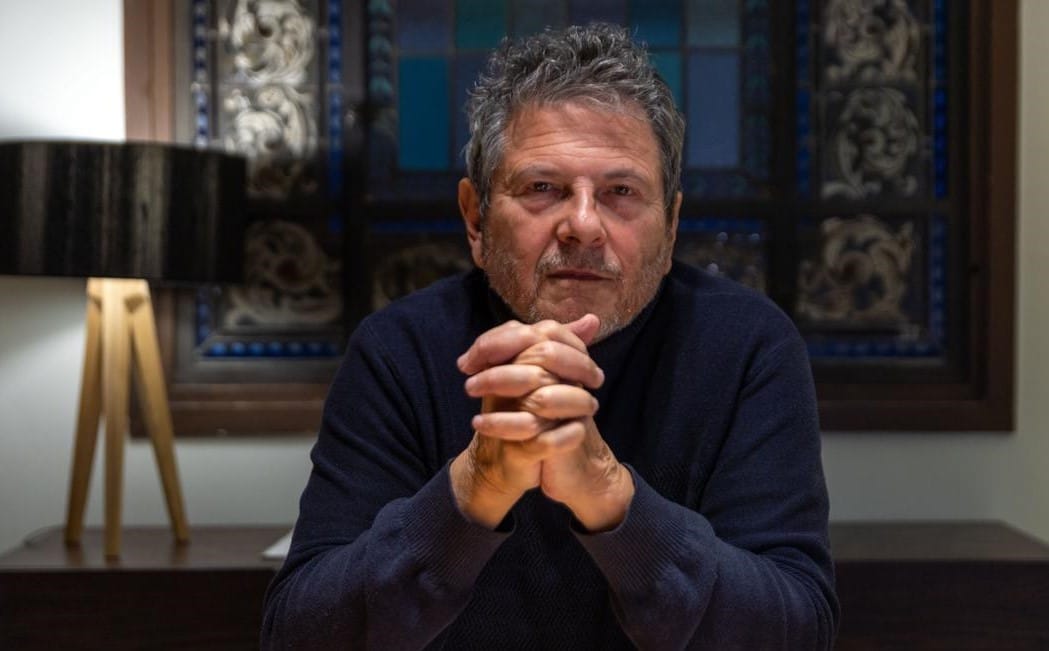
The acclaimed Nicaraguan writer Sergio Ramírez, winner of the Cervantes Prize, turned 83 years old in August 2025. CONFIDENCIAL is publishing a documentary that explores his life and literary work, now overshadowed by forced exile due to an arrest warrant and his subsequent denationalization ordered by the dictatorship of Daniel Ortega and Rosario Murillo in Nicaragua. The documentary premiered on Sunday, September 14, on the program Esta Semana on YouTube and Facebook Live.
The documentary was recorded in several locations, including the National Palace of Culture in Guatemala City, where Ramírez presided over the Centroamérica Cuenta Festival, which in 2025 reached its twelfth edition. It was also filmed in his apartment in Madrid, Spain.
The writer reflects on the different stages of his life: his early years in Masatepe, his political formation at the University of León, his time in Costa Rica and Germany, and his participation in the Sandinista revolution. He also speaks about leaving politics and dedicating himself fully to literature.
In addition to Ramírez’s testimony and anecdotes, the documentary includes the opinions of national and international figures on the global significance of his literature. Among them: Luis García Montero, director of the Cervantes Institute; writer Alma Guillermoprieto; journalist Pepa Bueno; Pilar Reyes, director of his publishing house; former Costa Rican president Luis Guillermo Solís; and former guerrilla fighter and historian Dora María Tellez, his friend of several decades.
Ramírez’s first short story was published in 1956 in the literary section of La Prensa newspaper edited by Pablo Antonio Cuadra. It was titled La Carreta Nagua, and Cuadra subtitled it Version from Masatepe, believing it to be something the young author had heard. But in fact, it was pure invention. Ramírez explained to CONFIDENCIAL that he was 14 at the time, and his grandmother asked him to read it in public at a celebration, but he hid and refused to do it. “For the first time, I realized that literature has this power of deception, of simulating what it is not.”
When he went to study law at the University of Leon, Nicaragua’s most prestigious university, he met rector Mariano Fiallos, of whom he became a disciple.
Ramírez recalls in the documentary that Fiallos turned the University into an ethical stronghold. “His voice was heard when he pointed out social ills and deficits, criticized the dictatorship, and denounced abuses. He was always close to the students, sitting on benches to chat with them. I could go to his house and enter his library with great trust.”
In 1969, after marrying Gertrudis “Tulita” Guerrero, he moved to Costa Rica to work at the Central American University Council, where he published his first novel Tiempo de Fulgor.
In 1973, he left for Germany on a literary scholarship, where he wrote the novel ¿Te dio miedo la sangre? (Did the Blood Scare You?).
While living in West Berlin in 1975, he received an offer to write scripts at the Georges Pompidou Center in Paris. He declined, however, because he decided to return to Nicaragua with a very clear objective.
“At that moment, I knew clearly that what I wanted was to return to Nicaragua, to join the rebellion against Somoza. And I think it was the right decision at that time. It would have pained me greatly to later learn in Paris that the Nicaraguan Revolution had triumphed without me,” Ramírez said during the interview in Guatemala.
The author of the memoir Adiós Muchachos revealed that he has been urged to write about his role in the revolution to respond to criticisms of his past as a government leader in the 1980s, but concludes that he will not sacrifice his time as a writer.
“I am interested in consolidating a literary work, not in defending my political figure. In today’s polarized world, that would be like plowing the sea,” Ramírez affirms.
In front of CONFIDENCIAL’s camera, Ramírez recalls leaving government in 1990 and trying to return to literature after feeling liberated from politics. Later, he joined the Sandinista parliamentary bloc, where he was elected head of the group. Four years later, alongside other parties, he supported constitutional reforms that institutionalized democratic transition and peaceful alternation of power—leading to a deep rupture with Daniel Ortega. In February 1995, after weeks of smear campaigns by Ortega’s allies, he resigned from the party and founded the Sandinista Renovation Movement, with which he ran for president. His son, Sergio Ramírez Guerrero, states that his father had to lose the election by such a wide margin—receiving around 1%—to understand that he should return fully to literature.
After leaving politics in 1996, Sergio Ramírez fully embraced his vocation as a writer, exploring multiple literary genres. He wrote novels such as Un baile de máscaras, Sombras nada más, and Margarita, está linda la mar, with which he won the Alfaguara Prize in 1998. He also published collections of short stories, essays, and testimonies, including Adiós Muchachos, his personal memoir of the Sandinista revolution.
After 2000, he published La Fugitiva, Sara, Mil y una muertes, and a trilogy of detective novels: El cielo llora por mí, Ya nadie llora por mí, and Tongolele no sabía bailar, the latter censored by the regime.
He rapidly conquered readers and international prizes. In 2017, he won the Miguel de Cervantes Prize in Spanish Literature, the highest recognition for Spanish and Latin American writers. The award ceremony, traditionally presided over by the Spanish monarchs, took place on April 23, 2018, when social protests in Nicaragua had been ongoing for five days.
Wearing a black ribbon on his suit lapel, Ramírez dedicated the prize, at the University of Alcalá auditorium, “to the memory of Nicaraguans who in recent days have been murdered in the streets for demanding justice and democracy, and to the thousands of young people who continue to fight with no weapons other than their ideals, so that Nicaragua may once again be a republic.”
In 2021, the Ortega-Murillo dictatorship issued an arrest warrant against him for alleged acts “that foster or incite hatred and violence” and ordered his detention and the seizure of his properties. Banished from Nicaragua, Sergio Ramírez first settled in San José, Costa Rica, and later in Madrid, Spain.
In February 2023, the regime included his name on a list of 94 citizens stripped of their Nicaraguan nationality, accusing them of “treason against the homeland.” The list included academics, journalists, and artists. Upon receiving the news, he wrote on social media: “Nicaragua is all that I am and all that I have. I will never stop being, nor stop having, my memory and my recollections, my language and my writing, my struggle for its freedom, to which I have pledged my word. The more of Nicaragua they take from me, the more Nicaragua I have.”
Nearly 30 years after leaving politics, speaking from his apartment in Madrid, the writer insists he does not feel foreign in Spain, but he does feel far from Nicaragua.
I have to return to a country that we can all return to, where there are at least minimum guarantees of democracy, of freedoms, and where there is freedom of information. I don’t know if it will happen in my lifetime, but I have no doubt it will happen,” he said, adding that if he were to return to Nicaragua, he would go straight to Masatepe from the airport.
“I long to see my town again, the surrounding area, the plateau, which is where I grew up and which, visually, first and foremost represents the country for me,” he shares.
PUBLICIDAD 3M
PUBLICIDAD 3D

Alertas en tu celular
Suscribite a las alertas informativas de Confidencial en Telegram.

Boletines
Lo mejor de nuestra cobertura noticiosa en tu correo electrónico.

Anuncios
Obtené una propuesta comercial de acuerdo a tus objetivos y presupuesto.

Test Político
Explorá tus ideas sobre nuestra política, economía y sociedad con nuestro Test Político.