AA
Share

 Las noticias del día en tu correo
Recibe lo más destacado de la cobertura de CONFIDENCIAL todos los días.
Más boletines
The best of our coverage, in English
Sign up for our weekly newsletter. We will send it to you every Friday at 10:00 am (Nicaragua time)
More Newsletters
PUBLICIDAD 4D
PUBLICIDAD 5D
“Every lawyer removed means families are left with no one to file an appeal, no one to challenge an arbitrary detention,” warns the UN expert.

Reed Bródy, abogado norteamericano nacido en Hungría, conocido como el “cazador de dictadores”. Foto: Tomada de elDiario.es/Kike Rincón
Hungarian-born lawyer Reed Brody, a member of the United Nations Group of Human Rights Experts on Nicaragua, warns that the government led by Nicaraguan spouses and “co-presidents” Daniel Ortega and Rosario Murillo is demonstrating that it is possible to dismantle the rule of law “without tanks.”
Known as the “dictator hunter,” Brody argues in an interview with EFE that the Nicaraguan government is sending this message to the world through the mass removal of lawyers from the registry of Nicaragua’s Supreme Court, without notification, disciplinary proceedings, or any official communication.
The message being sent from Managua, if this is allowed to become normalized, is that “the rule of law can be dismantled without tanks and without dramatic decrees: all it takes is a database,” he says.
“A state that decides administratively who may practice law and who may not no longer has the rule of law; it has an instrument of punishment,” the UN expert warns.
According to Brody, if the international community allows this measure to occur without consequences, it sends a signal to other governments with authoritarian ambitions that the legal profession, the citizen’s last line of defense, can be erased with the press of a key.
“That is why I believe bar associations around the world should speak out. Today it is their Nicaraguan colleagues who are being erased,” the attorney says.
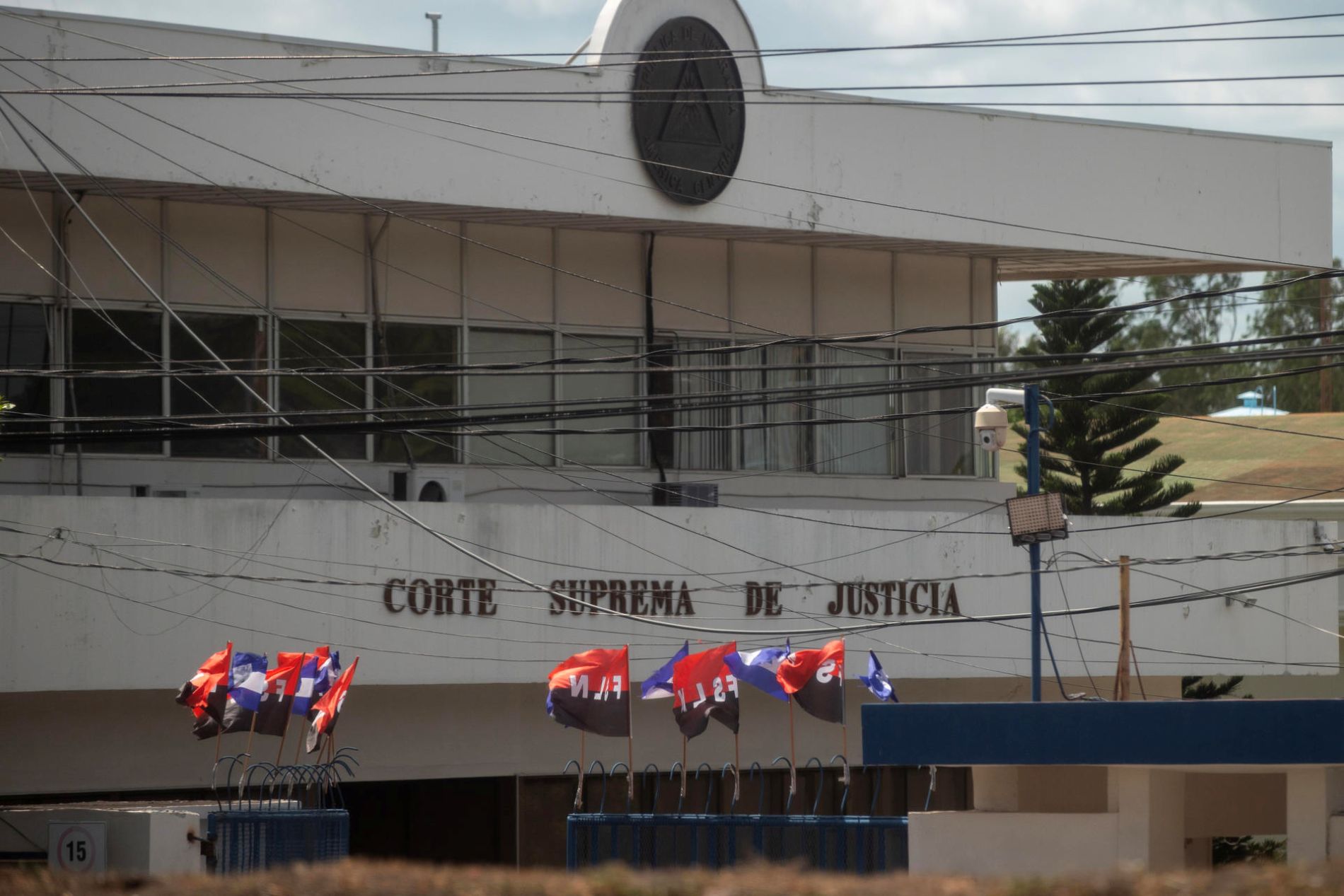
At least 2,000 lawyers have reportedly been removed from the registry of Nicaragua’s Supreme Court, according to affected attorneys and judicial sources who spoke to the Nicaraguan press. Neither the government nor the judiciary has offered an explanation.
Brody explains that a lawyer removed from the judicial registry can no longer file legal motions before the courts, represent clients, or serve as a notary public. Professionally speaking, that lawyer simply ceases to exist.
“Every lawyer removed means families are left with no one to file an appeal, no one to challenge an arbitrary detention, no one to sign a legal deed. When lawyers cannot practice, citizens are left without legal defense,” he says.
The jurist compares this measure to other tactics of control employed by the Sandinista government, including the mass closure of non-profit organizations, universities, independent media outlets, and churches.
“Now it is the legal profession’s turn. The pattern repeats itself: eliminating, without any due process, anyone who might stand between the government and the citizen,” Brody says.
Brody also argues that the measure is a direct violation of international law, specifically the UN Basic Principles on the Role of Lawyers, which he helped draft more than 35 years ago. Those principles prohibit barring a lawyer from practicing without a fair proceeding before an independent body.
“These are not merely an isolated professional code. They are the concrete expression of rights enshrined in the Universal Declaration of Human Rights—the equality of all before the law, the presumption of innocence, the right of every person to a fair hearing by an independent and impartial tribunal, and the right of every accused person to all guarantees necessary for their defense—as well as in the International Covenant on Civil and Political Rights,” Brody notes.
The Covenant is a legally binding treaty that Nicaragua has ratified, and none of those rights can be effectively exercised without free and independent lawyers.
Principle 28 establishes that disciplinary proceedings against lawyers must be conducted before an impartial committee of the legal profession, an independent body established by law, or a court, with the possibility of independent judicial review.
“In Nicaragua, none of those safeguards were respected. (…) Therefore, the violation is not only of the Basic Principles. By stripping the system of defense attorneys, the government also empties the guarantees contained in the Universal Declaration and the Covenant of their substance. That is precisely what those instruments were written to prevent,” the expert explains.
Brody says that the UN Group of Experts has found that Nicaragua does not meet even the minimum reasonable standard of judicial independence. When that is combined with “a legal profession that has been purged or intimidated, the result is defenselessness: the citizen facing the state without an intermediary, without a shield.”
Therefore, the expert believes that the remaining avenues are largely international: documenting the violations, using international protection mechanisms, and urging third countries to act through targeted sanctions, universal jurisdiction, and proceedings before the International Court of Justice.
PUBLICIDAD 3M
PUBLICIDAD 3D

Alertas en tu celular
Suscribite a las alertas informativas de Confidencial en Telegram.

Boletines
Lo mejor de nuestra cobertura noticiosa en tu correo electrónico.

Anuncios
Obtené una propuesta comercial de acuerdo a tus objetivos y presupuesto.

Test Político
Explorá tus ideas sobre nuestra política, economía y sociedad con nuestro Test Político.