AA
Share

 Las noticias del día en tu correo
Recibe lo más destacado de la cobertura de CONFIDENCIAL todos los días.
Más boletines
The best of our coverage, in English
Sign up for our weekly newsletter. We will send it to you every Friday at 10:00 am (Nicaragua time)
More Newsletters
PUBLICIDAD 4D
PUBLICIDAD 5D
Justice sought for Samcam’s murder. Lawyers say solving the case is a “security necessity” for refugees in Costa Rica

Almudena Bernabéu, directora de Guernica 37; Claudia Vargas, viuda de Samcam; y Luis Guillermo Solís, expresidente de Costa Rica. //Foto: Confidencial
One year after the murder of Nicaraguan political exile and retired army major Roberto Samcam in San José, Costa Rica, solving the case has become a “security necessity” for the Nicaraguan exile community. Refugees “need to feel safe” in their host country, lawyers say, and the Costa Rican state has a “non-negotiable obligation” to protect them.
The murder of Samcam, whose case is already before Costa Rican courts, has generated widespread uncertainty among exiled Nicaraguans. They view it as the clearest example of the Nicaraguan dictatorship’s transnational repression and are demanding that the trial not only convict the direct perpetrators but also establish who planned the crime.
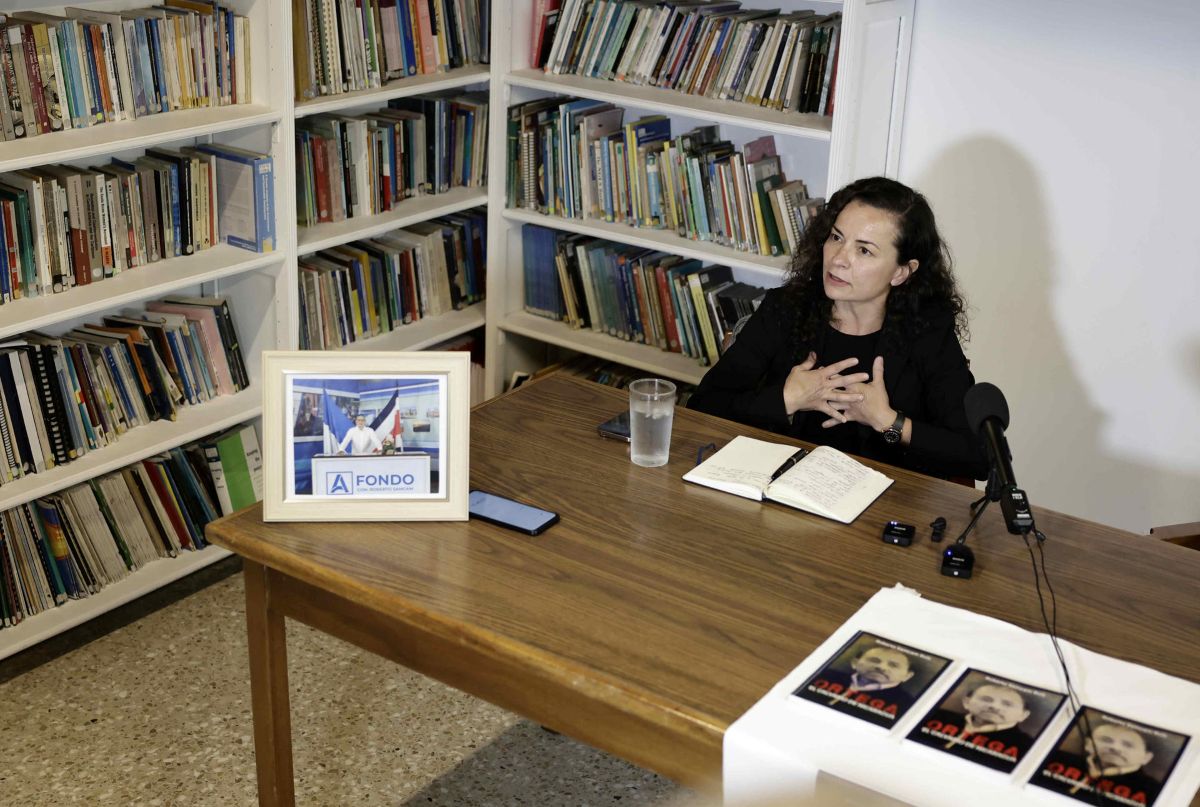
Identifying the intellectual authors of the murder is “the main challenge of the judicial investigation,” warned Federico Campos, attorney for the Samcam family, during the Persecution Without Borders forum held in San José on the first anniversary of the Nicaraguan opposition figure’s killing. However, he added, “it is part of the work we are doing,” and expressed hope that “during the trial, the direct perpetrators will overcome their fear and provide clues that could lead to those who masterminded the crime.”
Campos stressed that determining who planned the murder, committed on June 19, 2025, is “very important” not only for the family’s peace of mind, but also so that “political refugees in this country can feel confident that here, in Costa Rica, they are truly safe and that the state is providing the support they require.”
For former Costa Rican president Luis Guillermo Solís (2014–2018), solving the Samcam case “is not simply a matter of ethical or moral vindication; it also has legal implications that cannot be overlooked.” He emphasized that if Costa Rica fails to safeguard the security of refugees, it risks undermining its own national security.
“When a country is unable—and the Costa Rican state is unable—to provide guarantees that people who have sought refuge and protection will actually receive them, it seriously compromises the security not only of that persecuted population, but of the entire nation,” Solís said.
The former president recalled that the Costa Rican state has a “non-negotiable obligation” to protect refugees—“a protection that goes far beyond physical, legal, or material security and involves broader structural factors.” However, he argued, guaranteeing that protection requires “political will,” something that, at present, “is not sufficient.”
Solís and Campos agree that political will is “essential” to guaranteeing the protection of refugees and lament that the Executive Branch has sidelined the issue in recent years.
According to Campos, “unlike government authorities,” Costa Rica’s Judicial Investigation Agency (OIJ) and the Public Prosecutor’s Office “have taken Samcam’s murder very seriously.” “So much so that in less than a year, from the standpoint of the direct perpetrators, the case is already solved. They have been formally charged, and now we are headed to the preliminary hearing,” he said.
“Whatever may still happen to refugees in this country, at least there remains a Judicial Branch that supports them. The best example is Roberto Samcam’s case. Clearly, that is extremely important for refugees’ security, their stability, and for helping them feel that the Costa Rican state’s obligation toward them is being upheld,” Campos added.
Meanwhile, Solís pointed to the need for a “renewal” of Costa Rica’s Directorate of Intelligence and State Security (DIS).
“We continue to have an intelligence and security apparatus that at times behaves like a political police force,” the former president warned. He added that there have long been persistent reports “about the counterintelligence operations that the Nicaraguan dictatorship has embedded in Costa Rica and that have been coordinated through Nicaragua’s own diplomatic representation in our country.”
On this point, Campos said he hopes the Samcam case “will serve to expose everything that needs to be exposed, but also to bring about the reforms that the Costa Rican state must undertake so that political refugees truly feel protected,” he concluded.
PUBLICIDAD 3M
PUBLICIDAD 3D