AA
Share

 Las noticias del día en tu correo
Recibe lo más destacado de la cobertura de CONFIDENCIAL todos los días.
Más boletines
The best of our coverage, in English
Sign up for our weekly newsletter. We will send it to you every Friday at 10:00 am (Nicaragua time)
More Newsletters
PUBLICIDAD 4D
PUBLICIDAD 5D
Steps for Venezuela: release of political prisoners, departure of Cuban advisers, return of exiled leaders, freedom of assembly, elections

El presidente de Estados Unidos, Donald Trump, durante una reunión con ejecutivos del sector petrolero y gasífero en la Sala Este de la Casa Blanca, Washington D. C., EE. UU., el 9 de enero de 2026. //Foto: Efe
“The ultimate responsibility for this U.S. intervention in Venezuela must fall on Biden, Lula, López Obrador, and Petro. They were unable to persuade, force, or compel Maduro to respect the results of the 2024 elections, and it is into that vacuum that Donald Trump steps,” says political scientist Jorge Castañeda, former foreign minister of Mexico and professor at New York University.
In an interview on the program Esta Semana, broadcast on CONFIDENCIAL’s YouTube channel due to television censorship in Nicaragua, Castañeda analyzed the consequences for Latin America of Trump’s military intervention and the so-called Donroe Doctrine, as well as the “abstract and indefinite” three-phase timetable outlined by Secretary of State Marco Rubio for Venezuela.
Castañeda considers it “illusory” that the United States could exclude China from South American countries (Brazil, Peru, Argentina, Chile, Uruguay) where it already has a hegemonic presence in trade and investment, and he doubts that the Chavista dictatorship in Venezuela can be dismantled. “It seems difficult to me — not impossible, but difficult — for this to be achieved. These U.S. interventions, I insist, carried out by remote control, usually do not work. That is not to say that occupations like Iraq and Afghanistan worked much better. This is, to some extent, an unprecedented experiment, and it is unclear how (Delcy and Jorge Rodríguez, Diosdado Cabello, Vladimir Padrino, and others) will survive and coexist with the opposition that defeated them in the 2024 elections.”
The former Mexican foreign minister lays out five minimum steps to push forward a democratic transition in Venezuela: the release, this week, of all political prisoners; the withdrawal of Cuban advisers from Venezuela; the return of María Corina Machado, Edmundo González, and all political leaders in exile; allowing protests against the government and opening the media to the opposition; and scheduling presidential elections on the second anniversary of July 28, seven months from now.
“The opposition, and especially María Corina Machado, will have to understand that they will have to compete again, but I think they should welcome that, because she would win by a landslide as a candidate if there were free elections in Venezuela in mid-year,” the Mexican political scientist says.
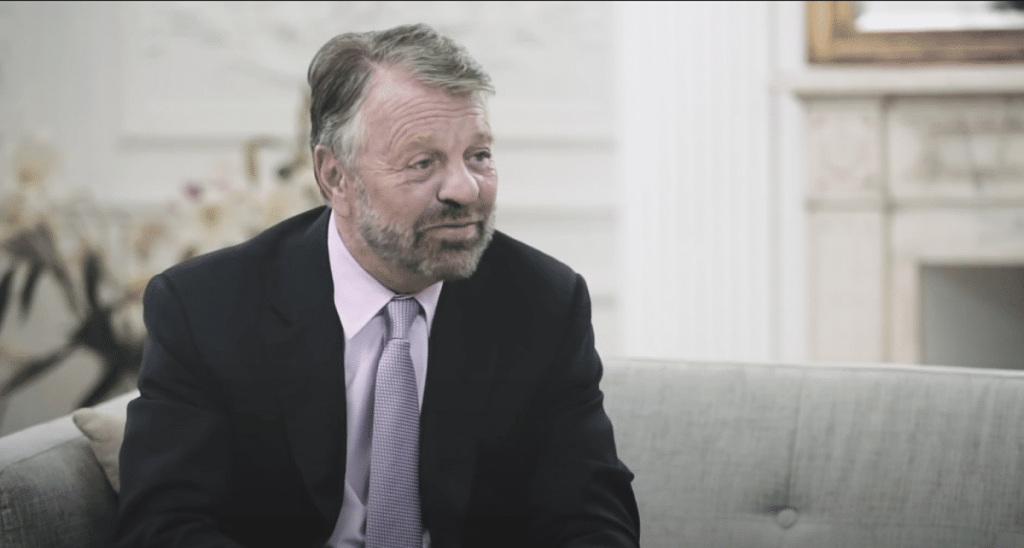
There are many open questions about what comes next in Venezuela after the U.S. military intervention, the capture of Nicolás Maduro, and the continuation of the Chavista dictatorship under interim president Delcy Rodríguez, under the tutelage of Donald Trump and the United States. Secretary of State Marco Rubio has announced a kind of three-phase plan that begins with economic recovery, followed by stabilization, and ends with a transition. Does this represent a roadmap toward a democratic transition? On what timeline?
Jorge Castañeda, former foreign minister of Mexico: It is better that Rubio announced this rather abstract and open-ended timetable than not having announced anything at all. At least it gives the impression that there is some idea of where they want to go. Still, there are many doubts about it.
First of all, because just yesterday President Trump, in an interview with The New York Times, referred to all of this in terms of years, which is something quite different. In other words, Rubio’s three stages could take six months, a year, or ten. And there are precedents in Nicaragua, among other countries, back in the 1920s, where an initial U.S. occupation or intervention ended up lasting forever. So this guarantees very little. One can also doubt the viability of Rubio’s scheme if all of this is supposed to be done by remote control from Washington, almost by WhatsApp.
Normally, throughout Latin American history, when the Americans want to achieve something in a country, they either occupy it, or if they do not occupy it, they fail to achieve their objective. That has been true in Central America and the Caribbean, but even in Mexico, with the famous expedition of General John Pershing chasing Pancho Villa in 1917, they had to leave quickly because they did not have enough time to find him.
So far, the United States has set aside the role of president-elect Edmundo González and the opposition leadership of María Corina Machado in this plan. How does the Venezuelan democratic opposition fit into this? Can it play an autonomous political role, or is it aligned with and dependent on whatever the United States decides?
In practice it is probably aligned, but that also remains somewhat up in the air, because if she decides to return to Venezuela, I do not see it being easy for either the United States or Delcy Rodríguez to prevent her from doing so, much less to detain her now — the same goes for Edmundo González. They may also choose to be cautious and avoid an immediate provocation, but in any case, one of the decisions that any new government in Venezuela — and that the United States will also have to try to impose on that government — is the return of all opposition leaders in exile. The two of them, but also Leopoldo López and many others who are in Madrid, in the United States, in Mexico, in Colombia. It is a large diaspora — not the eight million who have left, I am speaking only of opposition figures in exile — who at some point will have to be allowed to return, and once they are back on Venezuelan soil, they will not be easy to control.
At this moment, the Chavista dictatorship remains intact. Nicolás Maduro and his wife were removed, but General Padrino is still at the head of the army, Diosdado Cabello is still interior minister, and all the political structures remain in place. How is that dictatorship dismantled under the premises of this Trump intervention that puts control of oil at the forefront?
It seems difficult to me — not impossible, but difficult — for this to be achieved. These U.S. interventions, I insist, carried out by remote control, usually do not work. That is not to say that occupations like Iraq and Afghanistan worked much better. This is, to some extent, an unprecedented experiment, and it is unclear how the people you mentioned — and many others — are supposed to survive and coexist with the opposition that defeated them in the 2024 elections. And there is also the problem of political prisoners, repression, states of emergency, and exceptional laws. All of this complicates the three stages outlined by Marco Rubio, which in the abstract sound good, but in the short term I do not know what they really mean.
By the way, on the issue of restoring oil production, experts are saying that beyond a marginal increase of 100,000 or 200,000 barrels a day, achieving much higher output will take a great deal of time and a great deal of money.

Under the premises Trump has announced in his security strategy — which he now cites more frequently — saying “we are taking control of the hemisphere, we are exercising power and we are going to keep doing so” — what does this mean for relations with Latin America, this updated Monroe Doctrine with a Trump corollary?
This is one of the most interesting aspects, because on the one hand there is an idea, a concept, but on the other hand it seems rather naïve or even fanciful. The Monroe Doctrine’s original logic was always to exclude the European powers from the newly independent countries of the Americas, especially Britain. Updating it today would mean: no China. Russia is not an important player in Latin America.
In what is still called the Caribbean Basin, China is not present. The famous Chinese canal in Nicaragua never existed — and I remember that you and I talked about that in Managua a few years ago — it never existed. There is no significant Chinese presence in Mexico, except through imports that are now being restricted by tariffs. In the rest of the Caribbean Basin, China has no major presence. The hegemonic power — the one with which there is trade, investment, tourism, migration, even organized crime — is the United States. So it makes little sense to try to exclude China from a region where China is not actually present.
By contrast, South America does have a much closer connection with China. China is the main trading partner of Brazil, Argentina, Chile, Peru, Bolivia, Paraguay, and Uruguay, and it is also the main investor in Brazil, Argentina, Chile, and Peru. There is even a possible Chinese military presence in Argentina and in Peru through the port of Chancay. So how is Trump supposed to redirect Brazil’s soybean exports away from China, or to some other destination? What is he going to do about Chilean copper and Peruvian copper, and someday perhaps Bolivian lithium? All of this seems unrealistic — imposing a Monroe Doctrine on countries where a foreign power is already present.
In the specific case of Cuba, which still has a military presence in Venezuela and an economic relationship and political alliance with the Chavista dictatorship, it is the only country that has been mentioned directly by Secretary of State Marco Rubio. Is the Cuban dictatorship in the crosshairs of this Trump policy after Venezuela?
I think it is in Marco Rubio’s crosshairs; I’m not sure it is in Donald Trump’s. I have always had the impression that Cuba does not particularly interest Trump. It is not something he feels strongly about or is passionate about. Maybe he would like to open a hotel there or something like that, but it does not seem to matter much to him, and therefore I am not sure they would do anything like what they did in Venezuela. That said, they do have many tools to tighten the screws on Cuba beyond what they have already done this year — in terms of travel, remittances, and oil shipments from other countries, of course from Venezuela, but also from Russia and Mexico.
In Nicaragua, the Ortega–Murillo dictatorship, which is also an ally of Chavismo, has reacted to this military intervention with very cautious rhetoric, but at the same time by declaring a kind of “state of alert” and internal surveillance. Does the Nicaraguan dictatorship have reasons to be worried, or will it continue to be ignored by Donald Trump?
My impression, for better or worse, is that they will largely continue to be ignored. If Trump has never been particularly animated by Cuba, I think he is even less so by Nicaragua. And Marco Rubio has also never shown, over the course of his career, much interest in Nicaragua, unlike Cuba, of course, but also Venezuela. My sense is that the Ortega dictatorship may endure, at least in this conjuncture, because it does not appear that they want to do anything about it. They could, by decree, practically expel Nicaragua from DR-CAFTA, and they have been able to do so for a year now without even mentioning it.
This U.S. military intervention in Venezuela occurred in a great vacuum created by the failure of the Biden administration, the OAS, and the progressive governments of Latin America — Brazil, Colombia, and Mexico — who witnessed the monumental fraud imposed by Nicolás Maduro in the 2024 elections and were unable to do anything to reverse it or to ensure that the popular will was respected. Has Trump come to stay in Latin America, or is there any capacity for autonomous Latin American policy in the face of this new situation?
What you are saying is very important and must be stressed constantly: the ultimate responsibility for this U.S. intervention in Venezuela lies with Biden, Lula, López Obrador, and Petro. They were incapable of persuading, forcing, or compelling Maduro to respect the results of the 2024 elections. They could not, did not know how to, or did not want to — I don’t know — the fact is that it did not happen. Some now say that Maduro deceived Lula and Celso Amorim, who practically went to live in Caracas. But look, if a truck driver can deceive one of the most successful, longest-serving, and most politically savvy leaders in all of Latin America, as we say in Mexico, then Lula might as well go do something else. I do not believe that theory at all. I think they simply lacked the will to act. And into that vacuum stepped Trump. If other vacuums like that are created, he will step in again. He will not step in if there is no need to do so.
The problem with Latin America speaking with a weighty, unified voice — something Héctor Aguilar Camín, Ricardo Lagos, and I discussed in a small book we published three years ago, The New Loneliness of Latin America — is that the region’s ideological divisions have prevented it, for the past twenty years, from speaking with one voice. And no country, not even Brazil, has the strength to act alone. As long as there is no agreement among Latin American countries, whether governed by the left or the right, on certain basic principles, the region will not be able to have a prominent voice on the international stage.
And who today does have a prominent voice on the international stage? Beyond Latin America, this intervention also resonates by exposing the weakness and failure of multilateralism. It has an impact on Europe, and I assume it will have an impact on Russia’s war in Ukraine and on China’s threats against Taiwan.
Yes, indeed, it is difficult to know what impact this will have. In Beijing, for example, they could draw two different conclusions from this: one, that they would now be allowed without much trouble to invade Taiwan; or two, that Trump is someone who must be taken seriously, because it turns out he does what he says and says what he does.
I do not know what calculations are being made in Beijing, and I would not know what to conclude in China’s specific case. That said, you are absolutely right: this U.S. intervention in Venezuela must be seen as part of the rivalry, the conflict, or the new Cold War between the United States and China. That is what is really at stake here. The United States already has part of Latin America under its hegemony; another part may be impossible to regain. But there are two countries that are both in South America and in the Caribbean Basin — Colombia and Venezuela — which are, in a sense, hinge countries. It is not impossible to bring Venezuela back into the U.S. sphere, and Colombia has not integrated with China as much as the other countries I mentioned.
Returning to Venezuela, how do you see the next few months unfolding in this diffuse transition that Marco Rubio has announced?
It will depend on a series of very concrete developments that cannot be postponed indefinitely. The most important is the release of all political prisoners in Venezuela, and that does not need to be delayed beyond this week. There is no reason for people who committed no crime — and who in many cases have been tortured — to remain in prison.
Second, either the Cuban advisers stay or they leave; it is binary. This is not a matter of Caracas having to break diplomatic relations with Havana, but the Cubans who are there must go. How many are there? No one knows.
Third, the return of opposition leaders from exile will also be extremely important.
Fourth, protests against the government must be allowed. If they are against the government, so be it — that is how it works. And the media must be opened to opposition sectors. And finally, elections must be scheduled. If they do not want to hold them tomorrow, then they should at least say there will be presidential elections on what would be the second anniversary of the 2024 vote — July 28 — seven months from now, which is a reasonable timeframe.
The opposition — and especially María Corina Machado — will have to understand that they will have to compete again, but I think they should welcome that, because she would win by a landslide as a candidate if there were free elections in Venezuela in mid-year.
PUBLICIDAD 3M
PUBLICIDAD 3D