AA
Share

 Las noticias del día en tu correo
Recibe lo más destacado de la cobertura de CONFIDENCIAL todos los días.
Más boletines
The best of our coverage, in English
Sign up for our weekly newsletter. We will send it to you every Friday at 10:00 am (Nicaragua time)
More Newsletters
PUBLICIDAD 4D
PUBLICIDAD 5D
He announces a “wall” of laws in the National Assembly “to ensure that coup plotters and traitors can never return to power” during the July 19 rally

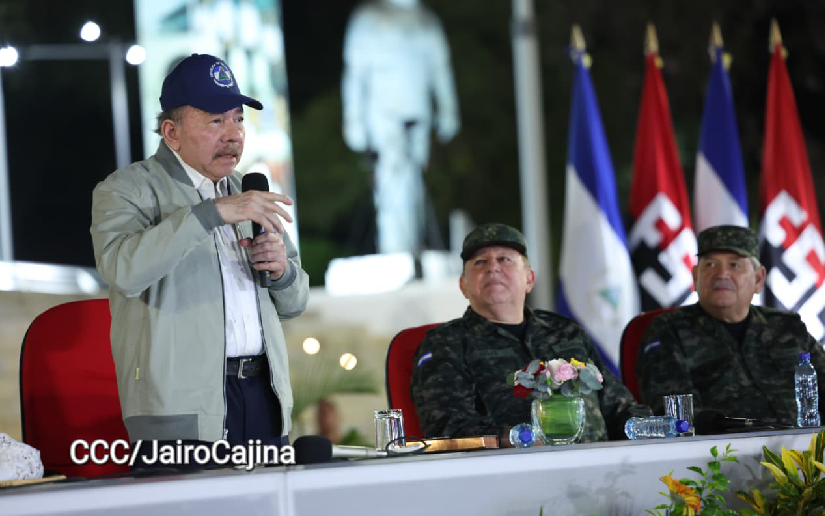
Daniel Ortega y Rosario Murillo, en el acto oficial por los 47 años de la Revolución Sandinista, el 19 de julio de 2026, en la Plaza de la Fe, en Managua. // Foto: CCC
After 61 days without a public appearance, dictator Daniel Ortega declared that “there will never be elections in Nicaragua again.” Speaking at the ceremony commemorating the 47th anniversary of the triumph of the Sandinista People’s Revolution, Ortega said that “there will never again be elections here for them to try to seize the government, to seize power.”
By “them,” he was referring to “the political parties set up by the Yankees, controlled by the Somocistas,” who, he claimed, “will never… return to government.”
Ortega announced that his government would work with the National Assembly to erect a “wall” against any attempt by the opposition to return to power. “We are going to work with the National Assembly and fulfill our responsibilities by passing laws,” he emphasized during his July 19 speech, “to build a wall, a barrier, against the coup plotters and the traitors, so that no matter how much money the Yankees give them, they will never be able to return to government.”
Nicaragua’s most recent electoral processes have been marked by widespread voter abstention, including the 2016 election, when Ortega secured another term with Rosario Murillo as vice president, and the 2021 electoral sham, in which he declared himself the winner with more than 75 percent of the vote after outlawing opposition parties and imprisoning every opposition presidential hopeful.
In 2025, a new constitution came into force, extending the presidential term from five to six years. Under the constitutional amendment, the next elections are scheduled to be held in November 2027.
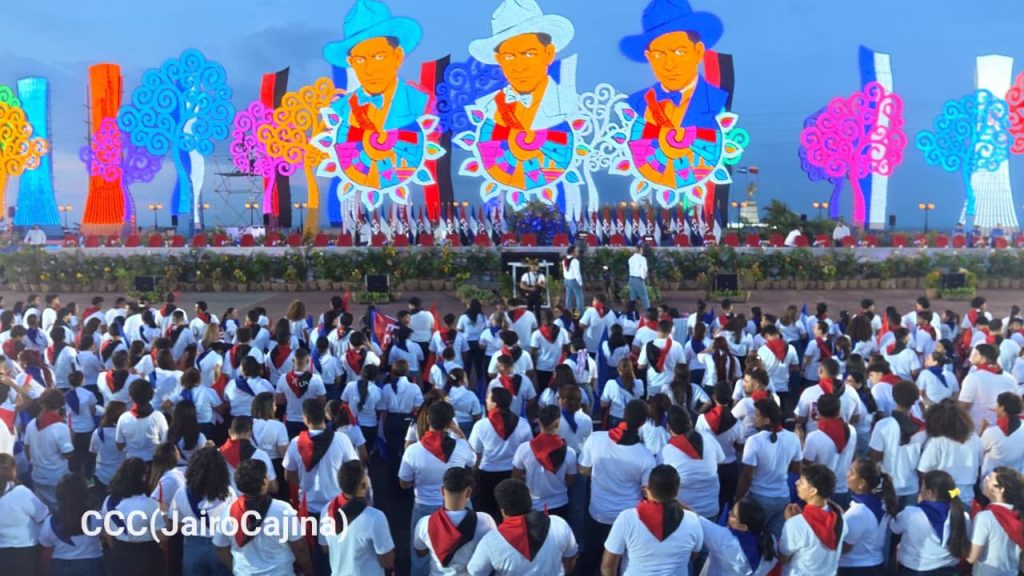
Ortega repeated his claim that the nationwide protests of April 2018 were an attempted “coup d’état.”
“In 2018, while we had agreements with the business leaders, with the Somocistas who were business leaders, we had a great agreement for peace, and then came the stab in the back,” he said.
The dictator, who unleashed the police and paramilitary crackdown, claimed that “they organized the coup. They used U.S. funding to recruit young people and adults, train them, arm them, and prepare them to overthrow the legitimate Sandinista government.”
He added that “they tried. The blood of young people, adults, women, and children was spilled here. Blood was shed, and in the end, there was no choice but to respond with the full force of the people’s anger,” once again acknowledging his responsibility for the massacre of civilians during Operation Cleanup.
“They had paralyzed the country. They had roadblocks everywhere. There was no alternative but for the National Police, together with the volunteer police and the young people, to dismantle those roadblocks, and not a single one remained,” he reiterated.
Without mentioning the international community’s condemnation or the investigations conducted by specialized human rights bodies at the OAS and the UN, Ortega said, “Now come the complaints, after they had murdered people, burned schools… We have to keep working to continue carrying out programs that benefit the poor. Housing for the poor, land for farmers, free schools…”
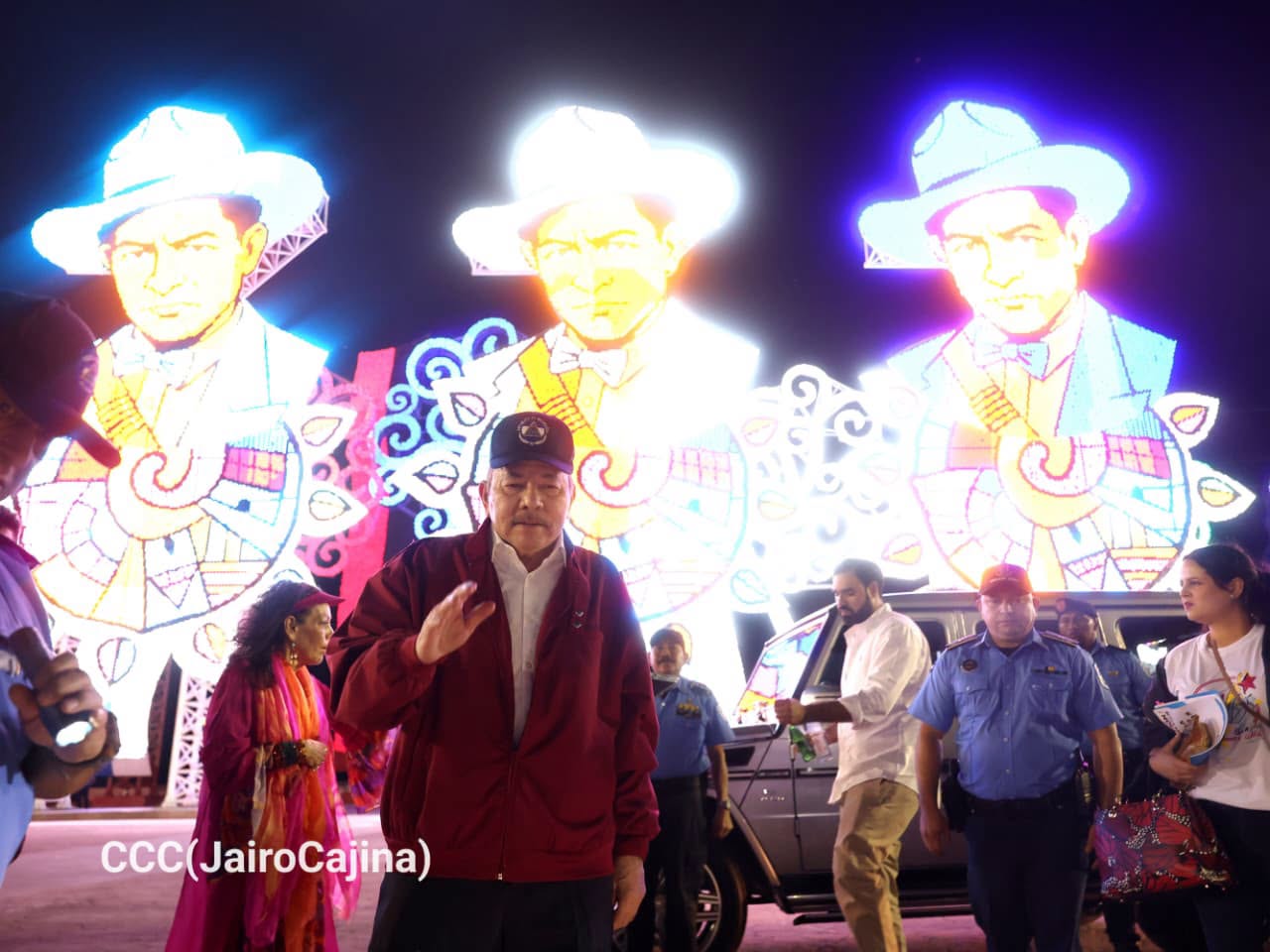
In a speech that once again revisited the struggle and assassination of General Augusto C. Sandino and the heroism of Andrés Castro and General José Dolores Estrada at the Battle of San Jacinto, the dictator expressed solidarity with the regimes in Cuba and Venezuela while criticizing the United States government and “the empires, because there are empires everywhere.”
Ortega condemned the U.S. military operation in Venezuela on January 3, 2026. “With all their military might, they stormed the presidential palace, where Nicolás [Maduro] was with his wife Cilia [Flores]. They killed the entire security detail stationed there, most of whom were Cubans, and took them away to prison in the United States. It’s monstrous,” he said of the Trump administration.
Ortega also denounced the possibility of a U.S. military intervention in Cuba. “Cuba, the Cuba of Fidel, of Raúl, of Díaz-Canel, has been under blockade for more than 60 years and has endured. Yet there are Cubans living in the United States who are asking the U.S. government to invade Cuba militarily and arrest, just as they arrested Nicolás, the commander of the Revolution and Army General Raúl Castro.”
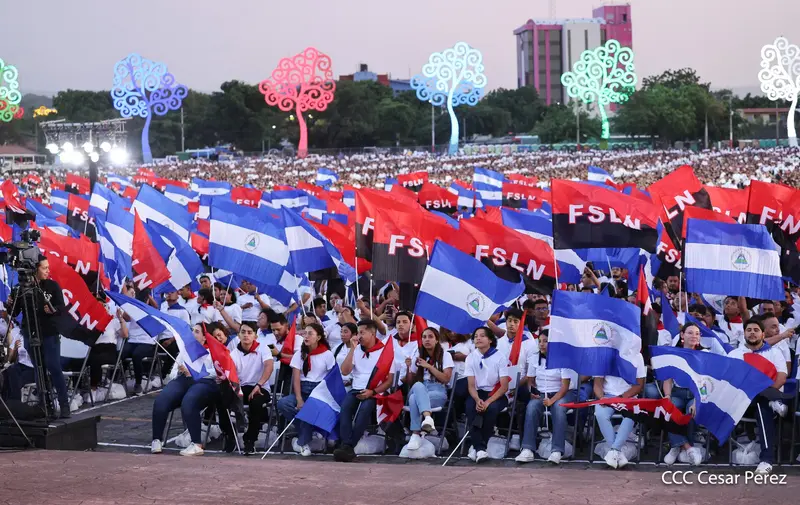
At the conclusion of the speech, delivered before a crowd of state employees, many of whom had been pressured into attending, units from the National Police’s specialized divisions marched in parade. The Nicaraguan Army also staged a military display featuring Soviet-made multiple rocket artillery, patrol boats, armored vehicles, tanks, command vehicles, ambulances, and other equipment.
Unlike previous years, no foreign leaders or their representatives were present on the stage during the July 19 ceremony. Daniel Ortega and Rosario Murillo appeared isolated, accompanied only by senior civilian and military officials from their “co-presidency,” including National Assembly Speaker Gustavo Porras, Attorney General Wendy Morales, Supreme Electoral Council President Brenda Rocha, Central Bank President Ovidio Reyes, the heads of the Army and National Police, Interior Minister Amelia Coronel, and Deputy Interior Minister Luis Cañas.
PUBLICIDAD 3M
PUBLICIDAD 3D

Alertas en tu celular
Suscribite a las alertas informativas de Confidencial en Telegram.

Boletines
Lo mejor de nuestra cobertura noticiosa en tu correo electrónico.

Anuncios
Obtené una propuesta comercial de acuerdo a tus objetivos y presupuesto.

Test Político
Explorá tus ideas sobre nuestra política, economía y sociedad con nuestro Test Político.