AA
Share

 Las noticias del día en tu correo
Recibe lo más destacado de la cobertura de CONFIDENCIAL todos los días.
Más boletines
The best of our coverage, in English
Sign up for our weekly newsletter. We will send it to you every Friday at 10:00 am (Nicaragua time)
More Newsletters
PUBLICIDAD 4D
PUBLICIDAD 5D
Public employees report threats of dismissal unless they attend and bring a guest to create the appearance of mass support at FSLN events

Los seleccionados para asistir al acto del 19 de julio son en su mayoría trabajadores estatales, pero también asisten jóvenes y partidarios radicales del FSLN. Foto: CCC
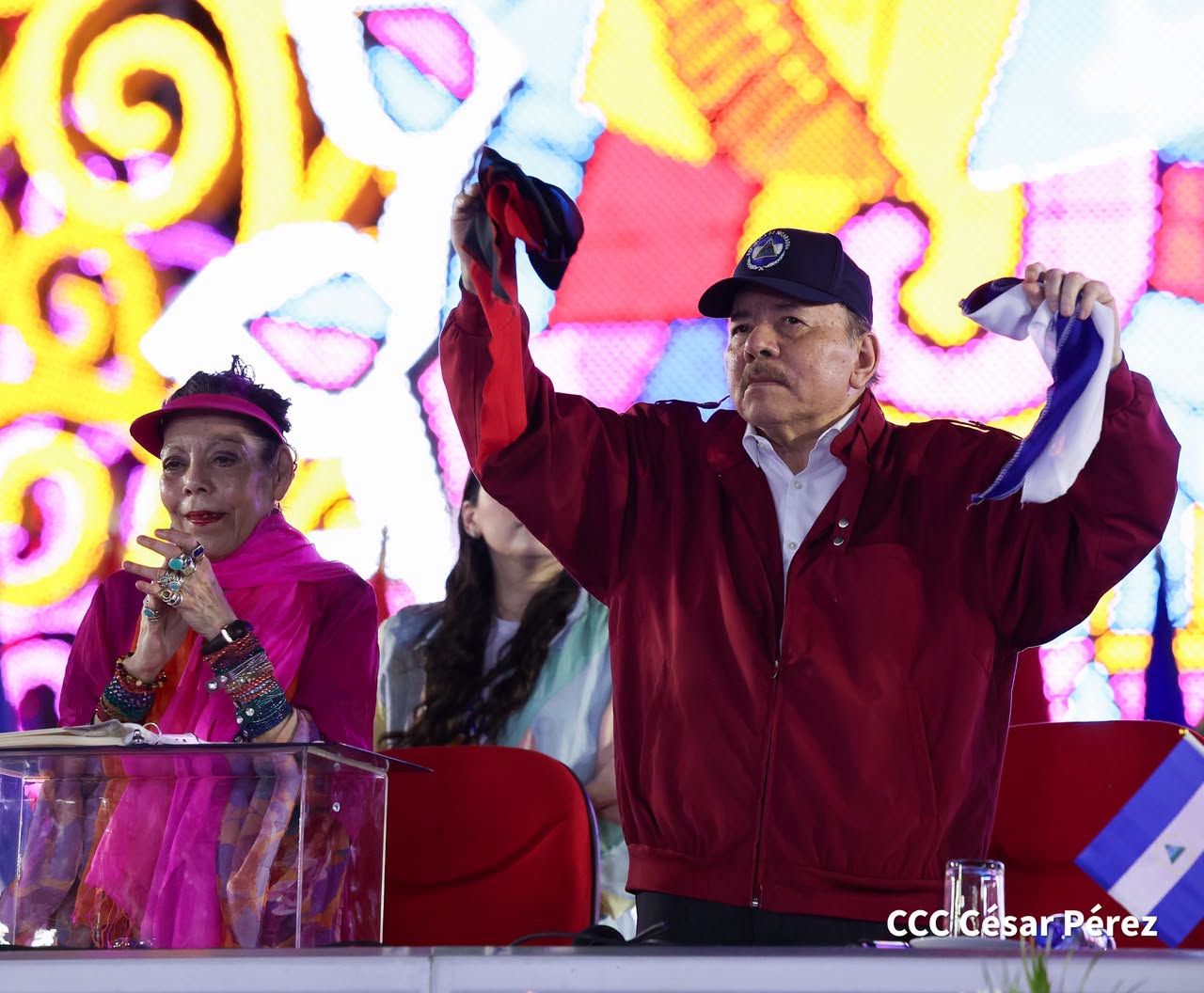
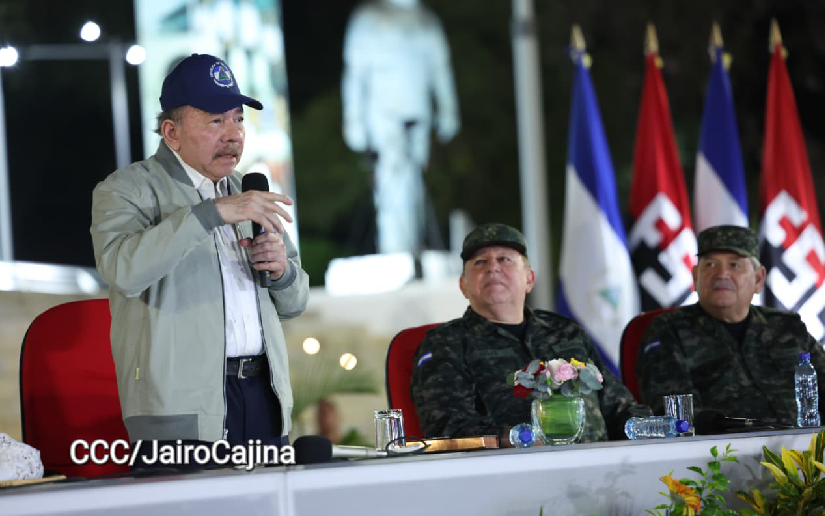
The propaganda apparatus of the regime of Daniel Ortega and Rosario Murillo has flooded its media outlets with images of dozens of events commemorating the victory of the 1979 Sandinista Revolution. Behind the carefully edited photographs that portray large, spontaneous crowds, however, lies a different reality: state employees are being compelled to participate in these events, which culminate on July 19 with the main rally at Plaza de la Fe, while giant screens in municipalities across the country will broadcast the proceedings. But in 2026, there is a new requirement: those who are “bused in” must bring at least one or two “guests” to help fill the venue.
The order to “go to the square” is nothing new, nor is the effort to monitor attendance by taking roll at the beginning and end of every event to determine who showed up—and who stayed through the final speech. This year, however, authorities have added another requirement. Just as employees must register themselves on a list using their national ID number, they must also provide the name and ID number of the person accompanying them. There are no exceptions.
The reason is that in 2026, the main celebration will return to the expansive Plaza de la Fe rather than the much smaller Plaza de la República. The need to fill the larger venue—or at least make it appear full on television broadcasts, including those shown on giant screens set up in town squares and municipalities—explains why attendees are now being required to bring additional people with them.
CONFIDENCIAL spoke with four public employees who were “chosen” to attend the main event, where Ortega and Murillo are expected to appear. To protect their identities, they are identified by pseudonyms: César, a government employee; Anselmo, a university professor; Jimena, a university graduate who could only find work as a teacher with the Ministry of Education; and Félix, a general practitioner.
No one was given a choice. They have to go to the square and bring someone with them.
All public employees have been told to bring a guest. The order was to take a friend or family member to the main rally. They say the goal is to reach a crowd of about 57,000 people.
And we already know what will happen to public employees who fail to comply with this order. It means they are going to mobilize every single government worker, their relatives whether they want to go or not, and the few party loyalists they still have.
With all these people who have been pressured into attending, they want to project strength and claim they still have popular support ahead of the electoral spectacle they plan to stage in 2027.
Some of those selected will march through the streets or gather in municipalities to watch the event on giant screens. Others will be sent to Plaza de la Fe simply to fill out the crowd, because they are determined to make it look completely packed.
I’m a professor at one of the universities that was confiscated by the government. A week ago, we were told that we had to attend the rally and that each of us had to persuade two students who are not members of UNEN, the pro-government National Union of Nicaraguan Students, to take part. In other words, two students who are not involved in any organized group. We were told this was mandatory.
I already knew I would have to attend the event. That has never really been a problem for me. What is a problem is having to bring two students, because young people don’t like going. The whole ordeal is exhausting.
I see it as very difficult and burdensome because I can’t force them to go, and I can’t ask them as a favor either. This is the kind of favor you ask of a friend, someone who might support you in a situation like this, not someone with whom you only have a teacher-student relationship. I’m their professor, not their friend, so I can’t ask them for these kinds of “favors.”
When they told us we had to fill out a form committing to attend the rally on July 19, several of my colleagues said no. They explained that they were sick and not feeling well. The official response was that anyone with high blood pressure, the flu, or asthma should simply bring their medication. The only people exempt are pregnant women.
I don’t agree with forcing employees to go to the square because our rights aren’t being respected. We don’t have the right to choose or to say yes or no. I’m a trained professional. I have a university degree. The truth is, I don’t like going to these events. They don’t interest me, but I do it to keep my job.
Now it’s not just that I’m being forced to go. I also have to bring someone with me. I asked my daughter, but she refused because I told her that last year they cut off our internet access “for security reasons.” We weren’t even allowed to get up to go to the bathroom because the controls were so strict. They want everything to be tightly disciplined.
When we enter the square, we’re searched because we’re not allowed to bring anything except our ID card and our cellphone. No caps, no sunglasses, no water. We’re only allowed to wear plain white T-shirts with no slogans, blue pants, and comfortable shoes. Last year they gave us water, but no food of any kind.
Then there’s the problem of getting back home. Many of my colleagues have complained about that. Some said they wouldn’t go no matter what, but I think they’ll end up going because they have no other choice.
One of my colleagues wanted to ride there on her motorcycle with her husband so they would have a way to get home afterward. When the event ends, the area around the square becomes complete chaos, and it’s hard to find the buses. You don’t get home until very late, often after midnight, even if you live near Managua. If you go in your own vehicle, at least you know you’ll have transportation and can get home earlier. But they didn’t allow my colleague to do that.
I’m a medical professional. I’ve earned my position through my own work. Demands like these make me feel harassed and uncomfortable because of the pressure and constant surveillance we’re subjected to. I’m not the only one who feels this way. My colleagues do too, but they have to accept it in silence because this is how they make a living. This is their primary source of income.
It’s true that many of us have private practices, but the salary we receive from the Ministry of Health is still our main source of income. Most people have a house or a car that they bought on credit because hardly anyone can afford to pay cash. This job provides the salary that covers those monthly payments. Being on a formal payroll also gives you greater financial credibility when applying for a loan, especially if you work for a government institution.
That’s why most people give in to these kinds of abuses.
Although we were instructed to bring someone with us, I don’t have anyone I can take. I know that could create problems for me, but not showing up at all would be even worse.
This is the first year they’ve required us to bring a guest, at least in our department of the Ministry of Health. It’s also much harder to avoid attending now because they take attendance, we have to provide our national ID number, and we’re picked up at a designated meeting point to board a bus.
PUBLICIDAD 3M
PUBLICIDAD 3D

Alertas en tu celular
Suscribite a las alertas informativas de Confidencial en Telegram.

Boletines
Lo mejor de nuestra cobertura noticiosa en tu correo electrónico.

Anuncios
Obtené una propuesta comercial de acuerdo a tus objetivos y presupuesto.

Test Político
Explorá tus ideas sobre nuestra política, economía y sociedad con nuestro Test Político.