AA
Share

 Las noticias del día en tu correo
Recibe lo más destacado de la cobertura de CONFIDENCIAL todos los días.
Más boletines
The best of our coverage, in English
Sign up for our weekly newsletter. We will send it to you every Friday at 10:00 am (Nicaragua time)
More Newsletters
PUBLICIDAD 4D
PUBLICIDAD 5D
Brother of Alejandro Hurtado, PLI Official, Demands: “We Have to Tell Society: We All Need to Be Freed”
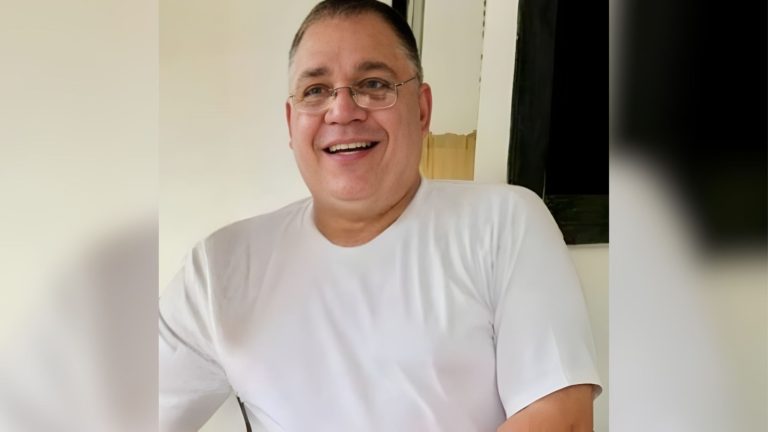
Alejandro Hurtado, directo del PLI secuestrado por la dictadura en Nicaragua. Foto: Cortesía
Since his arrest on January 27, 2025, the family of José Alejandro Hurtado, an official of the Independent Liberal Party (PLI), has had no precise information about his health or the reasons for his kidnapping, says his brother, Adolfo Hurtado.
According to Adolfo, his brother was targeted because he proposed a national dialogue, the end of repression, and an end to confiscations. Since then, the family has only received conflicting information, which has caused them constant anxiety.
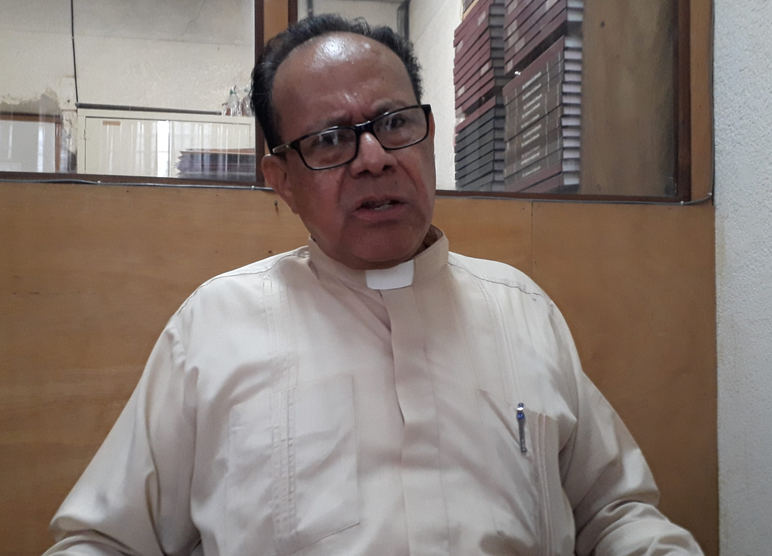
On the program Esta Semana, broadcast on CONFIDENCIAL’s YouTube channel, we spoke with Adolfo Hurtado about the ordeal that the families of more than 30 disappeared political prisoners are enduring in the regime’s prisons.
Last week, the regime released five political prisoners who had been considered disappeared, imposing a threat of silence on them. However, more than 30 political prisoners remain disappeared, including your brother Alejandro Hurtado. Since when has Alejandro been missing?
Alejandro was disappeared at the end of January this year. On the night of January 27, they came without any warrant, without any charges. To this day, no charges have been filed, and we have absolutely no information about him for certain.
Has your family or anyone else had any direct or indirect contact? Any proof of life or knowledge of his condition and whereabouts?
We haven’t had any proof of anything. Since he was taken, my family has been asking around—first at various police stations, and eventually focusing on La Modelo prison, where practically everyone ends up. They have systematically denied us any information.
What has happened is that we have supposedly received information from different sources, but it has been contradictory. The first information we received said he was in El Chipote. Then they said he was in La Modelo. A month later, we were told he was in La Modelo, in what we called a “five-star prison,” because supposedly they ate every day and doctors visited daily. Later, someone from Security called me saying he had narrowly escaped death, had been hospitalized at the Police Hospital for four or five days, and that they would give me a contact to negotiate his release—but in the end, I still received no information.
So, in August I denounced this. It’s a practice of torturing the family, with these policies of disinformation, contradictory information, and creating anxiety. Since August, we haven’t been contacted again.
This week, the dictatorship provided a proof of life for the political prisoner Fabiola Tercero, who had also been disappeared, using official propaganda media. They held a kind of press conference, a staged event with state-run media. What’s your opinion of this proof of life?
The only value it has is that now we know she is alive. That is the main demand we have at this moment, for the families of the disappeared and political prisoners, because we don’t even know their real condition. Many of them have chronic illnesses—my brother has chronic illnesses, Carlos Brenes too—and others have degenerative diseases. In Fabiola’s case, we didn’t know anything. Now we know she is alive. She practically disappeared on July 12, 2024, 14 months ago.
Why does the regime use these official propaganda outlets, which have no credibility, to provide this proof of life, instead of allowing the Nicaraguan prisons to be opened to the International Committee of the Red Cross, the UN Experts Group, or the IACHR? They could come to Nicaragua and verify the condition of the prisoners.
The regime has a very bad attitude toward promoting the suffering of people and their families. Their main goal is to promote terror. Families of the disappeared and political prisoners, even though we are speaking out and denouncing abuses, live under terror. The repression seems designed to create uncertainty among families, making people lose trust in each other. They act in ways that sometimes break the trust even between the families of political prisoners.
The issue of trust will be at the heart of building the New Nicaragua. We will need a new, dialoguing society based on legitimate trust. This deep rupture is something that families of the disappeared and political prisoners are already working on—finding ways to heal and, in one way or another, tell Nicaraguan society as a whole: we need to heal, because our relatives are imprisoned and so are we, and we all need to be free.
They released five political prisoners, but there are still more than 70 in the prisons. Yes, they released five—why can’t they free the rest?
Basically, their goal is not to release anyone. If they have freed some, it’s because they are feeling the pressure from international denunciations. They release as few as possible to create a positive media shock for their base, which is also eroding, and they are losing credibility among their supporters.
And that was one of the reasons they ended up killing Roberto Samcam, because he was speaking to the Army. The Army must be fracturing internally, so they had to silence him by killing him. I think there is an attempt not only to contain external pressure, but also internal pressure. For them, it’s important to tell their base: we are not giving in, we are not releasing anyone relevant, but the pressure is being felt.
We have to keep pushing. If we, as families of political prisoners, tell society at large: this is everyone’s problem, this is a problem for the new society we all want to build together, it helps to completely break what little legitimacy they have left and even encourages people around them, who are not involved in crimes against humanity, to start leaning toward the new society that they, in some way, once hoped to have.
PUBLICIDAD 3M
PUBLICIDAD 3D

Alertas en tu celular
Suscribite a las alertas informativas de Confidencial en Telegram.

Boletines
Lo mejor de nuestra cobertura noticiosa en tu correo electrónico.

Anuncios
Obtené una propuesta comercial de acuerdo a tus objetivos y presupuesto.

Test Político
Explorá tus ideas sobre nuestra política, economía y sociedad con nuestro Test Político.