AA
Share

 Las noticias del día en tu correo
Recibe lo más destacado de la cobertura de CONFIDENCIAL todos los días.
Más boletines
The best of our coverage, in English
Sign up for our weekly newsletter. We will send it to you every Friday at 10:00 am (Nicaragua time)
More Newsletters
PUBLICIDAD 4D
PUBLICIDAD 5D
Nicaragua’s lack of response to Venezuela’s earthquake disaster suggests, according to political analysts, a growing rift between the Ortega and Chavista leaderships

Maquinaria pesada retira escombros el jueves 9 de julio de 2026 de un edificio destruido por el doble terremoto en Caracas, Venezuela. | Foto: EFE/ Ronald Peña R
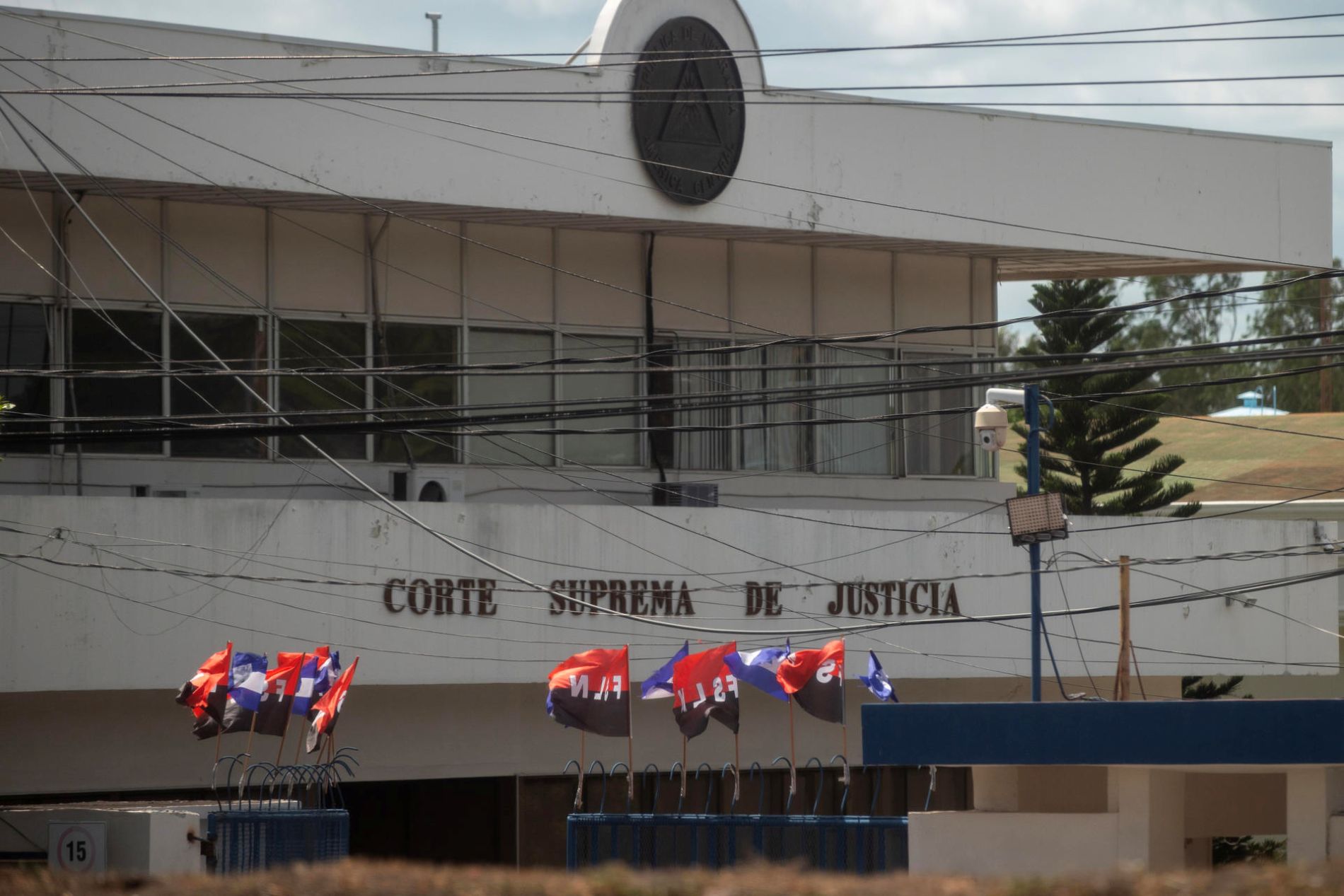
A minute of silence in Nicaragua’s National Assembly and a public letter of condolence have been the regime’s only show of support following the twin earthquakes that devastated Venezuela on June 24, 2026. According to political analysts, the Ortega regime’s muted response stands in sharp contrast to the solidarity shown by dozens of countries and points to a growing distance between the dictatorship of Daniel Ortega and Rosario Murillo and the Chavista government led by Delcy Rodríguez.
“We write to you from our profound sense of brotherhood to express our sincere and enduring solidarity,” Ortega and Murillo wrote in their letter. Beyond those words, however, the Nicaraguan government sent no humanitarian aid, despite the fact that the ruling family received an estimated $5.06 billion in Venezuelan cooperation funds between 2007 and 2018, according to data from Nicaragua’s Central Bank.
More than 27 countries—including many that are not political allies of Venezuela—along with international organizations have delivered more than 700,000 tons of humanitarian aid, over 30 tons of medicine, 3,000 rescue workers, and 140 search-and-rescue dogs to assist with the emergency.
Among Central American nations, El Salvador deployed 300 urban search-and-rescue specialists, including members of the armed forces, Civil Protection, the Emergency Medical System, and the Army’s Canine Rescue Unit. It also sent five tons of food.
Costa Rica dispatched 48 rescue workers and delivered 12 tons of humanitarian aid. Panama sent 38.9 tons of relief supplies, which were distributed through Venezuela’s Civil Protection agency, Caritas Venezuela, and the International Organization for Migration (IOM). Meanwhile, Guatemala has said it is coordinating the deployment of a rescue team.
The United States, long portrayed by the Venezuelan government as its “enemy,” has so far committed more than $386 million in humanitarian assistance for those affected by the earthquakes, according to the U.S. Department of State. The aid includes emergency medical care, food, drinking water, sanitation, temporary shelter, protection services, and logistical support delivered through organizations including the Red Cross, UNICEF, and the World Food Programme.
The Ortega government’s decision not to send aid is not due to a lack of resources. In previous disasters, Nicaragua has deployed its Humanitarian and Rescue Unit (UHR), primarily to neighboring Central American countries. It also has personnel trained through the National System for Disaster Prevention, Mitigation and Response (SINAPRED).
In August 2022, Nicaragua sent shipments of food, medicine, and other supplies to Cuba, another of its regional political allies, to help alleviate shortages on the island.
In November 2020, after Hurricanes Eta and Iota struck Central America, Nicaragua sent humanitarian assistance to Honduras, including Army helicopters carrying rescue brigades to help with flooding and evacuate stranded residents.
In Venezuela, the official death toll from the earthquakes rose to 3,899 on Thursday, July 9, while the number of injured remained at 16,740.
According to an official bulletin shared by National Assembly President Jorge Rodríguez, 17,907 people remain homeless, while 6,462 people have been rescued.
The bulletin also said authorities have assisted 86,794 families since the twin earthquakes—measuring 7.2 and 7.5 in magnitude—and that 16,892 people are currently staying in 89 temporary shelters set up by the Venezuelan government.
A total of 856 buildings have been damaged, including 190 that have collapsed.
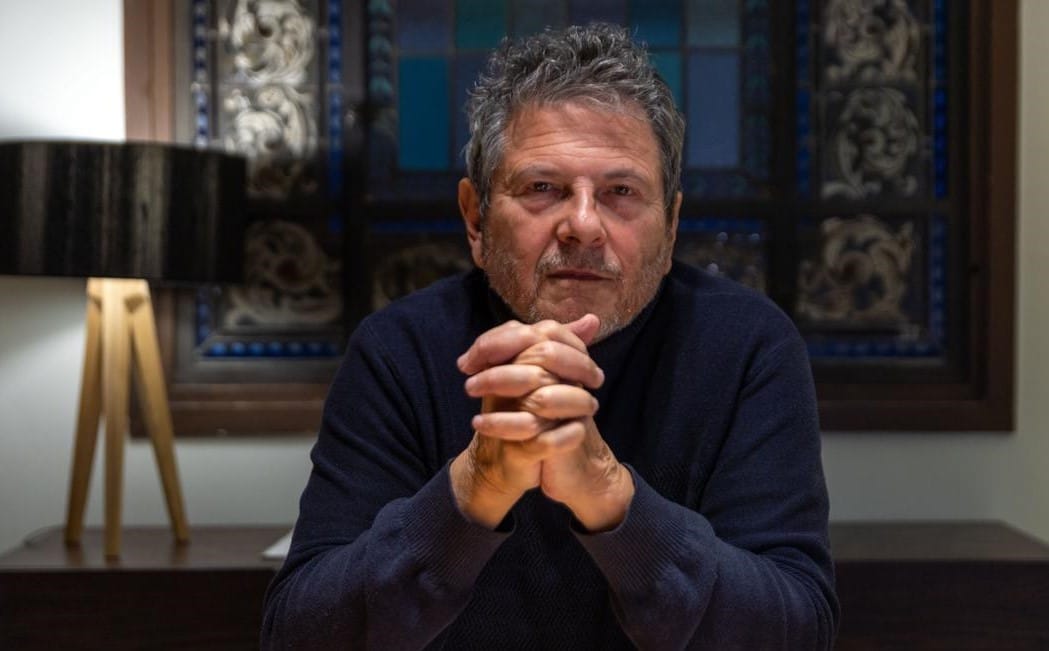
The Nicaraguan government’s indifference to Venezuela’s tragedy “comes as no surprise,” according to former lawmaker and political analyst Eliseo Núñez, who says it is consistent with the regime’s stance since January 3, 2026, when the United States captured Nicolás Maduro in Venezuela and installed Delcy Rodríguez as the country’s interim president.
“The regime does not want to create the impression that betrayal is well rewarded,” Núñez said. “What Delcy and the Rodríguez siblings did—essentially leaving Maduro in the hands of the Americans and then carrying on as though nothing had happened—could have a contagious effect in Nicaragua,” he added.
Faced with what they see as a “betrayal,” Núñez argues that Nicaragua’s rulers have two possible responses. “The first is what we’re seeing now: keeping relations with Venezuela very cold so as not to stir up controversy or draw attention to the issue—to make people forget it even exists.”
The second possibility, he said, is that the Ortega-Murillo family will maintain close ties with China, Russia, and other allies in an effort to project a strength that, in their view, Venezuela failed to demonstrate.
The Nicaraguan regime’s cool response is the latest sign of its growing distance from Venezuela, according to Nicaraguan political analyst José Antonio Peraza. He notes that in recent months Ortega has softened his rhetoric toward Venezuela, granted Nicaraguan citizenship to members of the Venezuelan diplomatic corps stationed in Managua, and made a series of changes at Nicaragua’s embassy in Caracas.
“Ortega and Murillo basically expressed solidarity over the tragedy, but that was it. They didn’t resort to their usual rhetoric about brotherhood or being willing to make sacrifices. It’s clear there’s growing distance and a cooling of relations,” Peraza said.
The naturalization of José Francisco Javier Arrué de Pablo, Venezuela’s former ambassador to Nicaragua, along with other members of the Venezuelan diplomatic corps, on April 23, 2026—two and a half months after Maduro’s removal—shows “that there is a problem” and suggests “that these individuals are in Nicaragua to stay,” Peraza added.
Following Maduro’s downfall, the Ortega-Murillo regime removed its ambassador to Venezuela, former Managua mayor Daysi Torres, and reassigned her to Cuba. In the following months, it attempted to fill the vacancy in Caracas by appointing Isidro Rivera and Valezka Fiorella López, but ultimately reinstated Torres as ambassador in May 2026.
According to Peraza, those diplomatic reshuffles reflected “inconsistency.” “They’re not clear about what they’re doing,” he said. “They’re desperately looking for allies, but in that search they’re drawing closer every day to China, Russia, and Iran, which is currently the United States’ number one adversary.”
Both Núñez and Peraza agree that Nicaragua does not have extensive resources to assist Venezuela at the moment. Even so, they note that in previous disasters the government has at least sent Civil Defense brigades—a symbolic gesture, they argue, that is better than doing nothing.
PUBLICIDAD 3M
PUBLICIDAD 3D

Alertas en tu celular
Suscribite a las alertas informativas de Confidencial en Telegram.

Boletines
Lo mejor de nuestra cobertura noticiosa en tu correo electrónico.

Anuncios
Obtené una propuesta comercial de acuerdo a tus objetivos y presupuesto.

Test Político
Explorá tus ideas sobre nuestra política, economía y sociedad con nuestro Test Político.