AA
Share

 Las noticias del día en tu correo
Recibe lo más destacado de la cobertura de CONFIDENCIAL todos los días.
Más boletines
The best of our coverage, in English
Sign up for our weekly newsletter. We will send it to you every Friday at 10:00 am (Nicaragua time)
More Newsletters
PUBLICIDAD 4D
PUBLICIDAD 5D
The slow movement of the weather system continues to bring heavy rains and rough seas, affecting León, Chinandega, Rivas, and Managua

Imagen que muestra los escombros de unos negocios y casas afectadas por el paso de la tormenta Cristina en Corinto, Chinandega, el 9 de junio de 2026. | Foto: EFE/ STR
Tropical Storm Cristina has become a greater threat to Nicaragua after remaining virtually “stationary” about 150 kilometers (93 miles) north of Managua, a condition that will prolong heavy rainfall, high surf, and strong winds along the Pacific coast, according to the US National Hurricane Center (NHC).
“Cristina is nearly stationary,” the NHC stated in its Bulletin 6A, issued at midday on Tuesday, June 9, 2026. The report noted that the storm’s center was maintaining maximum sustained winds of 65 kilometers per hour (40 mph) while showing virtually no movement.
The agency also warned that coastal flooding from storm surge is possible.
“Near the coast, the surge will be accompanied by large and dangerous waves,” the NHC emphasized, adding that the tropical storm is expected to move near the coasts of Nicaragua, Honduras, and El Salvador over the next two days.
Rainfall associated with Cristina continues to wreak havoc in several municipalities in western León, including La Paz Centro, Nagarote, Quezalguaque, Telica, El Jicaral, and Malpaisillo, as well as in the coastal communities of Poneloya and Las Peñitas.
In La Paz Centro, saturated soils and accumulated water caused the collapse of a perimeter wall at the San Nicolás de Tolentino Institute.
The situation has also put the coastal communities of Poneloya and Las Peñitas on alert, where waves have surged beyond the beach and reached streets, kiosks, and areas used for tourism and commercial activities.
Heavy surf has also affected the coastal area of Corinto, in Chinandega. Images released by the Corinto municipal government show several businesses flooded as seawater poured into establishments built near the beach, forcing owners to move their equipment.
Municipal authorities in western Nicaragua reported that emergency response brigades remain deployed in neighborhoods to clear roads and address incidents caused by the storm.
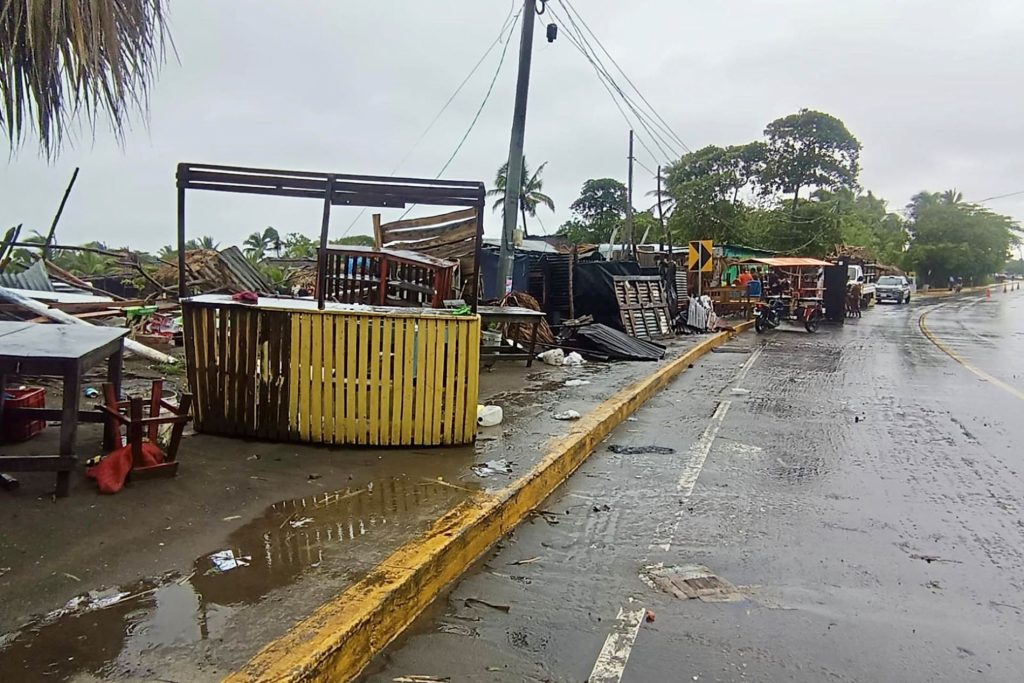
The most severe impacts have been reported in Rivas, one of the departments hardest hit since the storm began, particularly due to damage to fishing boats and tourism businesses.
High waves in San Juan del Sur and Tola swept boats toward shore and caused flooding in businesses located at El Coco Beach and Popoyo Beach.
The Nicaraguan Army advised vessels engaged in fishing, tourism, and lake transportation activities to take all necessary safety precautions and, if necessary, move to safe harbor to avoid accidents and loss of life.
In Carazo, authorities reported the rescue of five fishermen from Casares who were shipwrecked at sea when a large wave capsized the Águila Negra fishing boat.
The incident occurred about nine kilometers (5.6 miles) offshore during the early hours of Monday, June 8, 2026. The crew drifted for several hours before being located and rescued by other fishermen.
The National Hurricane Center warned that Cristina could produce rainfall accumulations of between 100 and 200 millimeters (4–8 inches), with localized maxima of up to 300 millimeters (12 inches) in coastal areas of Nicaragua and elsewhere in Central America between Tuesday and Thursday.
“This rainfall may produce life-threatening flooding and landslides, especially in areas of steep terrain,” the NHC stated.
In Managua, the rain has caused significant damage. The city government reported problems at kilometer 13 on the highway to Masaya, where part of the roadway collapsed due to accumulated water and ground erosion.
Municipal workers have been clearing drainage systems and channels in several neighborhoods to remove sediment deposited by the rains.
Although damage has been reported to boats, coastal businesses, homes, and road infrastructure, regime spokeswoman and “co-president” Rosario Murillo downplayed the storm’s impact, stating that “thank God we have not had any significant incidents.”
PUBLICIDAD 3M
PUBLICIDAD 3D

Alertas en tu celular
Suscribite a las alertas informativas de Confidencial en Telegram.

Boletines
Lo mejor de nuestra cobertura noticiosa en tu correo electrónico.

Anuncios
Obtené una propuesta comercial de acuerdo a tus objetivos y presupuesto.

Test Político
Explorá tus ideas sobre nuestra política, economía y sociedad con nuestro Test Político.