AA
Share

 Las noticias del día en tu correo
Recibe lo más destacado de la cobertura de CONFIDENCIAL todos los días.
Más boletines
The best of our coverage, in English
Sign up for our weekly newsletter. We will send it to you every Friday at 10:00 am (Nicaragua time)
More Newsletters
PUBLICIDAD 4D
PUBLICIDAD 5D
The young Nicaraguan poet describes in his book his faith, his activism in the church, and the pain of exile.

Carlos Bojorge posa junto a su poemario Me duele hasta el aire // Foto: Cortesía
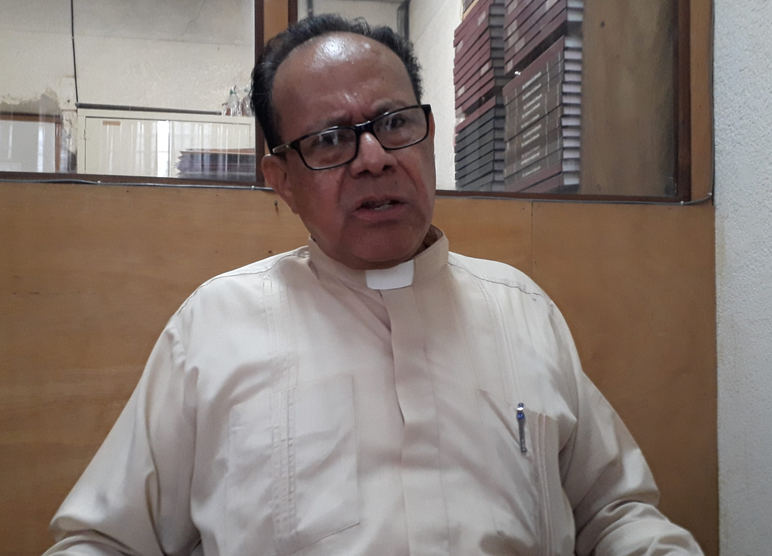
Carlos Alberto Bojorge Martinez, 24, was born and raised in the La Esperanza neighborhood in Managua. There, he devoted most of his time to the church and to religious missions in rural areas, always carrying with him a notebook filled with poems that almost no one read. Today, more than 5,600 kilometers from his hometown, exiled in California, USA, he has published his first book of verse titled Me duele hasta el aire (“Even the Air Hurts Me”).
The young poet is part of the group of 135 Nicaraguan political prisoners who were banished to Guatemala by the dictatorship of Daniel Ortega and Rosario Murillo on September 5, 2024. That day he was forced to board a plane without knowing where he was going, without a suitcase, and without a farewell embrace from his mother.
He recalls—as if it were yesterday—the feelings of “rage, pain, all the emotions” he experienced when the chargé d’affaires of the US Embassy in Managua, Kevin O’Reilly, arrived where the political prisoners were being held to inform them they had two options: “board a flight to Guatemala or stay (in Nicaragua) under the conditions of the dictatorship.”
“Making that decision was very difficult for me. At that moment I felt something like betrayal. I asked myself, why do I have to leave? Why must I abandon my country?” the poet remembers.
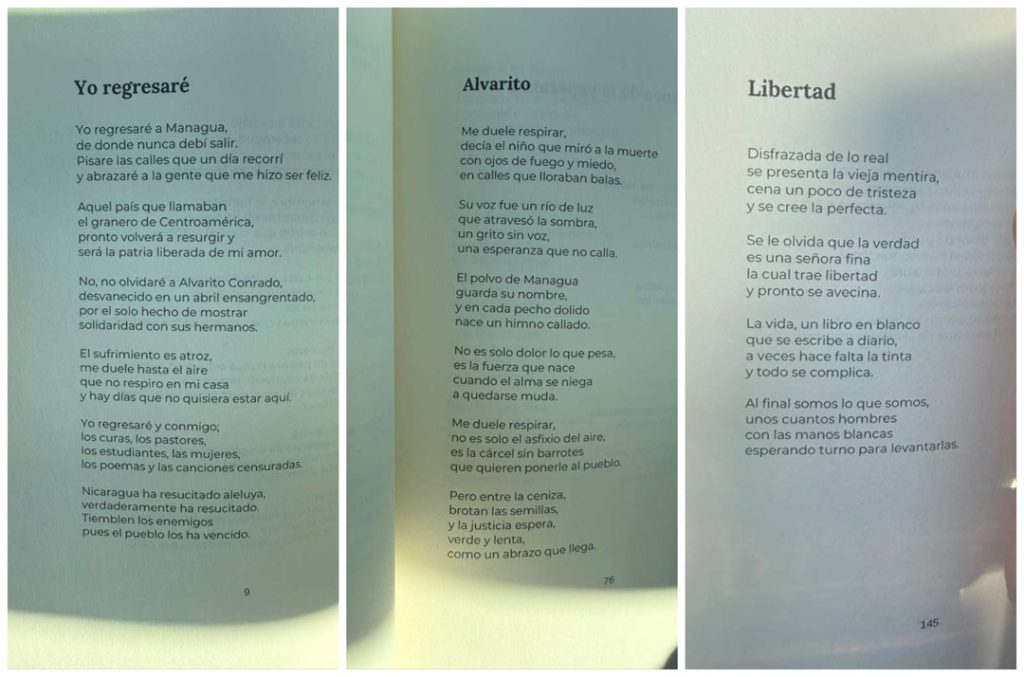
Upon arriving in Guatemala, banished from Nicaragua, the first thing he did was write a poem that he memorized, as he had done while imprisoned without access to books or writing materials. That poem, found on page nine of the book, is titled I Will Return—the same phrase that gives the book its title—and, he says, was the hardest for him to write.
“Even the air I don’t breathe in my home hurts me,
and there are days I don’t want to be here.”
The book, available on Amazon since February 2026, brings together poems Bojorge wrote at different stages of his life: from the years he traveled through rural communities as a missionary, to the months he spent in prison and his current exile in the United States.
Bojorge says the idea of compiling his poems into a book came to him in December 2023, during a trip to El Salvador. On that occasion he visited the Metropolitan Cathedral of San Salvador, where the remains of Saint Óscar Arnulfo Romero rest—the Salvadoran archbishop assassinated in 1980 and canonized in 2018.
“Being in the cathedral, in that basement, praying on my knees in that mausoleum, and feeling the presence of Monsignor Romero—a voice that prophesied freedom in his country—I felt his presence telling me that I could do something too,” the Nicaraguan recounted.
The book includes all the poetry Bojorge had accumulated over the years, previously published in fragments on Facebook or shared with a small circle of friends. Ninety percent consists of poems written before his imprisonment, as he did not want the book to become a chronicle of prison life. That episode still weighs too heavily on him.
“For me, my time in prison represents a traumatic episode in my life, and many times I try not to bring it back into the present. It affected me deeply,” he admits.
The collection is divided into five sections: A Country We Left Behind, Communion, What Confinement Left Me, I Promised to Love You and the Promise Is Not Yet Broken, and I Thirst for Sincerity.
In the first section, poems written in exile predominate, including the one that gives the book its title. The second section is dedicated to the Catholic Church and the ecclesial community. The third section gathers the last poems he wrote before being imprisoned. Only one poem in the book originated in prison; it is titled “Freedom” and appears on page 145.
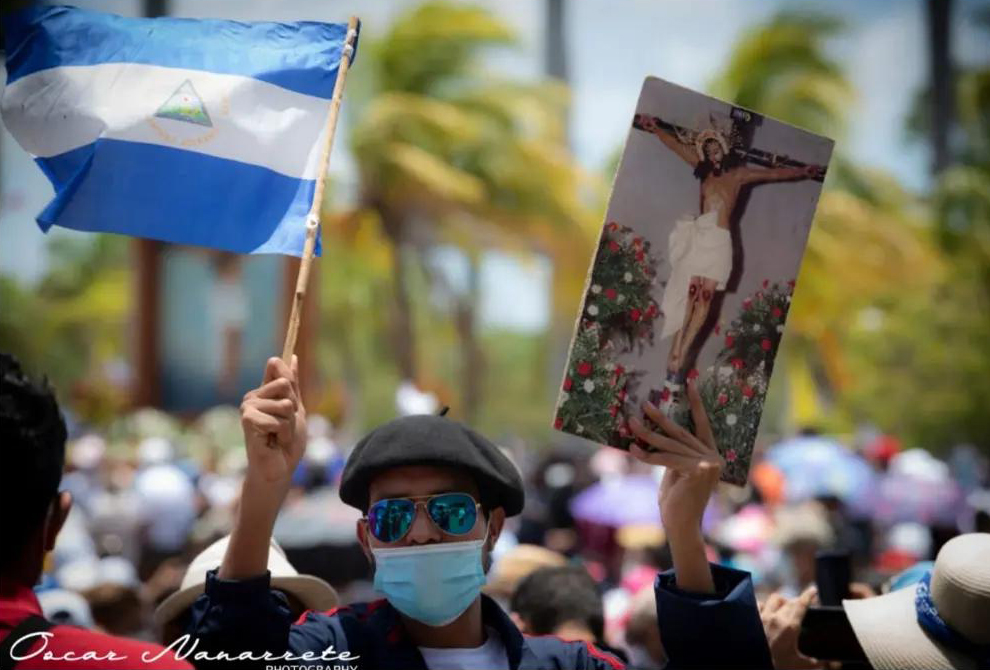
Carlos Bojorge was arrested on January 1, 2024, as he was leaving the Managua cathedral after participating in the procession of the Blessed Sacrament. He was detained without a warrant by police agents and taken to “La Modelo” prison, where he remained for nine months.
In prison, inmates organized “afternoon gatherings” from their cells, where Bojorge recited his own poems and works by Eduardo Galeano, Mario Benedetti, Pablo Neruda, and Ernesto Cardenal. There, in a nearby cell, he met sociologist and academic Freddy Quezada, who wrote the book’s prologue.
“Me duele hasta el aire” is a collection structured in layers that range from his most mature poems—for someone at the height of youth—to the earliest ones, timid and wide-eyed before a world of words that ruffle his hair, as adults do with unfamiliar children. Layers, like a train of old war films whose cars carry poems of imprisonment, nostalgia for his country, faith, reflection, struggles, cosmic themes, and youthful love,” Quezada wrote.
Months after his expulsion to Guatemala, Bojorge moved to California. He currently works at a fast-food franchise, studies English, and in his free time reads and writes poetry. He says he has written around 50 new poems that he hopes to publish in a second collection.
But life in exile carries a series of uncertainties that are also reflected in his verses. He says he cannot travel freely because he was stripped of his Nicaraguan nationality, and although he has received invitations to participate in Church gatherings in Argentina and El Salvador, he cannot accept them.
“I continue to denounce the abuse and human rights violations committed against me. Expelling me from the country through a back door—that should not have happened,” he reflected.
Poetry is Bojorge’s instrument of denunciation. He affirms that “poetry is to express, to denounce—it is to write what one feels.”
The presentation of Carlos Bojorge’s poetry collection will take place on May 23, 2026, at 2:00 p.m., at the Hayward Public Library in California.
PUBLICIDAD 3M
PUBLICIDAD 3D

Alertas en tu celular
Suscribite a las alertas informativas de Confidencial en Telegram.

Boletines
Lo mejor de nuestra cobertura noticiosa en tu correo electrónico.

Anuncios
Obtené una propuesta comercial de acuerdo a tus objetivos y presupuesto.

Test Político
Explorá tus ideas sobre nuestra política, economía y sociedad con nuestro Test Político.