AA
Share

 Las noticias del día en tu correo
Recibe lo más destacado de la cobertura de CONFIDENCIAL todos los días.
Más boletines
The best of our coverage, in English
Sign up for our weekly newsletter. We will send it to you every Friday at 10:00 am (Nicaragua time)
More Newsletters
PUBLICIDAD 4D
PUBLICIDAD 5D
Report presented to the Human Rights Council warns of a “transnational surveillance and intelligence network” used to target exiles

Paramilitares que participaron en la llamada "Operación Limpieza" fueron patrocinados con fondos públicos. Archivo | Confidencial
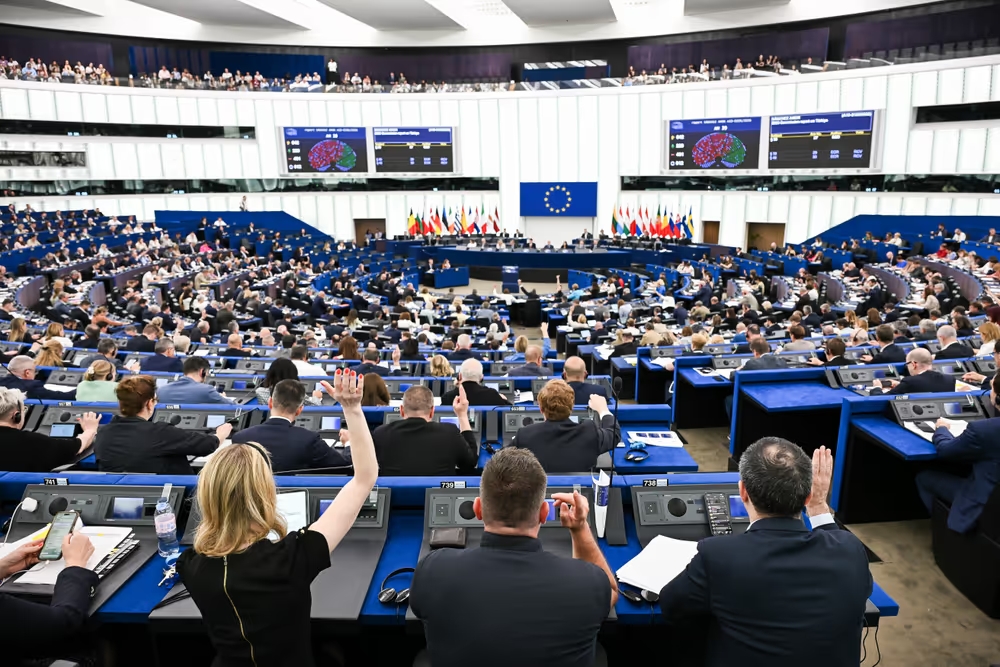
The dictatorial regime of Daniel Ortega and Rosario Murillo is “financing the repression of its opponents by diverting public funds” through a “parallel structure” operating within the Sandinista National Liberation Front (FSLN), according to the Group of Human Rights Experts on Nicaragua (GHREN) in a new report presented to the UN Human Rights Council on March 10, 2026.
With documentary evidence and dozens of interviews, GHREN confirmed that since 2018 this parallel structure has been responsible for “channeling funding for security operations, pro-government armed groups, and party activities.” The logistical costs for the first two months of the so-called “Operation Cleanup”—the name the dictatorship gave to the order to dismantle barricades and suppress public protests on streets and highways across the country in 2018—were estimated at 5 million dollars “allocated to finance pro-government armed groups,” according to the report.
According to the report, the regime used municipal budget allocations that were intended for “social assistance programs, sanitation projects, and operational expenses such as fuel, security, and travel allowances” to finance repression during the anti-government protests, including the so-called “Operation Cleanup.”
“Political persecution is financed by the State, carried out through its institutions, and extends beyond the country’s borders to ensure that no one—absolutely no one—stands in the regime’s way,” said Jan-Michael Simon, president of the Group of Experts.
The president of the Group of Experts stressed that “repression and institutional corruption have become the method of governance in Nicaragua under the control of the Ortega-Murillo family.”
For Reed Brody, a member of the Group of Experts, repression in Nicaragua “is not improvised: it is structured and financed under a scheme of corruption.” “The misuse and diversion of public resources have directly contributed to the commission of serious human rights violations,” Brody said.
The report presented to the Human Rights Council also details that the regime has built a transnational surveillance and intelligence architecture used to “monitor, intimidate, and attack” Nicaraguans displaced since 2018.
According to GHREN, the current co–foreign minister, Valdrack Jaentschke, coordinated between 2021 and 2023 part of a “high-level group tasked with directing and coordinating transnational repression in several countries,” while serving in diplomatic roles.
“Diplomatic and consular structures have been instrumentalized to track, monitor, and intimidate Nicaraguans in exile,” said Ariela Peralta, a member of the Group of Experts.
The Nicaraguan Army, the National Police—which constitutes the dictatorship’s main “political and repressive arm”—migration authorities, the Nicaraguan Institute of Telecommunications and Postal Services (TELCOR), diplomatic missions, and FSLN operatives are all part of this “multi-level intelligence structure” dedicated to “surveillance and digital harassment, hacking, and the disclosure of personal data (doxing)” in order to “silence critical voices,” the Group of Experts detailed.
“This is a deliberate policy,” Peralta added, “to eliminate dissent wherever it may be found.”
In the report, GHREN calls on the regime to adopt “immediate measures” leading to the dismantling of the “architecture of repression,” including “dissolving the para-state apparatuses and restoring the separation of powers,” and repealing all “restrictive” legislative and constitutional reforms adopted since 2018.
The Group documented at least a dozen cases of killings or attempted killings targeting critics in exile, including the murder of Roberto Samcam, a retired Army major who was shot dead at his home in San José on June 19, 2025.
Since 2018, the regime has arbitrarily stripped 452 Nicaraguans of their nationality and has left thousands of exiles in a situation of de facto statelessness by refusing to renew or provide identification documents.
At the same time, the dictatorship has prevented many from returning to Nicaragua, while others have faced “surveillance, harassment, smear campaigns, misuse of INTERPOL mechanisms, property confiscation, and punishment by association against relatives who remain in the country.”
GHREN also documents persecution and repression based on gender against human rights defenders, journalists, lawyers, political and community leaders, as well as LGBTIQ+ people, who have been subjected to “political persecution” and “moral stigmatization campaigns both inside Nicaragua and in exile.”
“Patterns of violations with a gender dimension do not occur in isolation. They are part of a deliberate repressive strategy aimed at punishing women and feminist movements for their historic leadership as autonomous political actors,” Peralta said.
Finally, the Group of Experts stressed that it is “urgent” for the regime to be held internationally accountable.
“The longer action is delayed, the greater the harm and the deeper the consequences (…) However, the resilience of victims—strengthened by the careful documentation of their experiences—continues to drive the search for truth, justice, and full compliance with international human rights law,” Simon said.
According to GHREN, states are called upon to mobilize a “comprehensive accountability framework”—including universal jurisdiction, targeted sanctions, and litigation based on international treaties—to ensure strong protection for the exiled population and prevent the “use of international legal and financial mechanisms by Nicaraguan authorities.”
“The Group of Experts stands ready to engage directly and constructively with the authorities (…) We are prepared to travel to Nicaragua in order to monitor progress and support the implementation of human rights reforms,” Brody added.
The “forced silence” of families, as a result of the “fear” imposed by the Ortega-Murillo regime, has led to a reduction in the list of political prisoners in Nicaragua to 46 cases as of February 2026. However, the list does not reflect the real number of political prisoners, because many cases go unreported due to fear. All political prisoners should be released, the Group of Experts said.
PUBLICIDAD 3M
PUBLICIDAD 3D