AA
Share

 Las noticias del día en tu correo
Recibe lo más destacado de la cobertura de CONFIDENCIAL todos los días.
Más boletines
The best of our coverage, in English
Sign up for our weekly newsletter. We will send it to you every Friday at 10:00 am (Nicaragua time)
More Newsletters
PUBLICIDAD 4D
PUBLICIDAD 5D
The political prisoners released by the dictatorship are between 60 and 67 years old and were in a state of “forced disappearance”
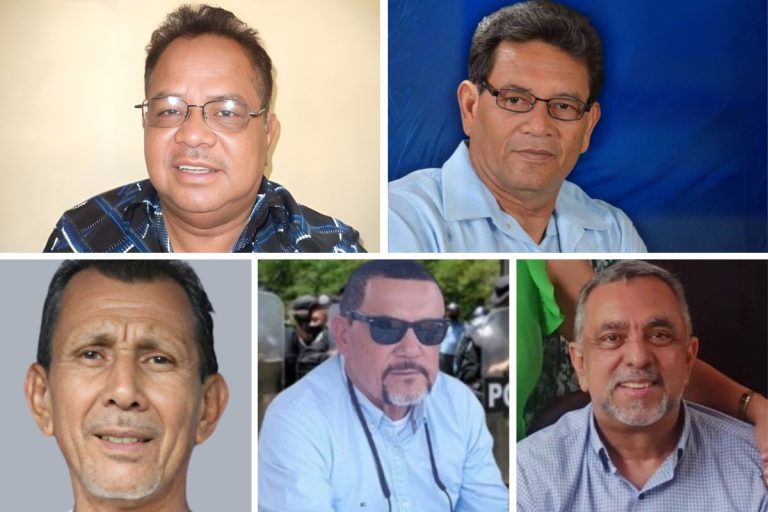
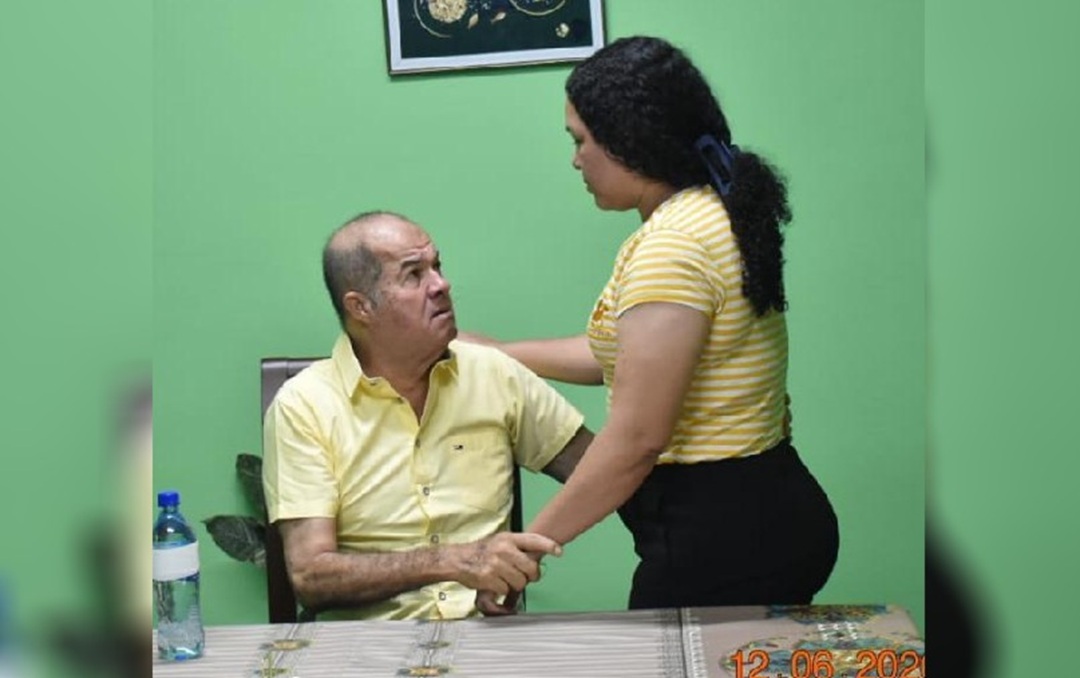
Los presos políticos excarcelados: Leo Catalino Cárcamo Herrera, Julio Antonio Quintana Carvajal, y Fabio Alberto Cáceres Larios; y los exmilitares Ronald Leiva Silva y Jorge Danilo Portocarrero Argüello. // Collage: CONFIDENCIAL
Five political prisoners, most confirmed to be over 60 years old, were released by the dictatorship of Daniel Ortega and Rosario Murillo in Nicaragua under the threat of being returned to prison if they speak about their situation, sources linked to the Nicaraguan Penitentiary System (SPN) and a source from the Political Prisoners Released Reflection Group (GREX) confirmed to CONFIDENCIAL.
Among the political prisoners are journalist Leo Catalino Cárcamo Herrera, 62, and Julio Antonio Quintana Carvajal, 67, both from León. Also, Fabio Alberto Cáceres Larios, 65, from Chinandega. The three were released on Friday, November 7, 2025, according to data verified by CONFIDENCIAL. The other two released are retired military officers Ronald Leiva Silva, from Matagalpa, and Jorge Danilo Portocarrero Argüello, from Jinotepe, although neither of these last two were on the list of political prisoners monitored by organizations tracking prisoners of conscience.
Journalist Leo Cárcamo Herrera was detained on November 23, 2024, during a wave of arbitrary arrests between November 22 and 28 of that year, which coincided with the illegal approval in the first legislature of the constitutional reform that established “co-presidency” in the country. A total of 30 Nicaraguans were arrested in at least ten departments, including León, Masaya, and Estelí.
The journalist has been a political prisoner on two occasions. The first was in January 2019. In February 2025, the Inter-American Court of Human Rights (IACHR) demanded, for the second time, his release, and in September, the United States government requested proof of life.
On December 11, 2024, about forty detainees, including several arrested in León, were sent home in various departments on the condition that they report periodically to the police in Managua, but Cárcamo was not released, supposedly “due to a mental health issue.”
On that occasion, some of the released prisoners had a judicial hearing via videoconference, in which they were informed of alleged charges of “cybercrimes” and “treason against the homeland” against them. In this case, it is still unknown whether any judicial hearing took place.
Like Cárcamo, political prisoners Julio Antonio Quintana Carvajal and Fabio Alberto Cáceres Larios remained detained under conditions of incommunicado detention and were considered victims of “forced disappearance,” according to the Mechanism for the Recognition of Political Prisoners of Nicaragua, which has not yet commented on this release.
Sources from the Penitentiary System and GREX told CONFIDENCIAL that the released prisoners and their families were threatened not to speak to the media or to civil society or human rights organizations. Since their arrests, their families had been unaware of their whereabouts and health conditions.
Quintana Carvajal, 67, was detained at his home in León on November 26, 2024. From that moment, his whereabouts were unknown, despite efforts by his family and human rights organizations.
The Inter-American Commission on Human Rights (IACHR) had granted him precautionary measures in February 2025, after determining that he was in a situation of extreme gravity and urgency.
According to the IACHR resolution, Quintana Carvajal joined the Sandinista National Liberation Front (FSLN) in the 1970s and was part of the University Student Front. In 2018, his home in León was attacked by Sandinista supporters who accused him of being a “traitor” and “sellout.” A year later, his home was vandalized again with the word “plomo” (“lead”) painted on the walls, and since then, he suffered constant harassment by the Ortega-controlled police.
Cáceres Larios, 65, from Posoltega, Chinandega, was detained on November 22, 2024, and since then remained in a state of forced disappearance.
His case was also documented by the Mechanism for the Recognition of Political Prisoners, an organization that has denounced the torture, cruel treatment, and denial of contact with family or lawyers suffered by political prisoners in Nicaragua.
The other two released prisoners, who are not on the Mechanism’s list, are retired military officers Ronald Leiva Silva and Jorge Danilo Portocarrero Argüello.
Leiva Silva, known as “Paul,” from Matagalpa, was chief of Military Intelligence. The former officer was detained in May 2025, although the case was kept completely secret by the regime and his whereabouts were unknown. At that time, about fourteen Nicaraguans were illegally detained by the National Police in various points in the northern region of the country, including former members of the canceled Citizens for Liberty (CxL) party and ex-military linked to recently arrested retired General Álvaro Baltodano Cantarero.
One source told CONFIDENCIAL that Leiva Silva was released several days before Cárcamo, Quintana, and Cáceres, although the exact date could not be confirmed.
Portocarrero Argüello, who is also at least 60 years old, was a captain in the Nicaraguan Army in the early 1990s, and after retiring worked for several decades in various advertising and communication companies. He was also a professor at the National Autonomous University of Nicaragua (UNAN-Managua).
As of October 29, 2025, the Mechanism for the Recognition of Political Prisoners identified 77 people as imprisoned, most in a state of “forced disappearance,” while hundreds more remain under de facto house arrest.
PUBLICIDAD 3M
PUBLICIDAD 3D