AA
Share

 Las noticias del día en tu correo
Recibe lo más destacado de la cobertura de CONFIDENCIAL todos los días.
Más boletines
The best of our coverage, in English
Sign up for our weekly newsletter. We will send it to you every Friday at 10:00 am (Nicaragua time)
More Newsletters
PUBLICIDAD 4D
PUBLICIDAD 5D
“A ruling by the International Court of Justice against Nicaragua for the deprivation of nationality would have a very significant impact,” says the jurist
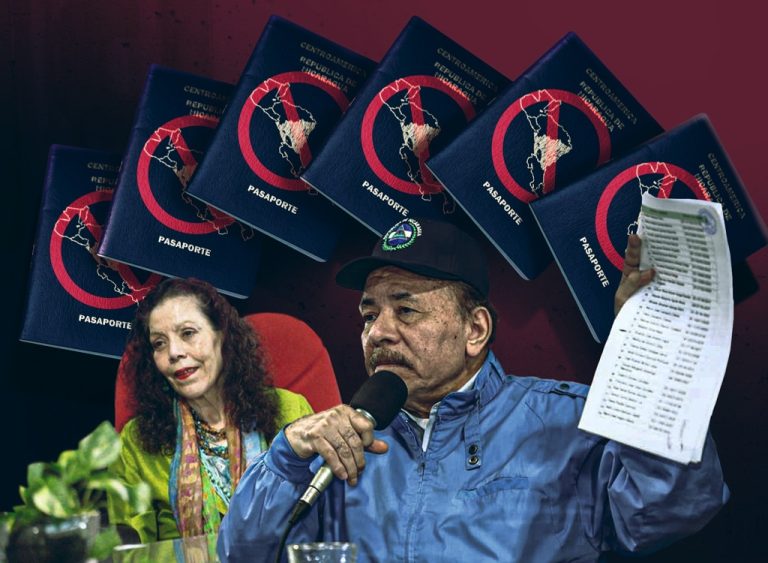
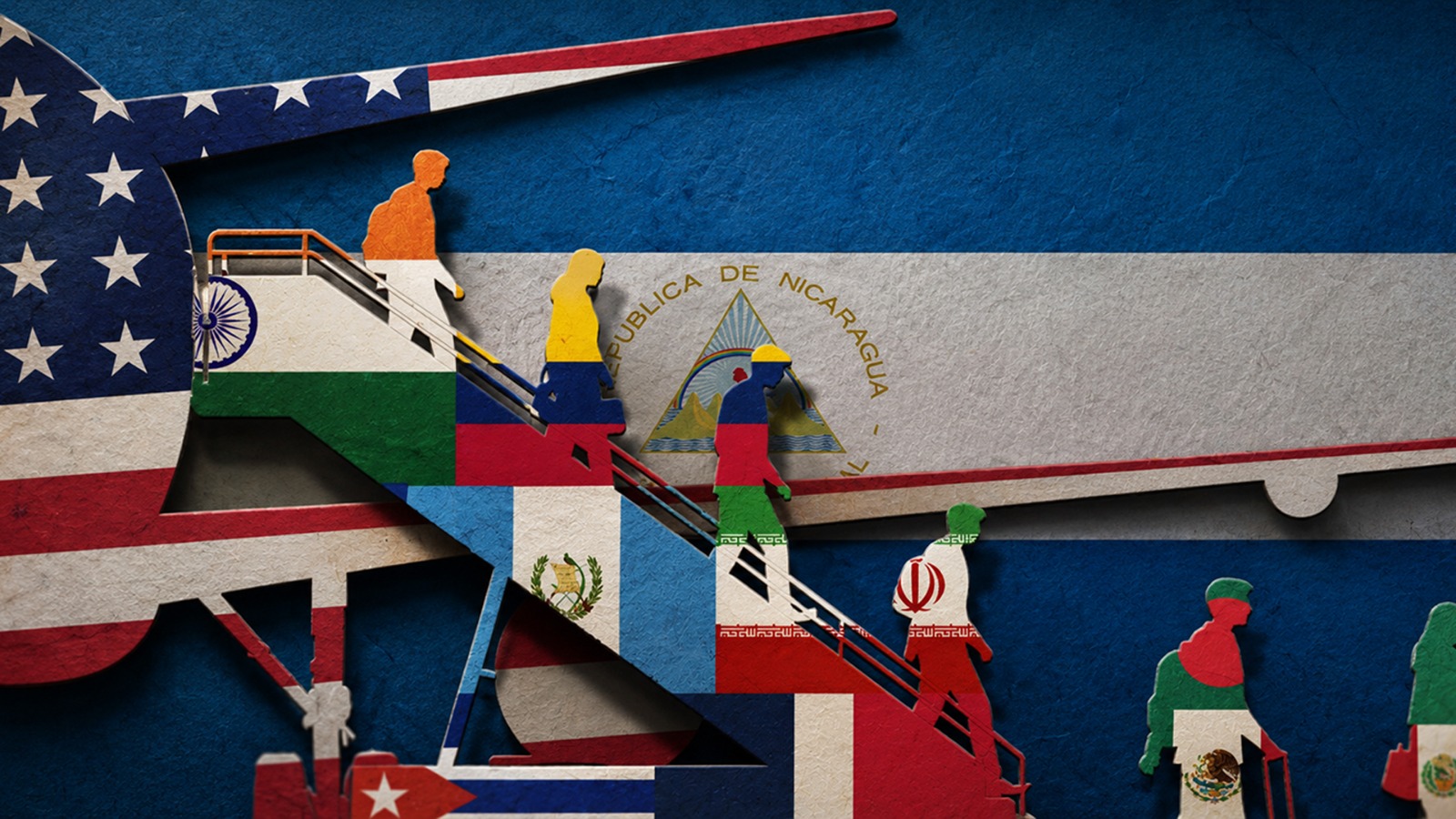
The new report of the United Nations Group of Human Rights Experts on Nicaragua (GHREN) regarding transnational repression documents 452 cases of Nicaraguans officially stripped of their nationality. But many more have been subjected to “de facto statelessness,” after being barred from returning to the country, or denied abroad the right to renew their identity documents.
These measures of “revenge” seek to “make life impossible” for voices critical of the regime, according to Group member Reed Brody in an interview with CONFIDENCIAL. “It is much more difficult for people who become de facto stateless, because they cannot prove they lack citizenship,” he notes.
Brody warns that no country in the world today promotes statelessness as much as the regime of Daniel Ortega and Rosario Murillo does in Nicaragua, in violation of the United Nations Convention on the Reduction of Statelessness. “We are promoting discussions among States so that between them they find a solution. A decision by the International Court of Justice condemning Nicaragua for the deprivation of nationality would have a very important effect,” he stresses.
Brody also points to eight ways the Ortega regime continues to violate the human rights of Nicaraguans beyond its borders, through a “broad and complex surveillance and intelligence network”: arbitrary deprivation of nationality, denial of entry, refusal of passports and elimination of identity documents, confiscation of assets, surveillance, threats and harassment, physical violence, misuse of Interpol Red Notices, and reprisals against relatives inside the country.
Known as the “dictator hunter,” Brody began his international career as a human rights advocate in Nicaragua in 1984, participated in the investigation of the genocide in Rwanda, and brought former Chadian dictator Hissène Habré to international justice. He also worked in documenting crimes committed by dictators Augusto Pinochet in Chile and Jean-Claude Duvalier in Haiti.
For 20 years, he served as legal counsel and spokesperson for Human Rights Watch. He has led UN missions in the Democratic Republic of Congo and El Salvador, represented exiled Tibetan women at the UN Conference in Beijing, and in recent years has pursued the former Gambian dictator Yahya Jammeh, now in exile in Equatorial Guinea.
The new report describes a fourth phase of repression against Nicaraguans. What does it consist of and what are the main findings?
Reed Brody: It focuses on transnational repression, carried out by the Nicaraguan government outside its borders against those perceived as opponents. But it is part of the same campaign, increasingly intense, to silence critics both inside Nicaragua and in exile. 452 Nicaraguans have been officially stripped of nationality, but there are many other measures—such as banning Nicaraguans from entering or returning to their country.
We have documented 318 cases of people refused reentry into Nicaragua. Surely there are many more, because people often refrain from reporting due to fear. We have also documented passport denials in consulates in the US, Spain, and elsewhere. These individuals become de facto stateless. They have no document proving they were stripped of nationality. This shows the cruelty, the tactic of revenge.
All those on blacklists are systematically subject to confiscation. A very important part of the report deals with digital surveillance—monitoring Nicaraguans abroad identified through social media activity or opposition groups. Many phones have been tapped, platforms monitored to identify not only people in Nicaragua but especially those in the diaspora.
Who makes up this surveillance structure and how does it operate?
Transnational surveillance is organized through a multi-layered intelligence architecture involving the army, the police, the foreign service, non-state actors. But at the core is a network coordinated by the Army’s Directorate of Defense Information, the famous DID, which is the Military Intelligence Agency.
Agents are tasked with identifying and monitoring internal and external threats. Targets are identified by monitoring social networks, public activities, and associations with opposition groups. Once profiled, they are subjected to surveillance—even physical surveillance by undercover officials, informants, account hacking, spyware, and intercepted communications.
We interviewed individuals who reported being photographed, followed, harassed, and approached by strangers abroad—in Costa Rica above all, but also in Honduras, Belgium, Guatemala, Spain, and the US. It is a vast intelligence and surveillance network.
Who are the targets of this surveillance? Who is monitored in exile?
Obviously, the most exposed are the most critical voices. Information suggests this especially includes former Sandinistas and former Contras. But in fact, anyone in contact with “persons of interest,” anyone who has joined opposition groups, or even posted disfavored content on social media may be targeted.
The report mentions physical violence, assassinations, and attacks against exiles, such as the killing of retired major Roberto Samcam and the attempted murder of opposition figure Joao Maldonado. To what extent are these crimes part of a pattern linked to repression ordered from Managua?
The assassination of Roberto Samcam has deeply shaken us, and has enormously impacted the exile community. So far, we cannot reach any conclusions about the motives. The Prosecutor’s Office has recently indicated that it is seriously considering the possibility of a politically motivated attack. What is certain is that his death underscored a chilling reality: even beyond Nicaragua’s borders, opponents of the government do not feel safe.
I was in Costa Rica just before, and there was already a sense of fear that we are being watched. And Roberto Samcam, who was clearly a very public figure—especially in his criticism—yet also a very prudent person, was found in a moment of vulnerability. That has sown terror. And perhaps that could be the motive: it may have been intended as a message to Nicaraguans abroad, that the same surveillance and control the government exercises inside the country, it also wields beyond Nicaragua.
In Costa Rica, the investigation into Samcam’s murder is moving forward, pointing to the possible involvement and responsibility of the Nicaraguan Army in this crime. Yet the Costa Rican Executive Branch has remained silent about the killing and, in the past, has dismissed the idea that Ortega-linked cells are operating in the country. What does the report and the information from the Group of Experts say about transnational repression, specifically in Costa Rica?
Many people have reported surveillance. As a group, we are monitoring, for instance, who the Nicaraguan government appoints to diplomatic posts—consulates and embassies—and we see many individuals with backgrounds in military intelligence or, more recently, from the Sandinista Youth.
Last week, we interviewed the mother of a political prisoner who said her family was threatened for denouncing her son’s arbitrary detention. What reprisals against families of exiles does the report document?
That projects and multiplies the abuse, leaving families—especially those of disappeared persons—living in fear. Because the repression is so systematic, and the judicial system is, I would say, predatory, people are afraid to speak out.
The report also highlights the misuse of international cooperation and control mechanisms, such as Interpol Red Notices. What kind of actions do you expect from the international community in response to these abusive practices?
An understanding of the Nicaraguan situation. These mechanisms were designed for protection. I work daily on international crimes where we pursue suspects fleeing from one country to another, and Interpol Red Notices are very important for locating and capturing those people.
The problem is that Nicaragua abuses them. It issues and requests the arrest of people convicted in Nicaragua—but in fabricated trials, trials that violate human rights, without due process. So we are trying to raise awareness in the international community—Interpol itself, but also other countries—that a Red Noitce from Nicaragua is not the same as one issued by Mexico, Brazil, or Sweden. The same applies to the mechanism for reporting stolen passports.
The Nicaraguan government—and to me, this shows its vengeful drive—seeks to make life difficult for these people. There have been cases where someone has called us from an airport somewhere saying: “I can’t enter because my Nicaraguan passport has been reported by Nicaragua as fraudulent, and I’m stuck here in immigration; they won’t let me through.” In extreme cases, we or another international group have managed to intervene to prevent the person from being sent back to Nicaragua.
The group also identifies the Vice Minister of the Interior, Luis Cañas, as the official responsible for deciding who may or may not enter their own country. How is that decision made? How does this machinery of de facto banishment work?
I don’t know exactly how many “points” someone has to accumulate to end up on the list, but it’s essentially the regime’s total control over the media and social networks. The surveillance that exists in Nicaragua runs from the very top, through the Army, the Police, and also the Sandinista Party structures—political secretaries, “victory units.” That’s where the lists are drawn up. In our previous report we identified 54 individuals involved in these various abuses, including Luis Cañas.
The goal is to silence. And once people are identified, to make their lives impossible. It is very cruel because it affects the person, it affects their family—especially those without documents—who try to rebuild their lives, validate their university degrees, or access things like their pensions, but can no longer do so.
What can democratic states and the international community do to offer a solution to these citizens who cannot return to their own country?
The 452 people who were officially stripped of their nationality became stateless immediately. Some countries—especially Spain—have shown solidarity by offering them citizenship. It is much more difficult for those who are stateless de facto, because they cannot prove the absence of nationality. We are intervening directly with several states to raise awareness of this problem.
And the recommendations in the UN report go precisely in the direction of urging states to implement comprehensive measures to protect these people—whether by determining refugee status, facilitating exile or asylum pathways, or providing naturalization.
What would it take for the international community to adopt stronger measures and bring Nicaragua before the International Court of Justice in The Hague, for violating the conventions against statelessness?
For me, that is perhaps the most important recommendation: Nicaragua’s arbitrary deprivation of nationality. As an individual arbitrary measure, it has no equal in the world. There are many cases of statelessness globally caused by war, or by mass expulsions of ethnic groups. But the idea that 452 people have each been individually declared “traitors to the homeland”—there is no other country like it, and it is a clear violation of the Convention on the Reduction of Statelessness. We are speaking with states; many states are interested, they like the idea—but want another state to be the one to act.
So, there’s no political will?
It carries a diplomatic, economic, and political cost. First, it takes one, two, three, even five million dollars to pursue a case. Second, worldwide, each year only two or three new cases are brought to the Court.
Nicaragua has gone before the International Court of Justice more than any other country in the world. When we presented our last report to the Human Rights Council, Nicaragua walked out. When the International Labour Organization issued a report on Nicaragua, Nicaragua left the ILO. It left UNESCO. It left the International Organization for Migration. It left UNHCR. But the International Court of Justice is like a trophy for that government.
The words International Court of Justice appear five times in Nicaragua’s new Constitution. A decision by the Court condemning Nicaragua for the deprivation of nationality would, I believe, have a very significant effect. We are sparking discussions among states so they may find a solution among themselves. I expect progress, but I cannot say more at the moment.
PUBLICIDAD 3M
PUBLICIDAD 3D