AA
Share

 Las noticias del día en tu correo
Recibe lo más destacado de la cobertura de CONFIDENCIAL todos los días.
Más boletines
The best of our coverage, in English
Sign up for our weekly newsletter. We will send it to you every Friday at 10:00 am (Nicaragua time)
More Newsletters
PUBLICIDAD 4D
PUBLICIDAD 5D
Colombia’s Ministry of Foreign Affairs and Ministry of Justice maintain that they are requesting his extradition ‘for the alleged commission of ordinary crimes.’

Carlos Ramón González, exfuncionario del Gobierno de Gustavo Petro. Foto: Presidencia de Colombia
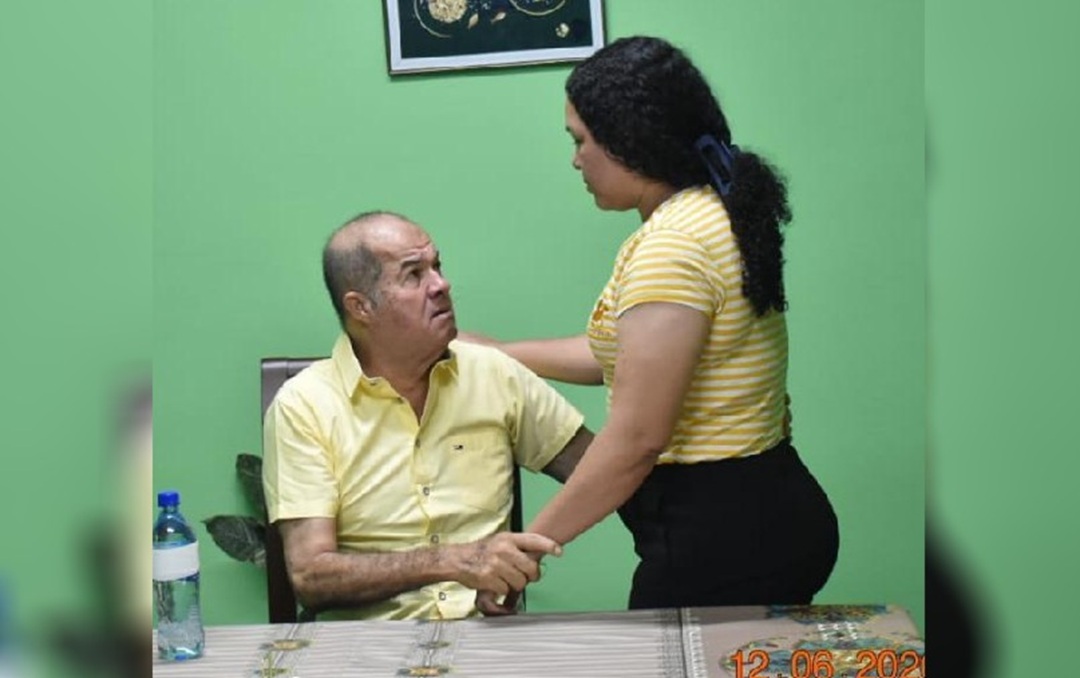
The Colombian government has asked Nicaragua to reconsider its decision to grant political asylum to Carlos Ramón González Merchán, until recently a high-ranking official in Colombian President Gustavo Petro’s government, who is facing an arrest warrant for corruption.
This was stated by Colombia’s Foreign Ministry and Ministry of Justice in a statement noting that they “do not share the decision” of the Nicaraguan government on Wednesday, August 20, 2025, “to grant political asylum” to González, “given that the individual is wanted by Colombian justice for the alleged commission of ordinary crimes.”
“Colombia requests that the Government of the Republic of Nicaragua take into account the evidence provided by the Attorney General’s Office and, consequently, reconsider its decision in order to revoke such international protection, so that Mr. González Merchán can surrender to Colombian justice, which will provide him with all procedural guarantees,” the statement says.
The report adds that González, implicated in the largest corruption scandal of the Petro administration, “is facing a criminal process in Colombia for the alleged commission of ordinary crimes under Colombian law, and for this reason extradition has been requested.”
González, 66, and a former comrade of Petro in the demobilized M-19 guerrilla, held important positions in his government, including director of the Administrative Department of the Presidency (Dapre) and of the National Intelligence Directorate (DNI).
His name surfaced a few months ago in investigations into the embezzlement of funds from the National Unit for Disaster Risk Management (UNGRD), attached to the Dapre, which were allegedly used to pay bribes to congressmen in exchange for legislative support for the government.
For that reason, the Attorney General’s Office charged him with bribery, embezzlement of state assets, and money laundering, accusing him of ordering multimillion-dollar kickbacks to the former presidents of the Senate, Iván Name, and the House of Representatives, Andrés Calle, both of whom are now detained in connection with the case.
However, after media reports that González had fled to Nicaragua and was under the protection of the Colombian embassy in Managua, the government requested his extradition from the country — a request that was denied.
#Communicado:
– Ministry of Foreign Affairs of Colombia (@CancilleriaCol) August 21, 2025
Colombia does not share the decision of the Government of Nicaragua to grant political asylum to Carlos Ramón González Merchán, wanted by the Colombian justice system for allegedly committing common crimes.@MinjusticiaCo @infopresidencia https://t.co/YgNXv4xhKN pic.twitter.com/uXIBeBpzsA
According to the letter from Nicaragua’s Ministry of Foreign Affairs sent to its counterpart in Bogotá, the country granted political asylum on the grounds that “every person has the right to seek and receive asylum in foreign territory in cases of persecution for political crimes or common crimes connected to politics.”
“Granting political asylum to Mr. González Merchán disregards the provisions established in the Extradition Treaty” signed by both countries in 1929, Colombia countered.
Petro, who initially dismissed as “false” the news of his government’s support for González—after a local outlet revealed a letter in which the Colombian embassy asked Nicaragua’s Foreign Ministry to renew González’s residency in that country—later stated on his X account that the asylum granted to his former official “is due to two powerful reasons.”
The first, he said, is that Nicaragua’s President Daniel Ortega “does not like Petro because he denounces that I turned against the Sandinistas who made the revolution against (the dictatorship of Anastasio) Somoza.”
The other, Petro added, is that “Carlos Ramón González, as a full-fledged member of the M-19’s combat commission, went to fight in Nicaragua’s war against dictator Somoza,” who was overthrown in 1979.
“The M-19 officers were incorporated into the Sandinista People’s Army with military ranks,” Petro said.
On Wednesday, August 20, 2025, Colombia’s Interior Minister, Armando Benedetti, described Nicaragua’s refusal to extradite former senior official Carlos Ramón González as “unfriendly and aggressive.”
“More than offensive, the issue is that if the president requests extradition from any country with which treaties exist, and that country does not respond to that request, it is something unfriendly and aggressive that should not happen,” the minister told the press.
Benedetti warned that “it will be necessary to review what happens with diplomatic relations” between the two countries.
PUBLICIDAD 3M
PUBLICIDAD 3D